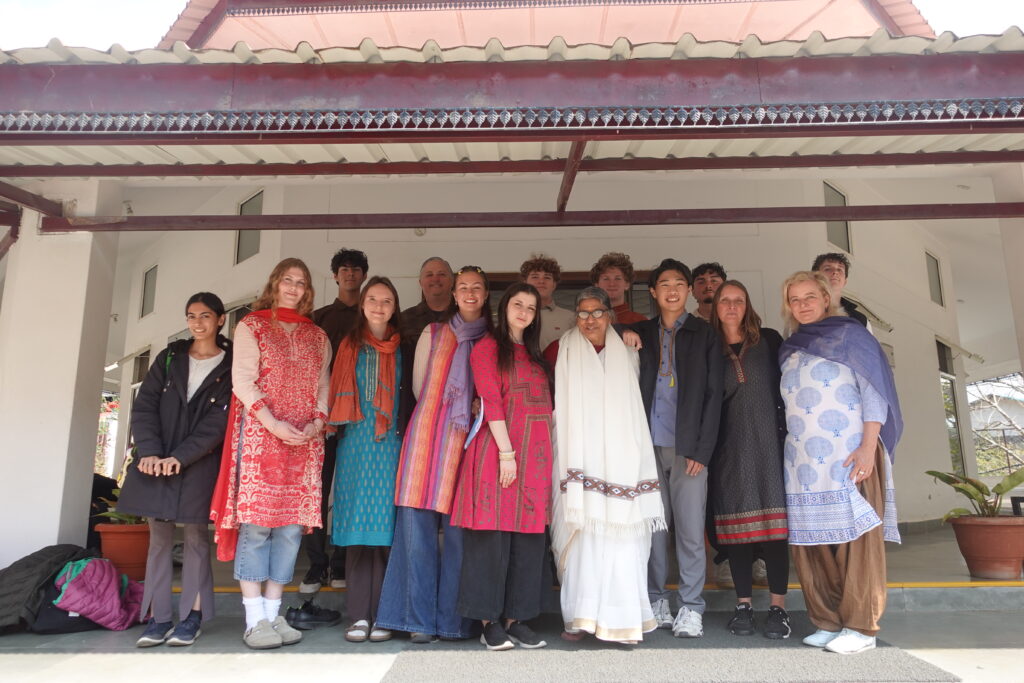
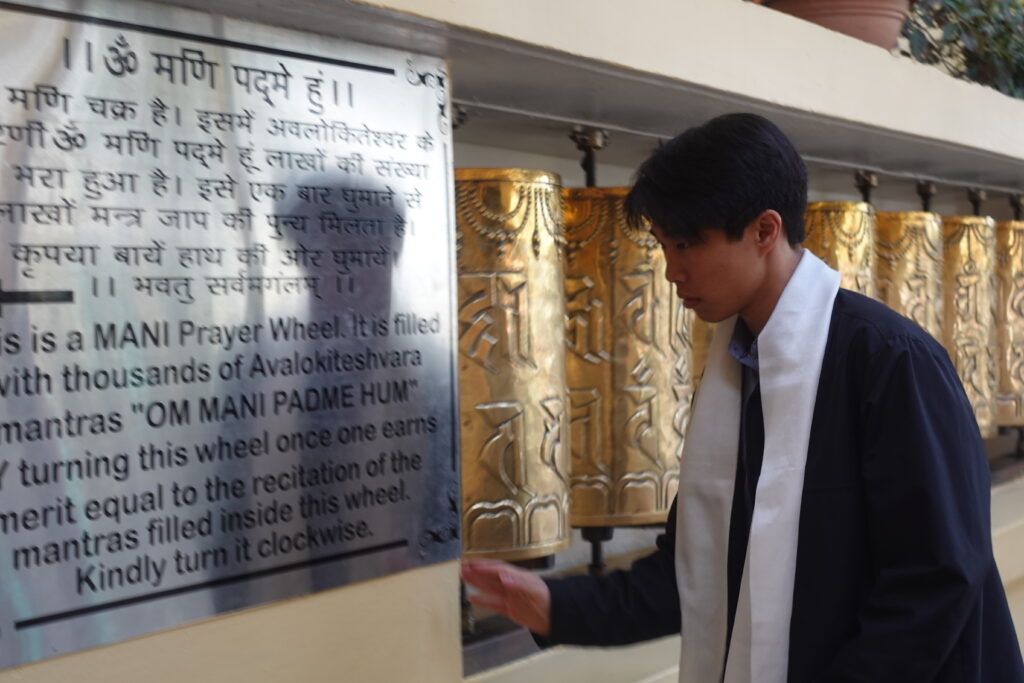
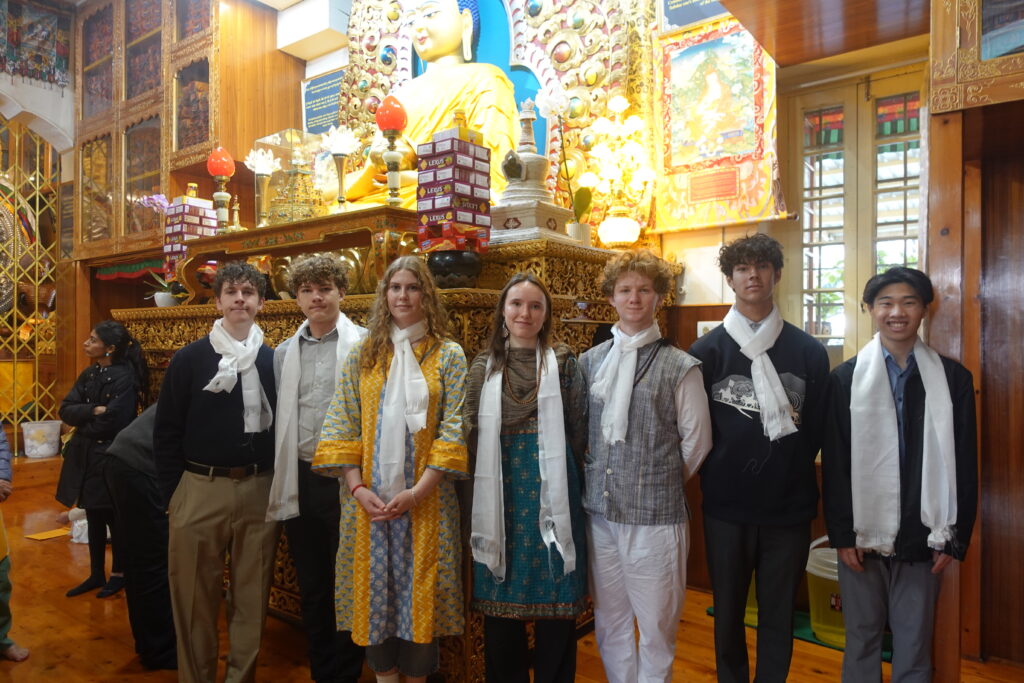
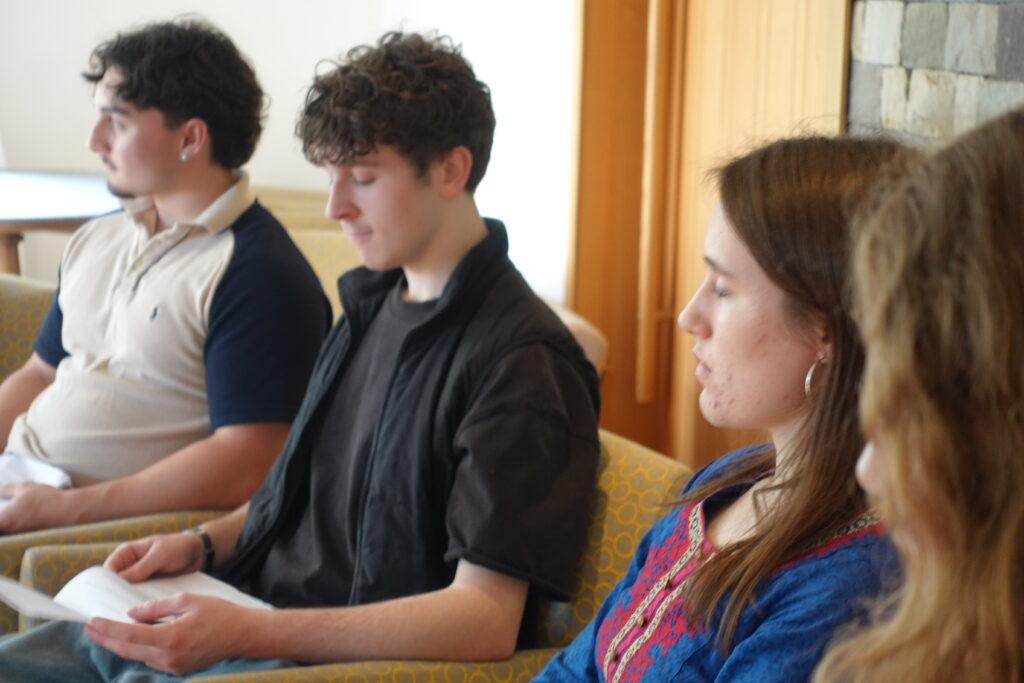
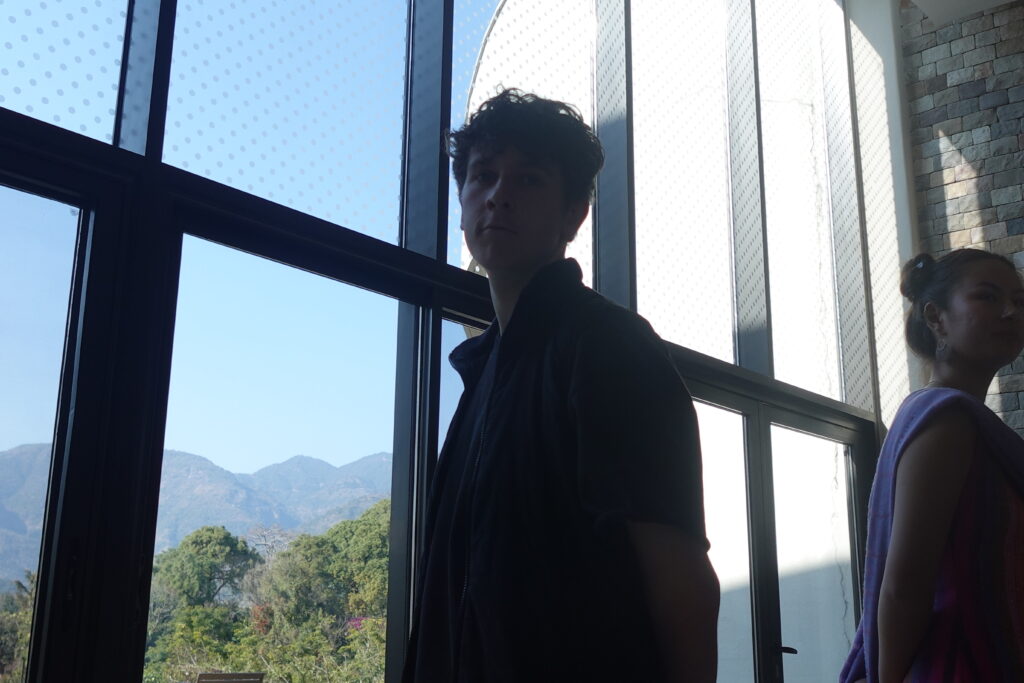
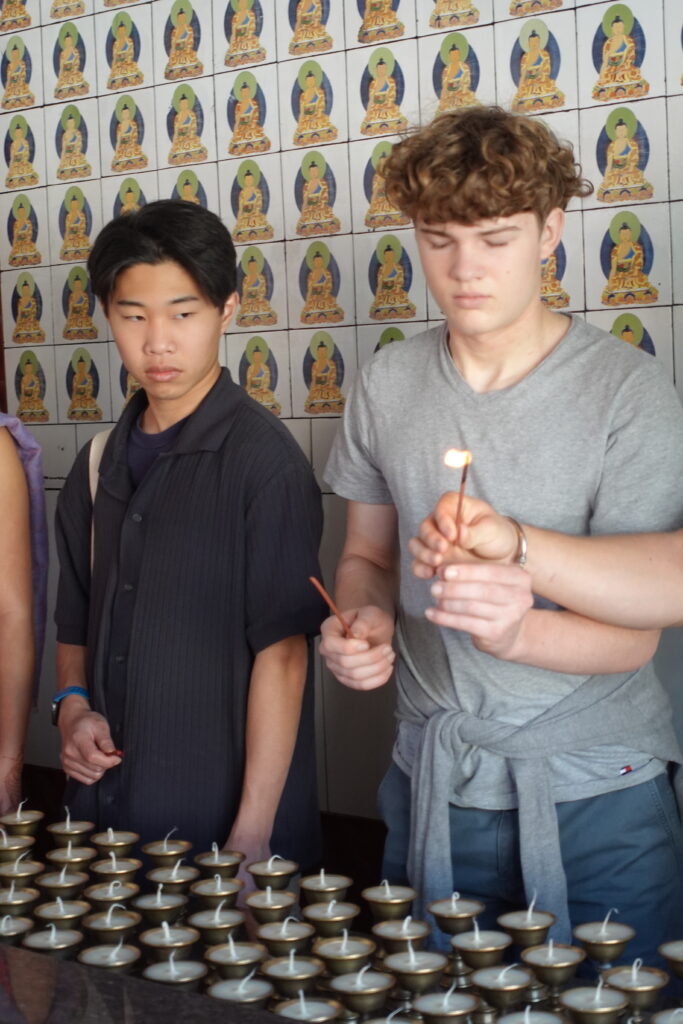
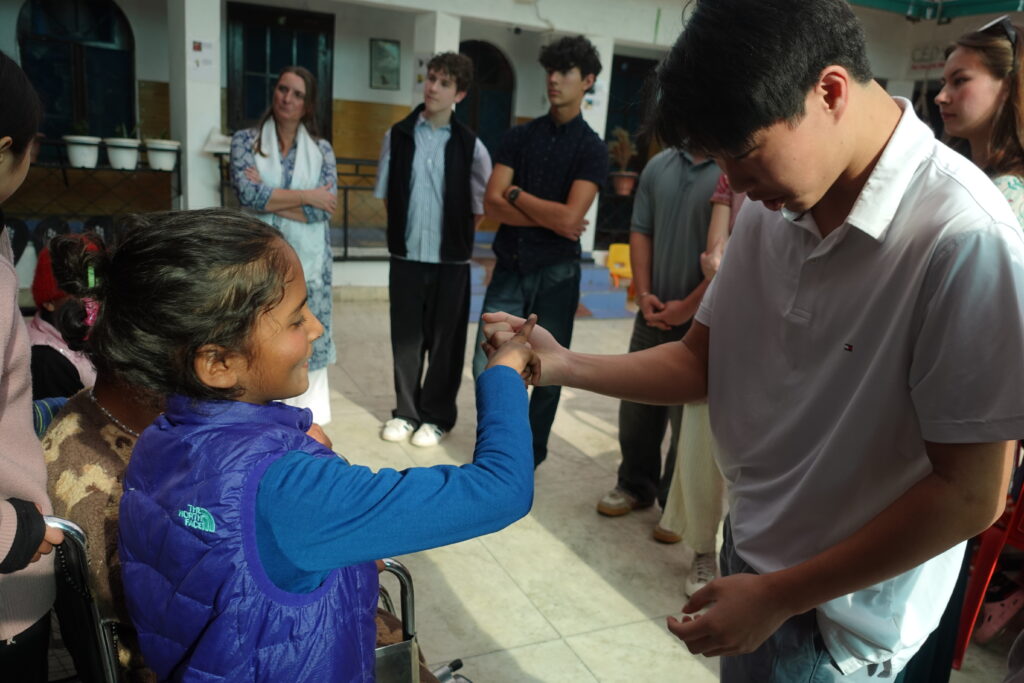
Right now I’m writing this from the quiet comfort of my bed, back in my own home; a strikingly different environment from the bustling streets of Old Delhi where I was immersed just days ago. Experiencing Old Delhi as the last stop on our incredible trip felt perfectly planned and beautifully conclusive.
For most of the trip, I had been waiting for that “India experience” everyone talked about—overwhelming crowds of people, hundreds of lives mixed together, blurs of color, wafts of smells, snatches of sounds—but we had yet to come across it in full. Finally, I got to experience this whirlwind of the senses. By then, two weeks into the trip, I was so used to India that I didn’t think twice about the strong scent of the pollution, the cows in the roads, or even the incessant honking. I felt peaceful among these things that had only briefly, in the past, felt new to me. I was ready for one final experience to test the level of this comfort that I’d developed.
I was surprised at what I found. Though I was physically aware of the information that suddenly crowded my senses as we stepped off the bus into a packed street of criss-crossing vehicles, my insides felt utterly calm. At this moment, I took time to appreciate my growth. At home, I often feel overwhelmed in crowds, or when shopping, and I am constantly worried about germs. Right before we left, I’d been overwhelmed just shopping for the trip in a Target, but somehow now I felt perfectly peaceful.
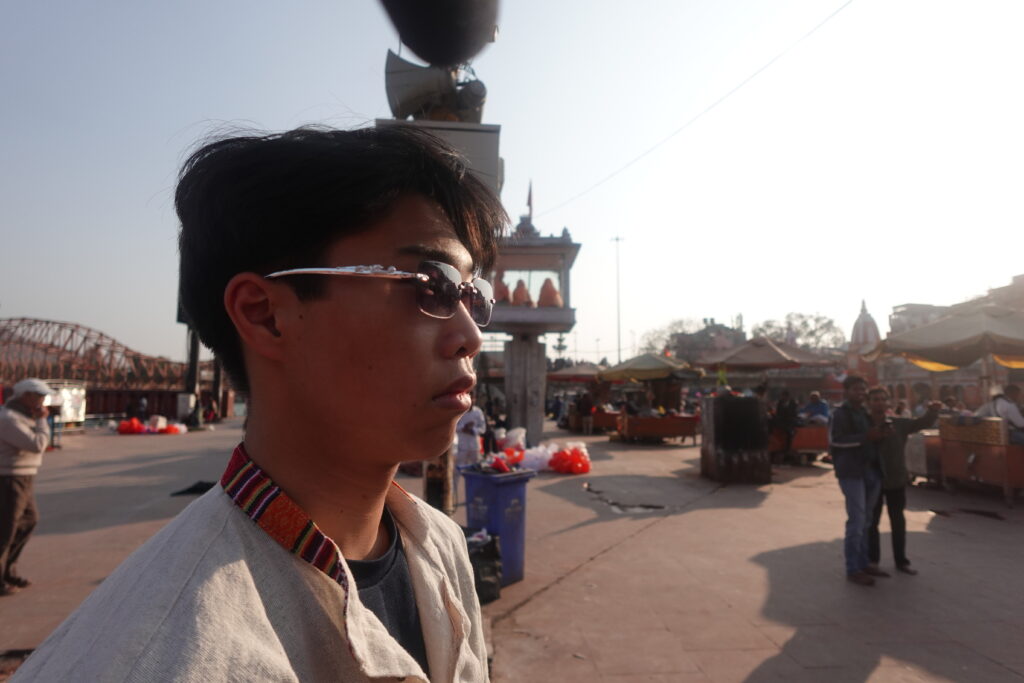
I marveled at the packed, wide street we made our way onto. It was so full of life; motorcycles close to running over your toes if you weren’t careful, vendors appearing out of nowhere to push objects in front of you, people of different religions and backgrounds dressed in different ways, speaking words I couldn’t understand.
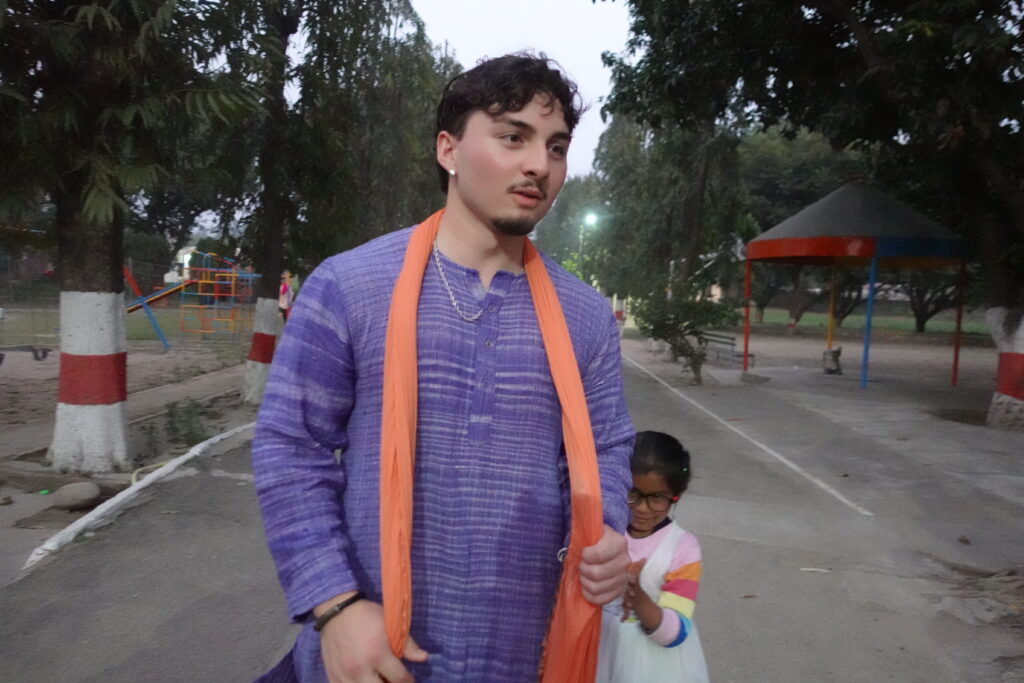
The atmosphere was so exciting, and it all started to blur together. I wasn’t, however, in a state of overwhelm, I was in one of focus. My attention dialed into simply tracking the shirt of the person in front of me as we wound through the crowds in a constant state of brief separation, the paths of so many others meeting and breaking ours. I found this strangely meditative. Throughout India I’ve found my opportunities for meditation amidst commotion to be somehow more impactful than those for meditation amidst silence and calm. Within the chaos, our mind is turned to the present, and we are forced to focus it on something coming from one of our senses. I found that beautiful. I had learned to cope, and thrive. In this case, I was just attempting not to lose the pattern of Kyler’s purple shirt ahead of me in the crowd, instead of letting my mind drift to places that cause me anxiety and unrest.
I marveled again at the peace found in spite of the bustle of the street. There in Old Delhi, we introduced our bare feet to new germs, entered magnificent temples, and had the opportunity to learn more about the traditions of Sikhism and Jainism, which we hadn’t been able to engage with yet in India. So many vastly different lives were being led and mixed together all in one place, in a way that is a rarity in the United States’ individualistic, separated culture. The stimulating experience of Old Delhi added to the fullness and clarity of our journey and helped satisfy some of my curiosity and hunger for more as the trip came to a close. Now, in my comfortable home, as I realize that I haven’t had chai or seen a monkey all day, I start to reminisce on those crowds, the devotion, and the noise, with a sense of grateful longing.
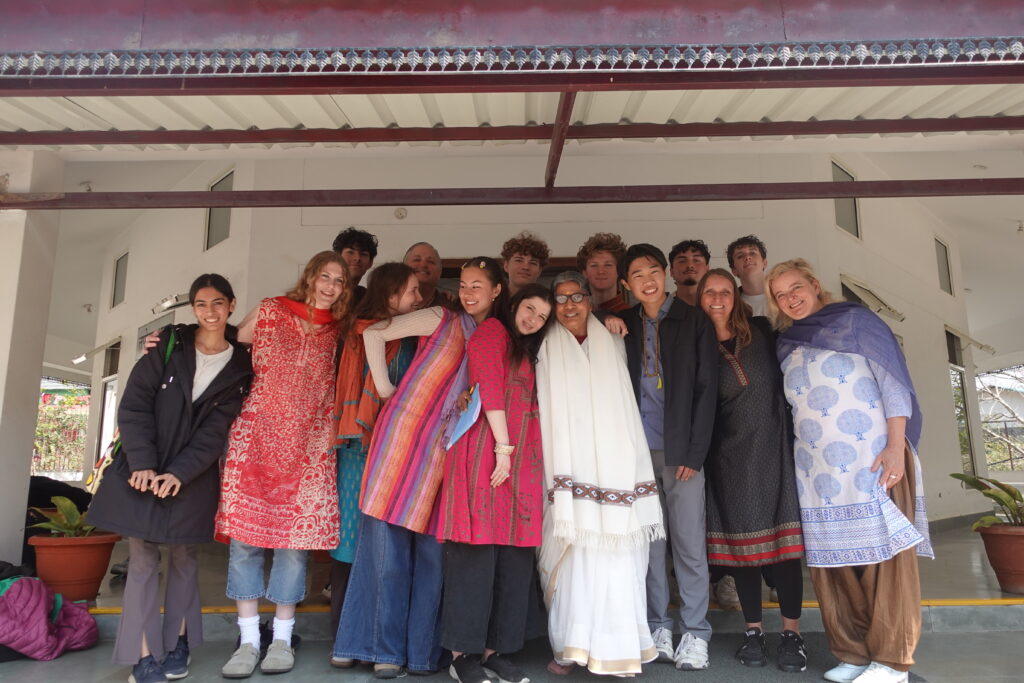
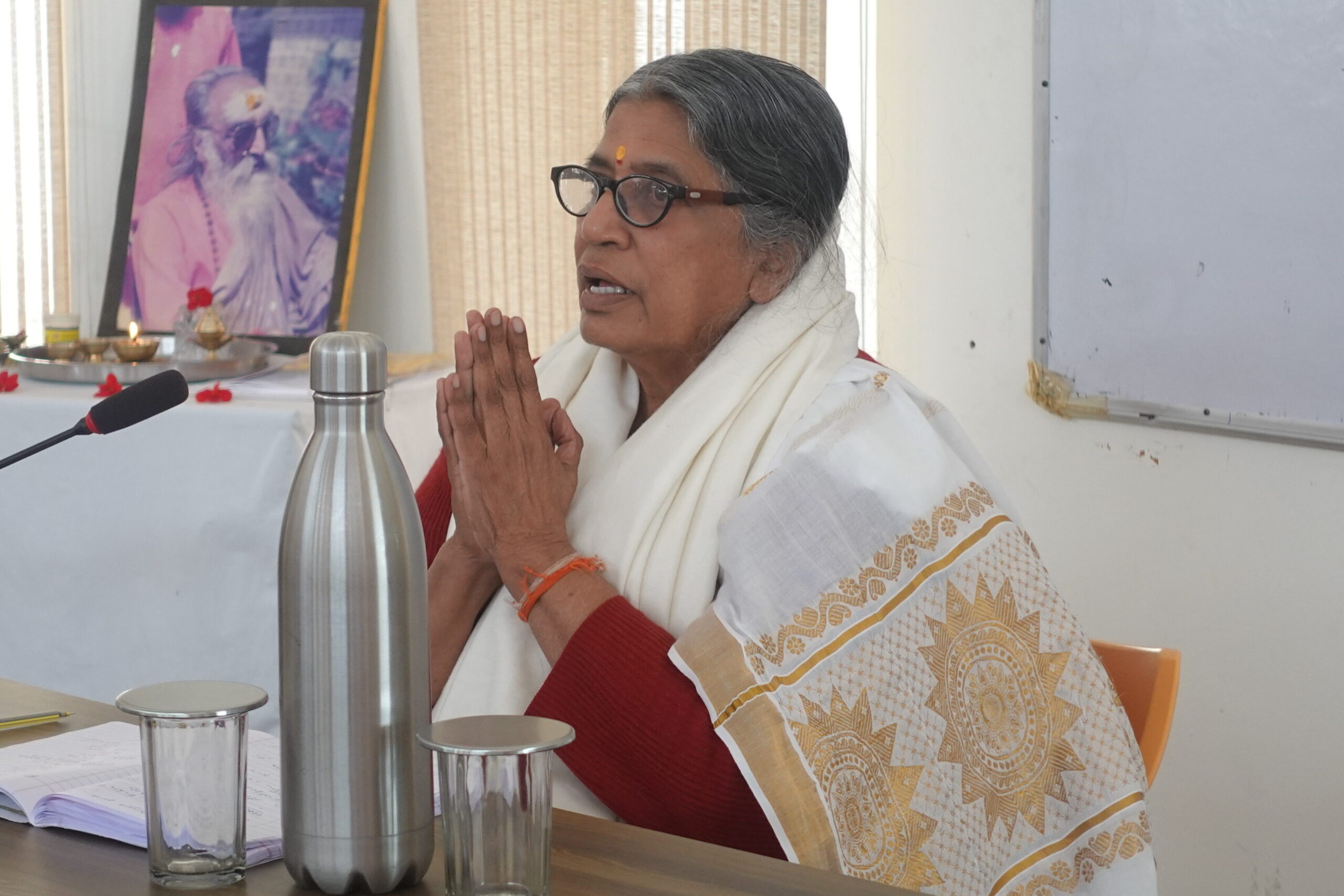
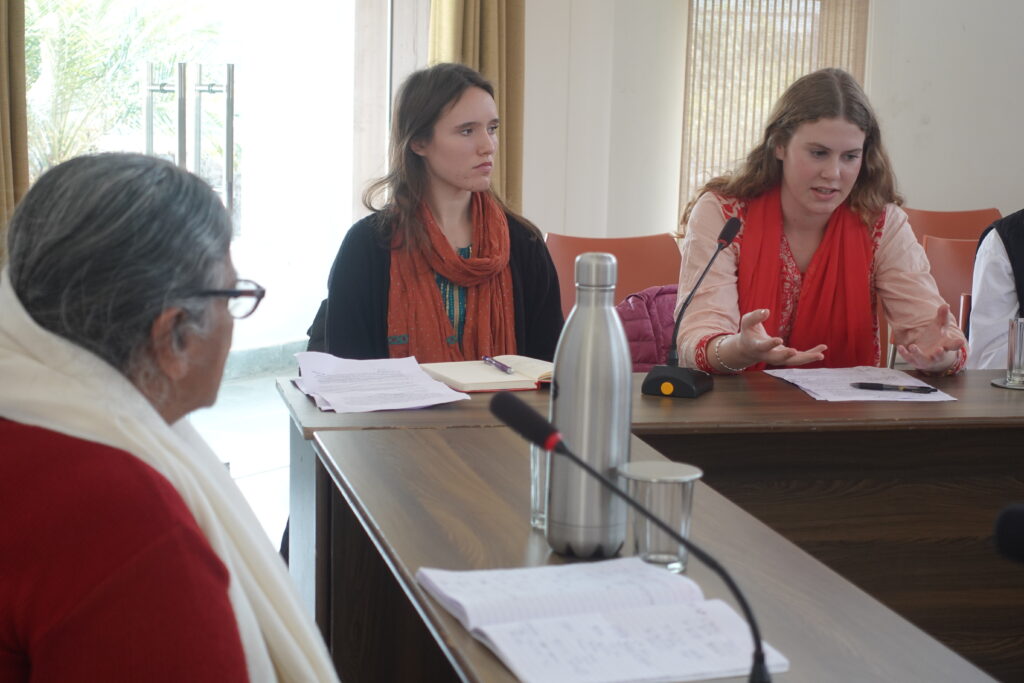
Today we had the privilege of meeting with Dr. Metre, an inspiring woman who serves as the director of CORD (Chinmaya for Organisation Rural Development). From the moment she stepped into the room, there was a noticeable shift in energy. We felt as though we were in the presence of someone who had not only seen and experienced much in life, but who had also practiced deep reflection.
Dr. Metre did not just talk about systems and structures, she spoke about people, communities, and the deeper values that shape how we live. She spoke about individualism in a context of negativity, in a way I had not heard about for a long time. When I was little, my brother and I would fight a lot about our toys and space. My grandfather would chastise us. “Mine. Mine. Mine. If you are always so focused about what’s yours, you’ll never know what more you could have if you joined your toys together.” He would always say this, no matter the context. He tried to teach us about unity over division.
I realized that over time I forgot about this, and was sucked into the individualism and independence of California culture. When Dr Metre spoke about individualism, I was reminded of many things I had forgotten. I remembered that I should be mindful.
By becoming independent, I lost connection to the things I could have had. I also became disconnected from my family. We praise independence in our culture. The minute we turn 18, we leave the house and go to college. From there, most Californians establish their own home. This is entirely different in India, where a normal path is to stay with your parents to help care for younger siblings. Then people care for their parents. While I don’t entirely resonate with either side, I feel like a good mix is necessary.
Rosemary Konviser
Inspiring Work
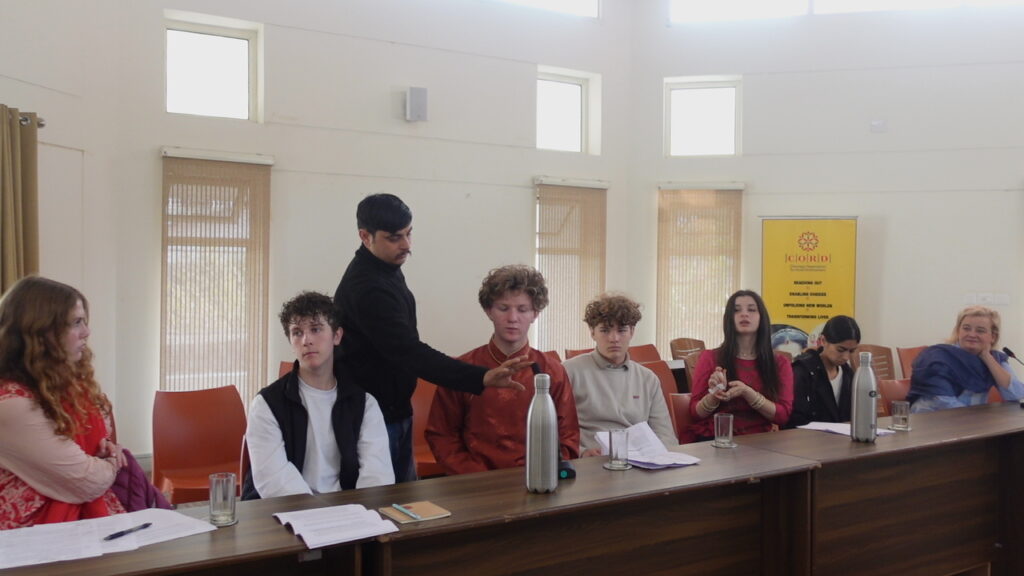
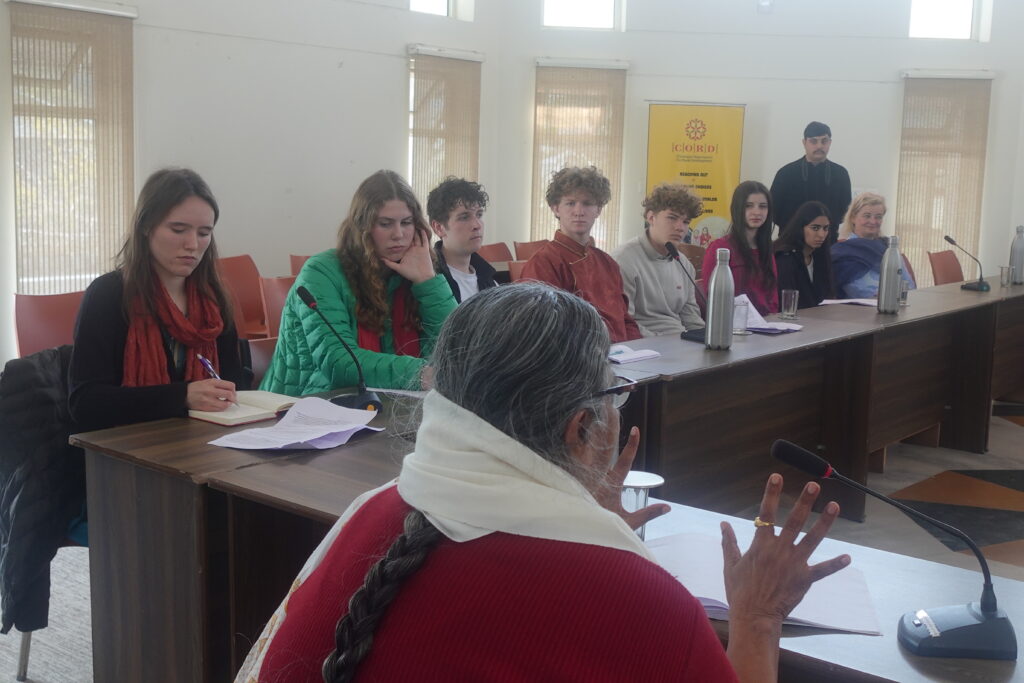
Today we interviewed Dr. Metre, director of the Chinmaya Organization for Rural Development. CORD is an organization built to empower people (especially women) in rural communities to become self-sufficient. The organization facilitates holistic well-being, community participation, and acquisition of modern business, medical, and agricultural skills.
Decades ago, Dr. Metre left her medical job and privileged life in Delhi to address health-related issues in the rural communities. Originally, this was the sole focus of the organization, but once she arrived, she realized that the health issues the people faced were interrelated with so many others that it was pointless to address them on their own. From there, the main focuses of the organization as it is today arose: women’s empowerment, healthcare, education, livelihood development, and community programs. This holistic approach was revolutionary and allowed for far greater empowerment and development than approaches that only address one issue, or treat people as only recipients of aid, rather than equal partners in their own advancement. CORD has become a model for other organizations trying to do similar work.
For CORD to be effective, people have to actually believe they have the power to change their lives. Because of conditioning from the caste system and the patriarchy, many often do not believe they have any agency or right to change their circumstances. An important part of Dr. Metres’ work is teaching women that they are important and their work is of value, and making them see that they are often actually doing more with their days than the men are. Giving women a platform to get together and discuss their concerns helps them gain confidence in what is often an isolating life of doing housework in their husband’s house, far away from their own families.
Apart from this work, Dr. Metre is also a wise and practiced spiritual thinker. Her commitment to CORD comes from her beliefs in service to others for happiness. We are all interconnected. She said, “If we value each other and each others’ roles, we begin to see that we are all complimentary.” She talked about how all you can change is yourself, but you can guide and help others, and by changing yourself, others around you will change. She said, “the greatest help I do to others is by changing myself to be the best human.”
Dr. Metre spoke of the body, mind, and intellect as instruments that we must take care of and learn how to use. To keep the mind calm, we must be able to watch what it is doing with alertness and awareness. We must also differentiate the permanent from the temporary. We are the witnesses of our own mind and we can learn to observe it and become separate from it and its fleeting emotions. Ultimately, we are all on this planet for a short period of time, and all we can do is share our prosperity, become one with ourselves, and do our best to help others. Dr. Metre said “the greatest purpose is to realize oneself, and to be one with the divine.”
Growing up, I knew about the Dalai Lama. He was always somewhat of a mystery. I pictured a mystical figure, and I knew he was the leader of Tibet. When preparing for this trip, we found out we were meeting the Dalai Lama, and it sounded cool but I didn’t really understand the significance until we got here.
I only realized how important he is after arriving in India and seeing the people’s dedication. I always thought he was powerful because he is the reincarnation of Avalokiteshvara (the bodhisattva of compassion), but what I have learned from being here is that his power comes from belief. I have never seen a leader with more devoted followers in my life. After seeing all of these people I was very excited to meet him and see for myself what’s so special about him.
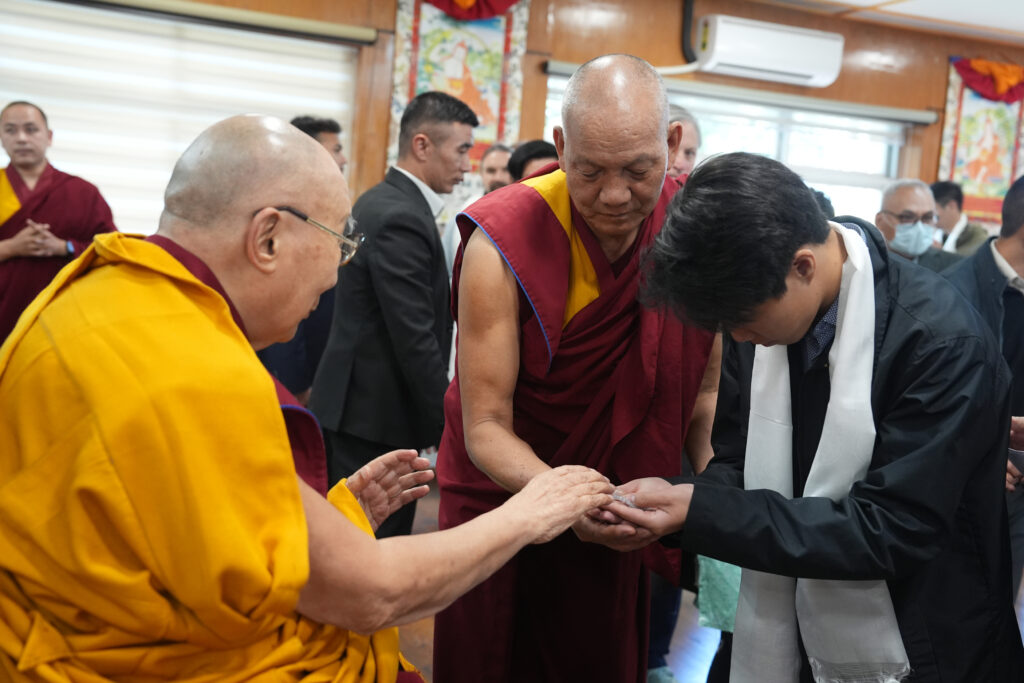
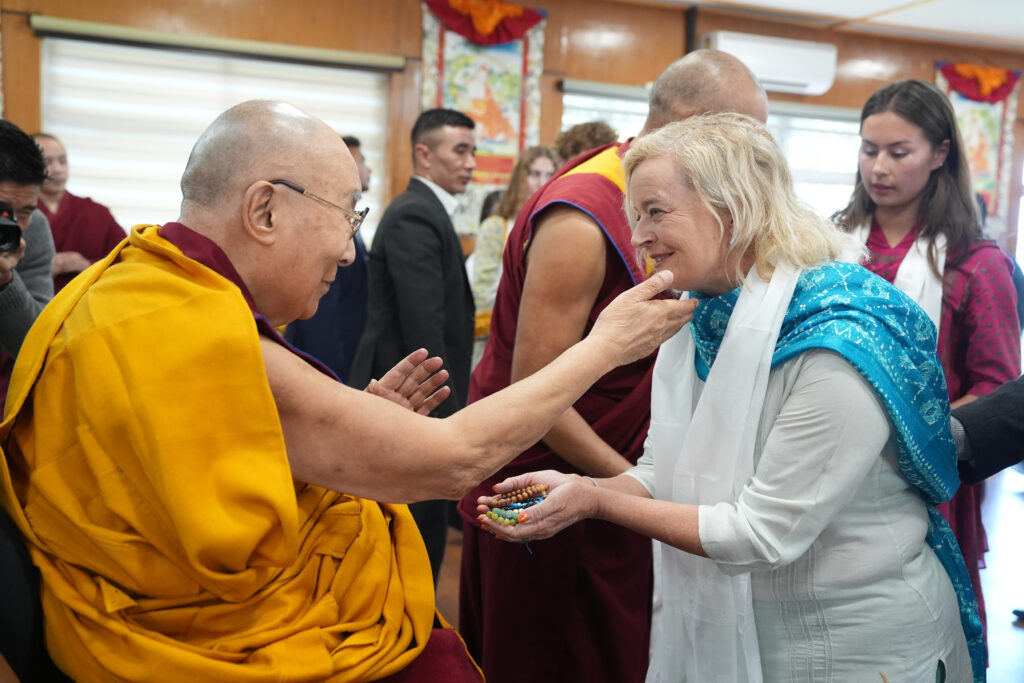
When we got there, I was excited and also incredibly nervous. We waited in the waiting room for a while before he walked in. When he finally did, everyone stood up and you could feel the reverence and respect that everyone in that room had for him. I was even more excited, but I was questioning what he was going to do that would be so impactful in the mere seconds that each person is allowed to be with him.
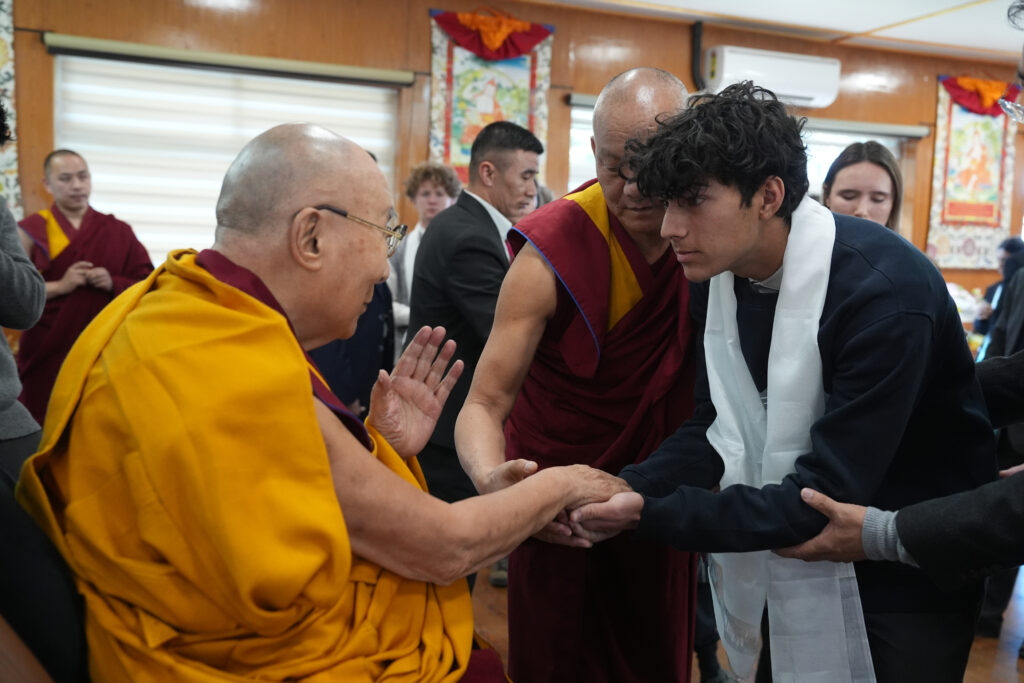
I finally made my way to the front of the line and I held out my hands to be blessed. This was one of the most simple gestures possible, but it still came across so powerfully. All he did was reach out and hold my hand and look me in the eyes for about two seconds. In those two seconds (I don’t really know how to explain it), I felt like he truly saw me. He just looked at me so calmly and intently that I felt like he really saw me in a way that I don’t think many people on this earth could ever see me.
This experience was something unlike anything I have ever been through, even though it was so simple. The feeling of his stare, his touch, and his obvious compassion and love is incredibly hard to explain. There is definitely more to my experience that I can not put into words.
Meeting the Dalai Lama showed me the true power that he holds and how all of the devotion that people have for His Holiness is fully deserved. I am truly grateful to be given this opportunity to understand a different culture.
Kyler Nishimura
An Exciting Morning
I have always had an appreciation for a great view, but after seeing the view from the top of the hotel we were staying at, I knew I would never be happy with any other view. While I could compare Delhi to a larger Los Angeles, and the countryside to Sacramento, the view at Dharamshala was unlike anything else I have seen before or am likely to see after. The closest thing I could compare to it is Grouse Mountain in Canada, but that does not seem even half as impressive. At Grouse Mountain, once you reach the high point, you are finished with the journey. Here in the Himalayas, the mountains seem to never end. When one stops, another begins, and there is an endless wall of snow capped peaks. Still, I was happy to head downhill from our high hotel today, even though the time was very early.
Today we would be meeting the Dalai Lama. I could not wait to see what would happen. This was because I was excited and nervous at the same time, and even now, I have the same reservations. The Dalai Lama is a very famous and revered person.
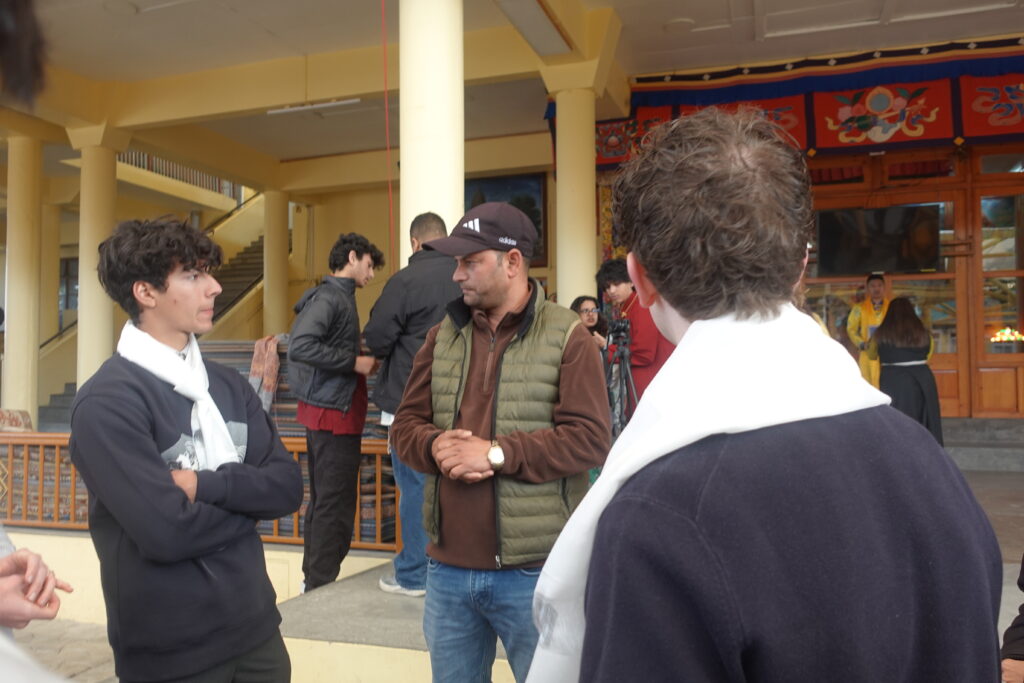
The walk was quick, and soon enough, we arrived at the Dalai Lama’s compound. The wait began. The wait was long, and at times I felt it would take hours, but I was surprised about one thing. I was still paying attention. I am, by nature, a person who is always thinking, and normally this takes the form of telling stories and remembering facts. This time, however, I was thinking only about the current situation I was in. I thought about who was next to me, who was in front, and how far I was from the Dalai Lama.
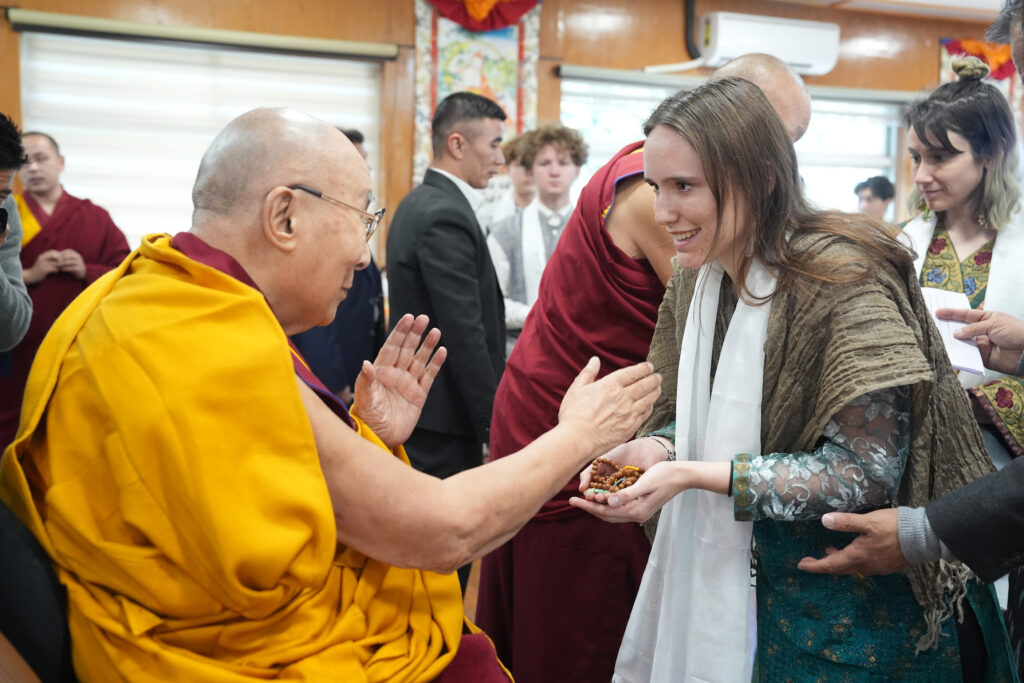
But soon, another concern hit me. I had not brought an object for the Dalai Lama to bless. Of course I had the scarf hanging around my neck, but everyone was getting their scarf blessed. I wanted something unique. Then I remembered that I had a friendship bracelet of beads that I got from a girl at the Ashram, and I knew that it was the object I needed. I quickly slipped it off my wrist, and my breathing soon returned to normal.
As I waited in line, two of the monks talked to me, and I was surprised by what they asked me about. One asked where I was from, and another asked about the bruises on my wrists, and I told him it was from a punching bag and not from a fight. He smiled at me and I continued on in line. Finally, the person in front of me moved, and it was my turn to be blessed. I extended my hands out with the bracelet inside of them, and I said “blessing”, so he knew that it wasn’t an offering. Then he closed his hands around mine, and just like that, it was over.
Overall, I’m happy with my blessing. Although I do not feel a major change in my life from the blessing directly, it has finalized my commitment to learning more about Buddhism, how to be a good Buddhist, and how to honor Buddha in my own life.
Chelsea Otterness
Encountering Holiness
“When you have nothing, you have nothing to lose.” — Bob Dylan
Easy for us to say. We have so much. Piles of things—more things. When something breaks, we toss it in the trash (perhaps after a few YouTube tutorials on how to fix it) and buy another. Convenience: a lifestyle that revolves around the purchasing of enhancements. That vacuum—while incredibly satisfying when it chooses to work—does not provide lasting contentment. It is temporary. It is fleeting. It is conditional: dependent on having a dirty floor, which is itself conditioned on having more things to dirty it.
Layer upon layer, our Western lifestyles amass these sediments. Layer after layer, they contribute to the mountain of “things,” of “stuff.” But what else is there? Another receipt? Another bill? Another metric to measure up to? To what end?
Our friends—brothers and sisters in humanity—fled through the night. They hid during the day, avoiding treacherous persecution from the “other.” They escaped with only the clothes on their backs, some prostrating for twenty-one days straight, callousing their foreheads and bruising their knees. Tomorrow was never guaranteed. Freedom existed only beyond the Himalayan range, in the haven of India. They carried nothing but an indomitable spirit, exalted by a generational heritage of faith in the interconnectedness of all beings. Faith that when they arrived—tired, cold, hungry, and alone—they would be received with kindness and make a home, albeit on foreign soil.
India welcomed these sisters and brothers from the land of Tibet, granting them refuge, supporting their autonomy, celebrating their vibrancy, honoring their religious ceremoniousness, donning their colors, and sharing in their devotional fervor.
How can a people persist in such joy as refugees? Perhaps the lesson is obvious, waiting to be received. Great teachers remind us that inner peace begins within. Maybe in extreme discomfort and material instability, the virtuous and resilient people of Tibet discovered an invitation to turn inward—to find their true home, their enduring happiness. Perhaps the less we have to pull our attention outward, the more direct the path to our compassionate hearts becomes.
When we sat in the waiting room this morning, awaiting His Holiness the Dalai Lama, everything felt ordained. A chaos so poised, regal, and beautiful embraced us like a warm hug. We waited together in tantalizing anticipation, hoping to be graced by his presence. He entered, ushered in by monks and devoted attendants. Group by group, we formed a winding, snake-like line. Each group was announced by its association and offered a brief but penetrating moment of his attention. His face—playful yet profoundly serene—lifted the fog from the sky.
Thank you, India, for sharing your mountains, your fields, your soil with the people of Tibet. Thank you, Tibetans, for persevering with utmost joy, color, and spirit. Thank you to the nations that cooperate so powerfully and publicly, showing us that peace between peoples can endure—that difference can be embraced, and that it makes us stronger and more compassionate as a species.
May our faith not rest in material things that fade, break, and clutter our sacred attention. May we look instead to these living examples of deep peace—of reliance on the intangible yet profoundly real force that binds us together in love.
Lisa Catterall
I was standing in a colorful, sunny courtyard rippling with people in all kinds of costumes and regalia, bright woven fabric and sleek embroidered silks, flowing robes of monastic and other traditions, well tailored western suiting and other outfits I can’t describe because they have no place in my experience of the world. There was a crowd of anxious people, all in their personal and cultural best, waiting at a small doorway to be called into the next step on the path to be blessed by Jetsun Jamphel Ngawant Lobsang Yeshe Tenzin Gyatso, His Holiness the Fourteenth Dalai Lama.
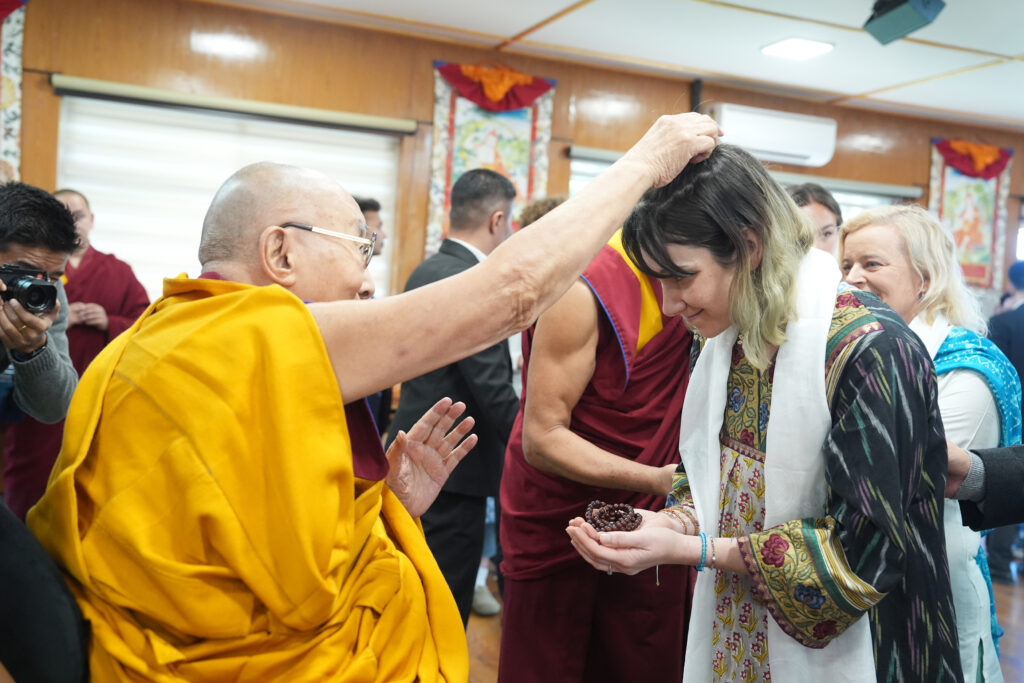
Buddhist believers think that the Dalai Lama’s are reincarnations of Avalokiteshvara, the bodhisattva (Demi-god) of compassion. In the two times I have been in the presence of his holiness, I have, indeed, found him to be the most compassionate person I’ve ever met. Fifteen years ago, in a long conversation, he taught me to love my enemies and to accept them as teachers. Today, as he looked deeply into my eyes and gently touched my face, I had the overwhelming feeling that he somehow understood the toil I endured this year, and in a way, the load I carried was instantly lighter.
I do not like organized religion. I do not believe in higher powers that can manipulate the minutiae of human experience. I deeply distrust the hierarchy and structures of major religions, knowing too much about their history. I do, however, firmly believe that there is much magic, and myth, that exists beyond the current explanations of science. We will explain it someday; we haven’t yet, but we can feel and describe and know it in the present. I believe that His Holiness has magic about him. Perhaps it originates in the difficult circumstances he has faced in his life, or in the years and years of meditation, dedication to others, and study that are required of him. Or perhaps it has arrived in the probability field between gluons or in the travel of the undiscovered particles at the vertices of E8, or perhaps Tibetan Buddhists are correct. In any case, his magic is as real to me as the chana masala I had for breakfast.
High Lamas in this area are beginning, I hear, to have visions about the birth of the next human body that will carry the bodhisattva of compassion. They have indicated that the fifteenth Dalai Lama is likely to be a westerner, and she will be born in a female body. I wonder, if she accepts the honor, how she might change the world.
While I stared at a giant painting of the Potala in Lhasa (the palace that has been the residence of the 5th-14th Dalai Lama’s, and was so until the Chinese conquered Tibet), I could not help but wonder how the structure of a religion convinced people to build such an enormous palace. Did they toil in the sun for little or no pay, promised that this was a path towards enlightenment? Weren’t Mecca, the Vatican, the Golden Temple, and other centralized religious seats much the same? I looked it up. While not slave labor, the building of these places does not, entirely, fit the doctrines dictated within. I am fascinated by the active ritual held in these places when they seem like they should be museums.
The thoughts I wrestle with are rampant in the modern world. The Dalai Lama was interested in Mount Madonna’s Values in World Thought program and first invited us for a conversation 17 years ago because he believes that secular schools hold the future of moral and ethical teaching. New generations are turning away from organized religion in record numbers. Schools will have to take up the teaching of ethics, in his opinion, and our Values program is a shining example of this. The program asks students to explore and define their own morals and ethics without dictating or indoctrination. The juniors and seniors read, discuss, sample, and question thought leaders from around the world as part of the process.
Rosemary Konviser
Compassionate Presence
Being in the presence of such a revered, practiced, and wise spiritual leader was both impossible to wrap my head around, and simple at the same time. There was a deep sense of humanity in the room; dozens of people making their way towards the Dalai Lama, in tears, humility, joy, gratitude, and other deeply human emotions. The Dalai Lama blesses around 600 people every day, so I almost felt guilty for being there. I wondered if he would be tired of doing this. Somehow, the opposite was the case. This was not a celebrity overrun with fans and tired of giving autographs. This was a joyful being, living a life of compassion and service, and choosing to connect with others in a beautiful way each day.
I didn’t know what to expect from my moment with the Dalai Lama. I tried to watch his interactions with the people in front of me, but somehow, even in this crowded room, he still seemed to have a personal, private, present moment with each individual. He is 90 years old and blesses so many people every day, and yet I gathered after the experience that he had blessed each member of our group in slightly different ways, making us all feel truly seen individually. The experinece was amazing. He made us feel like we were not just another face in the crowd.
The word that struck me about my meeting with him was gentleness. His gentleness removed all signs of aging, worry, or anything else apart from the moment we shared and the simplicity of it. We looked into each other’s eyes and I felt humbled by the gentleness in the lines of his face, his smile, his sparkling eyes.
I continue to be struck by the Dalai Lama’s health and kindness after living through a life full of hardship. He truly practices what he preaches in the sense that happiness can come from within and from service to others, regardless of the circumstances and the suffering we go through. The Dalai Lama is so inspiring, not because so many people follow him, but because he is a living embodiment of a beautiful ethical system that brings out the best of human nature. The themes of compassion, connection, and happiness despite suffering, have been prevalent throughout the trip, and meeting the Dalai Lama solidified all of these experiences into one awe-striking, moving moment.
Gage Saul
An Entourage of Gratitude
The hotel where we were staying was very close to the Dalai Lama’s palace, which made everything feel more immediate. When we finally got to visit this palace, there were many other foreigners nearby. Clearly, people had traveled far just for the chance to see him, even briefly.
The security was much stronger than I had expected and envisioned. We were told to bring almost nothing. No phones or cameras. The restrictions felt intense, stricter than when we once visited the Pentagon. Every entrance was monitored; we saw armed security on the balconies. Every movement felt very controlled by the Dalai Lama’s assistance. At first it seemed excessive. The level of respect surrounding him explained it. He received many gifts.
There were so many people who simply wanted to see him in person. I was surprised; before, I had not fully realized how respected and important he is within Indian culture and across the world. The admiration was visible in the careful preparation that took place before his arrival. The Dalai Lama is very well cared-for. The attendants spent a noticeable amount of time preparing his space. They positioned his chair carefully so he could sit with ease. Many minor and small adjustments were made for his comfort. This experience taught me the importance of cultivating, and earning, respect.
The name “norbulingka” is the name of the 18th century palace in Tibet that served as the Dalai Lama’s summer residence. The place that we visited today is the Norbulingka art institute. The architecture and layout are modeled after the original palace, but this place was made for a different purpose.
The Norbulingka Institute is a prestigious art institute that is focused on teaching and preserving Tibetan culture through art. The experience that stuck me about visiting the institute occurred when we were watching the students do their art work. We went into a room filled with painters. They were making traditional Tibetan paintings called Thangka. When we were looking at the students’ art pieces, I was astounded by the complexity and beauty in all of their works. The colorful paintings were some of the most detailed amazing hand made art I had ever seen.
I was already astonished at the skill and mastery displayed in the Thangka learning studio. Our tour guide then took us into the room next door and told us that the people that we just saw had to study for three years before they were allowed to graduate and move to the room that we had just entered. I was genuinely baffled. This was before I had seen any of the masters’ paintings and I couldn’t even picture what more could be done. Then I looked. The art work being produced in that room was without a doubt the most detailed and vibrant art I have ever seen up close.
The craziest part of it all was that the artists were just sitting there quietly working like they weren’t producing some of the best art on the planet. What I gained from this experience is that greatness can come from anywhere. No matter how famous or publicized something is, there is always incredible work that goes somewhat unnoticed. Or at least, unnoticed in my part of the world. I was inspired to see the dedication and skill of these artists and I am so happy I got to see these unique pieces in person.
Cora Kayne
Adventures in Color and Detail
Today we visited Norbulingka Institute, near Dharmsala. Before we explored the actual site, we ate lunch. The food was mouth-watering, with soft vegetable momos (Tibetan dumplings), warm soup with hand-pulled noodles and carrots (add chili paste or “Sepen” for more bite), black mushroom stew with glass noodles, and more.
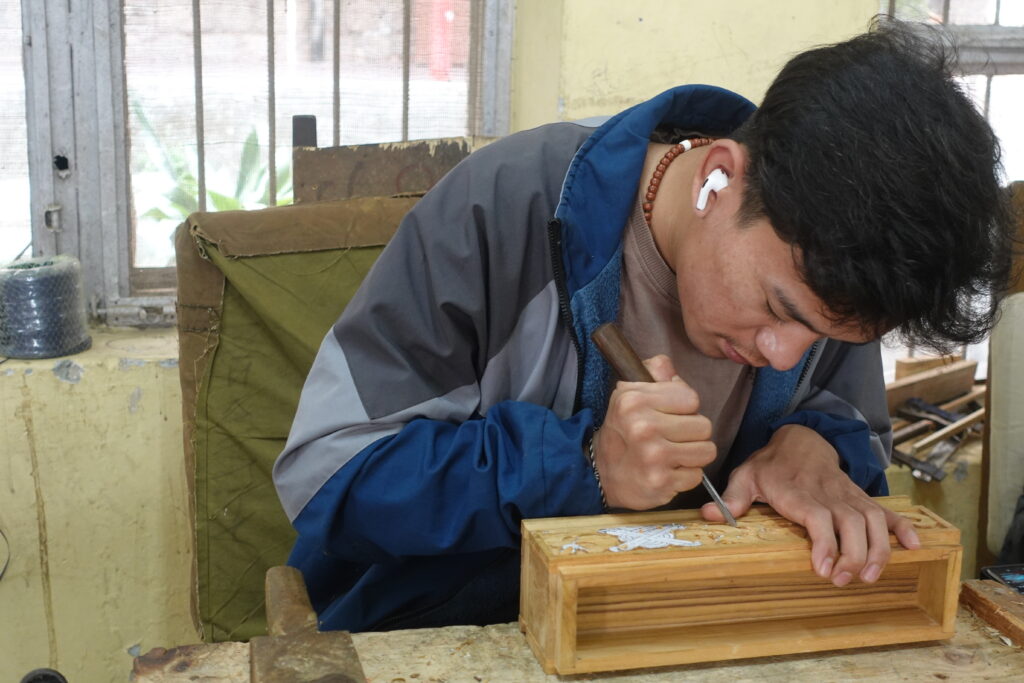
After our meal, we were led around Norbulingka by a tour guide. He first led us into a room where people were working on wooden art. The artists used tools in order to carve pictures and details. The pieces were incredibly intricate, with detailed depictions of nature and Buddhist deities. After looking at the wood artists, we took a brief break outside to observe the architecture. There were beautiful water features like golden lion spouts on the gutters and tumbling fountains, koi ponds, and stone lined rivers. The buildings were bright and colorful; they had red, green, and blue lined pillars with gold details and puffy clouds.
After our break, we visited the painters, who were creating traditional sacred art pieces called Thangka paintings. Both the wood art and the painting are considered meditative and take years of training because of the ancient traditional skills needed. For example, painters must mix and use natural pigments. The paintings were also extremely detailed. Often, there was one main focus in the painting, whether that be Buddha or another figure; however, surrounding the figure were hundreds of details. I took pictures and added them because I cannot fully describe the beauty of the Thangka paintings with words.
I found that the artists seemed to have no ego, and this deeply inspired me. These art pieces are so intricate and literally require months to complete. In the US, if an artist mastered this, I believe they would be bragging and selling their pieces for millions. These artists, however, allowed us to view their process, even though we were entering their space.
The grand finale, at least for me, was entering the Tibetan temple, where we discovered an enormous golden Buddha. When you first step inside the temple, you feel the shift in energy. The immaculate and concentrated detail inside this temple was stunning. You can spend hours looking at each intricate detail and not be able to take everything in. Once again, I am adding a picture, because the words to describe the sacred art escape me.
The best part is, you can buy all of the artworks that these artists are making in the highly curated gift shop at Norbulingka. I bought a beautiful mug and a shirt with some of this artwork on it. Overall, Norbulingka was one of my favorite stops thus far.
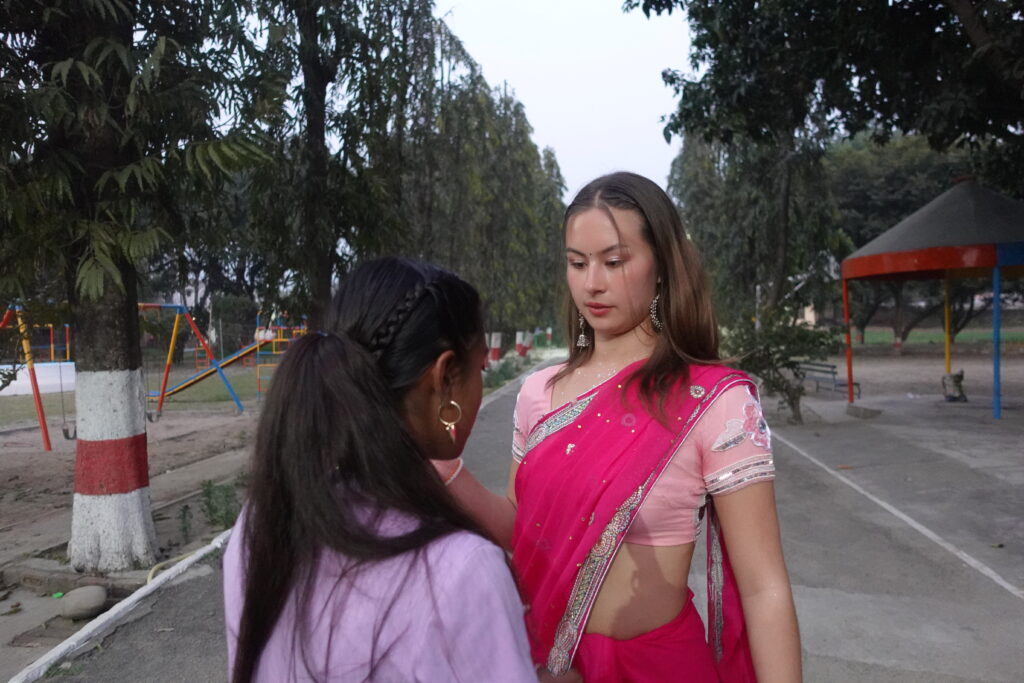
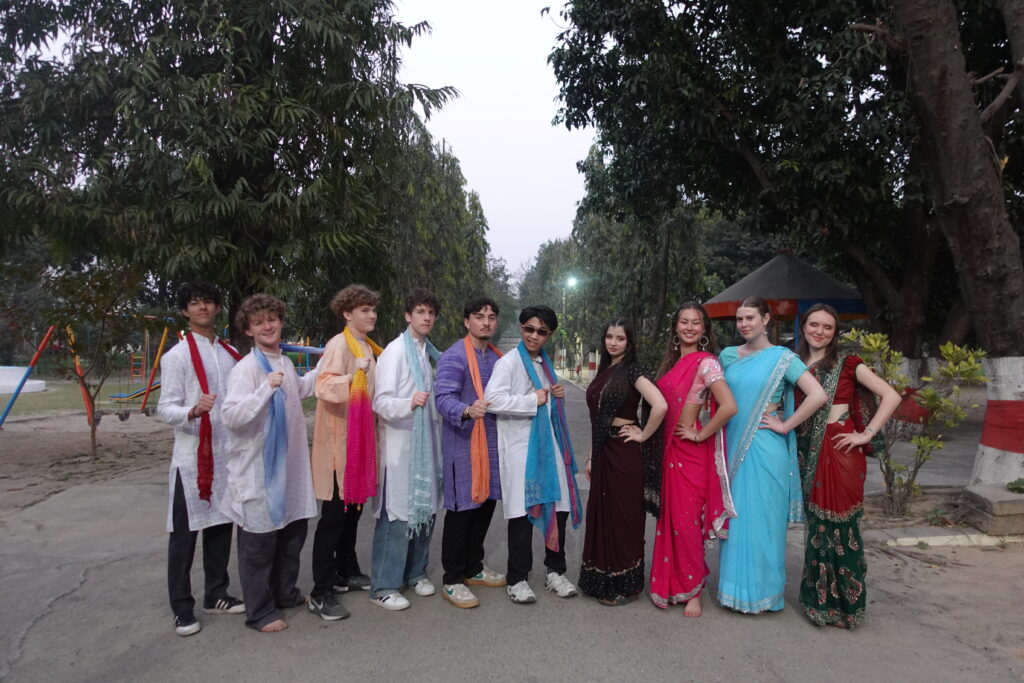
Dance has always been a form of self expression for me. I feel that dance is not just one of the most important parts of my own life, but it is also one of the most important forms of cultural expression across the world. I had been excited about learning something about Indian dance from the beginning of the trip.
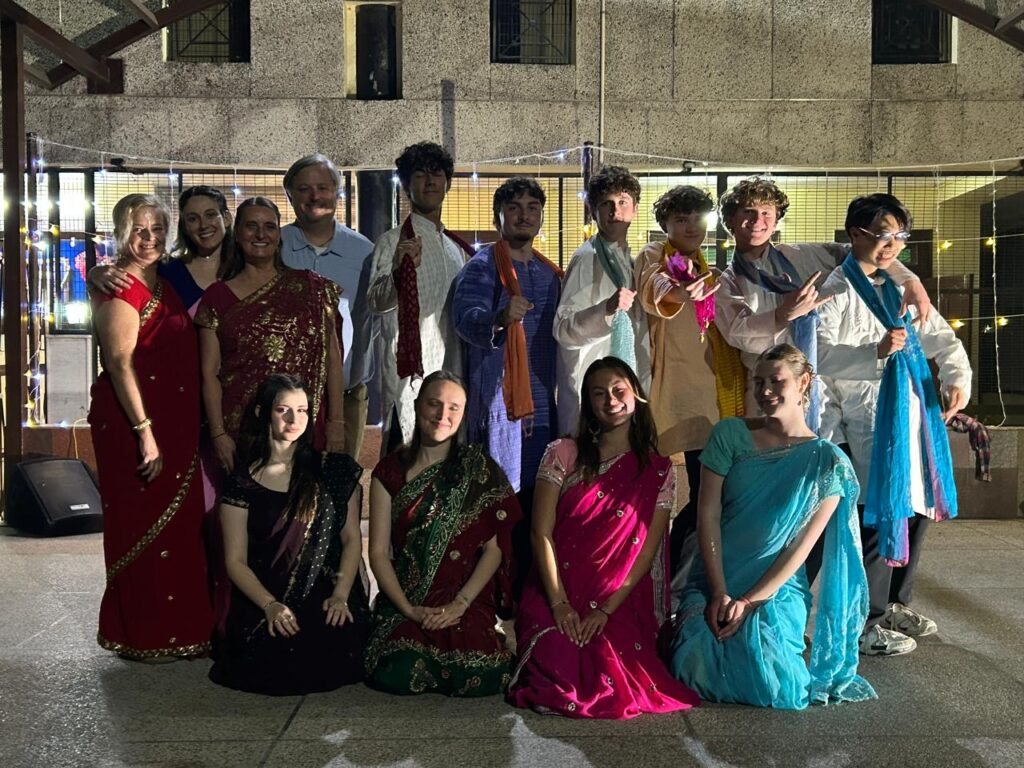
First, I was amazed by how well our class was able to learn and perform the dances after just three days of short rehearsals. I attribute this to both our class’s talent and to the incredible teaching of the older girls at the ashram. I admire the talent, knowledge, and patience of those girls!
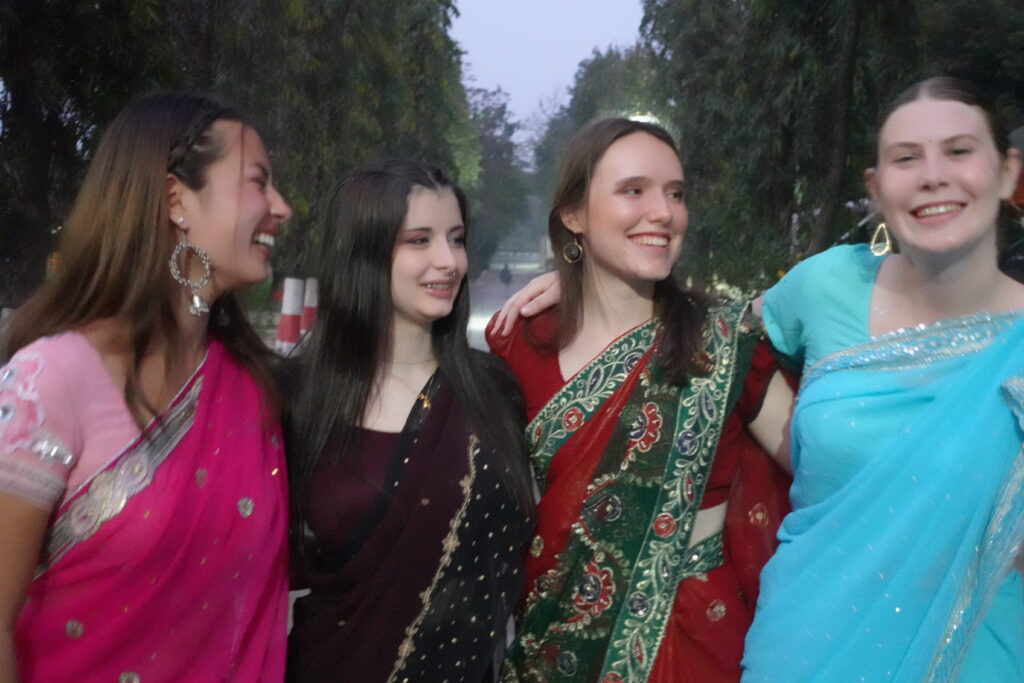
On the surface, the dances were incredibly fun, high energy and exciting to perform. The Saris were beautiful, the food was delicious, and the atmosphere was joyful. Watching the ashram kids dance was astounding to watch. The dancers ranged in both age and talent, but running through them was constant joy and delight in sharing their compositions and culture.
On a deeper level, what struck me about this whole process, beyond the general pleasure I take in dancing and the way it bonded us all, was the incredible sincerity with which the ashram kids wanted to watch us perform. I sometimes feel as if people come to watch my dance performances out of obligation or caring for me no matter what I’m doing. While I am grateful for all the support I receive, I was shocked by the earnestness the ashram kids displayed while watching us dance.
After our performance we were asked to do it again. I was immediately confused at what they were asking for, because surely they didn’t want us to just repeat the exact dance we had just done (all of them knew the dance). However, that was exactly it. They wanted to see us repeat the dance they had taught us. Never mind that it was far from perfect; they seemed fascinated.
I have heard from faculty and alumnae of the trip that the ashram feels like a family. Like our family. I was so surprised to find that this is entirely true. They remember every Mount Madonna student. They love, care-for, tease, play, get frustrated with, and miss us just like family. Seeing how much we mean to them, just our presence, really puts things in perspective. To be celebrated and unconditionally loved just for showing up is an indescribable feeling. It is an extremely humbling and moving feeling I will not be forgetting soon.
Nikowa D’Costa-Hemp
A New Way to Play
Staying at Sri Ram Ashram amazed me so many times and in so many ways. The one thing that stood out to me the most, however, was the time we spent at play.
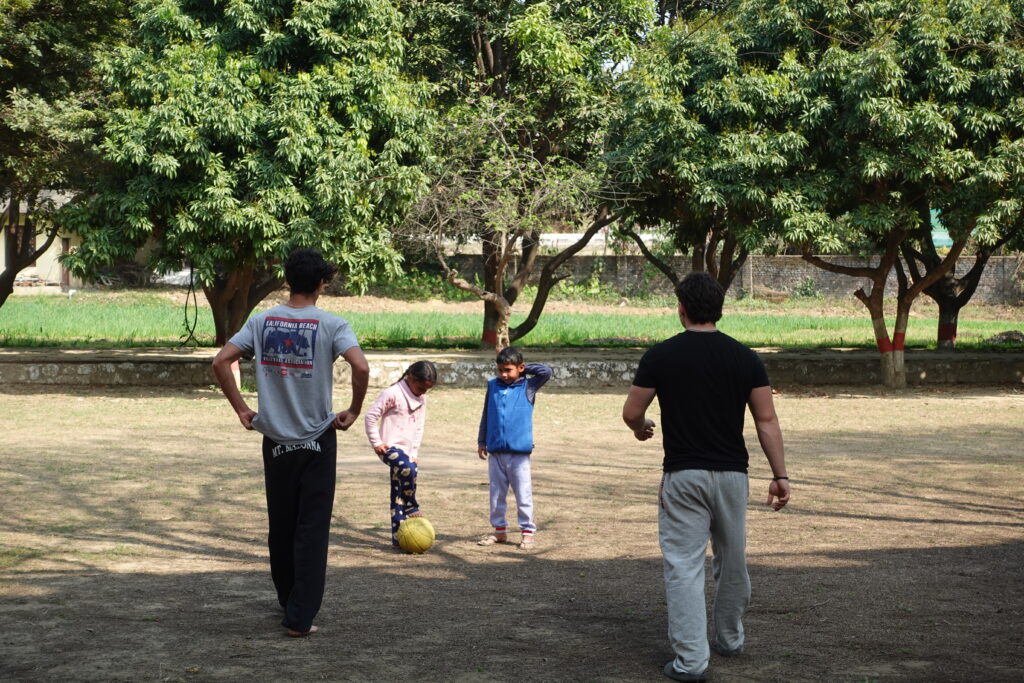
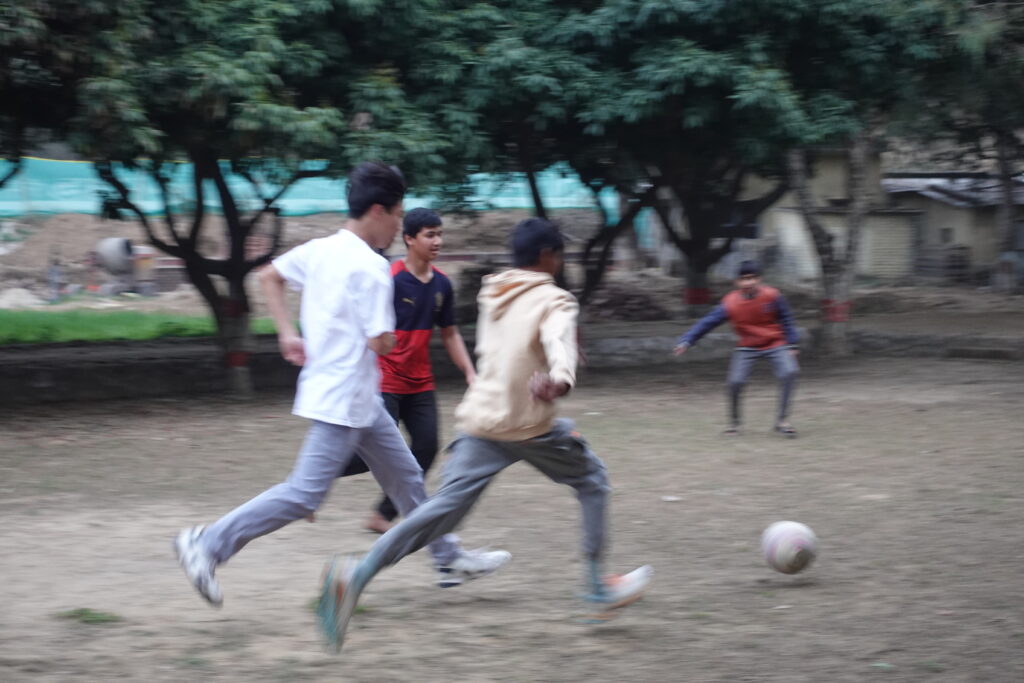
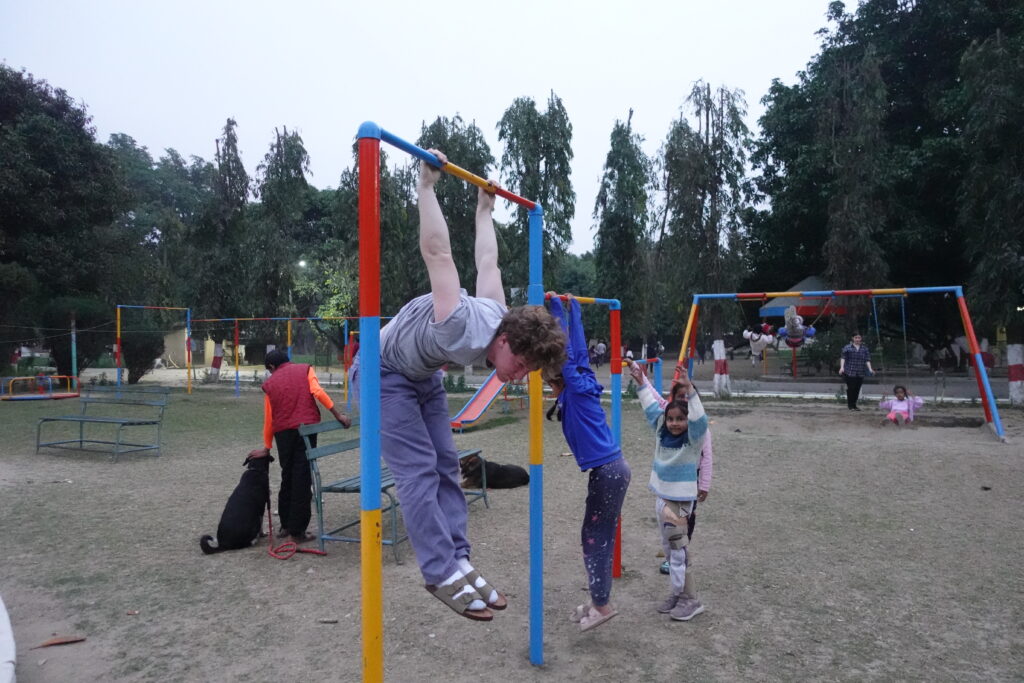
Every moment that is not spent eating, sleeping, studying or praying is pure playing. The type of play that we are used to in the United States is very different that what we did at the Ashram.What these kids do is one hundred present untamed, unadulterated fun. What struck me most about it is that the games weren’t about skill for them. It didn’t matter how good or bad you were. Whatever you were doing in the game, all that mattered was that you were trying your best. There was no judgment about who was the best or who was winning. We were just having fun for the purpose of having fun.
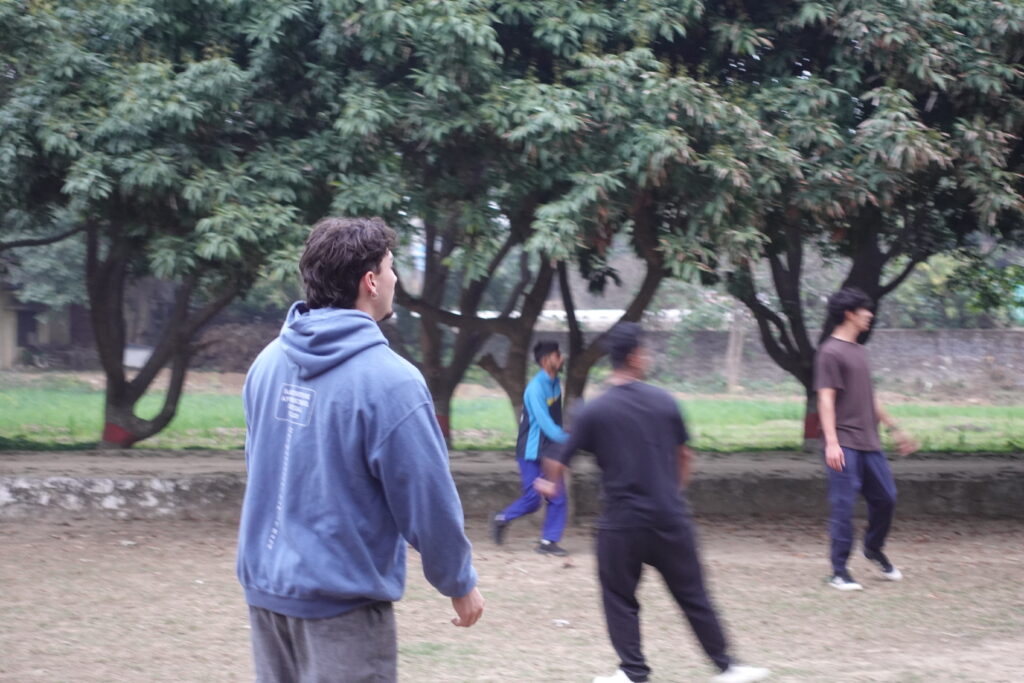
I notice that in America, we think about playing games as a way to advance our skills or to be the best, but we often forget the joy in just playing for the sake of fun. This is definitely true for me personally. I get very competitive and the only thing that matters to me when I play games is winning. What was so fun about playing with these kids is that winning was just a perk of having the most fun. That sounds cliche, but it is the truth. All the kids cared about was fun. I had some of the most fun, ridiculous and incredible play of my life in a dirt field with a frisbee and a soccer ball. All thanks to these incredible kids and the short time we got to spend with them.
Mateo Borrego
Everything is Temporary. And That’s Okay.
Today we had our last day at Sri Ram Ashram. The night before, we had a farewell party where many of the kids performed. We also performed a dance that we were taught by some of the ashram kids. Leaving the ashram for me was a very sad experience. I feel like I am leaving a second home. All the kids at the ashram are so kind, loving, and funny, and they make you feel at home. They immediately treat you like their bhaiya (big brother) or didi (big sister), and this was a very touching experience for me.
Although we were not there long, I felt like I had made really great friendships and had many conversations that meant a lot to me. Although there was a language barrier, I nevertheless felt a deep connection to everyone there. I will definitely miss everyone. I will miss playing games with them, having each meal together, and talking with them about their lives. The kids there every year seem to make friendship bracelets or jewelry for all of the MMS seniors who visit. I was gifted six bracelets, and they mean a lot to me. The bracelets show how much they appreciate and care about our visit, and I think that is really amazing. I hope they don’t break.
In practical terms, I learned how to eat with my hands the proper way. I honestly find it optimal, and in some ways better than eating with utensils. There are definitely some downsides but that’s fine.
In conclusion, I feel like I should say what I learned, and I learned a lot of things. The thing that strikes me the most, however, is that nothing lasts forever, but I have learned to find peace in that truth. More importantly, take every opportunity you can and make the most out of your experience because you will thank yourself. That is what I did at the ashram, and now the experience is a core memory that I will cherish for the rest of my life. Crazy how that works… I hope I can come back someday, and hopefully that day is soon.
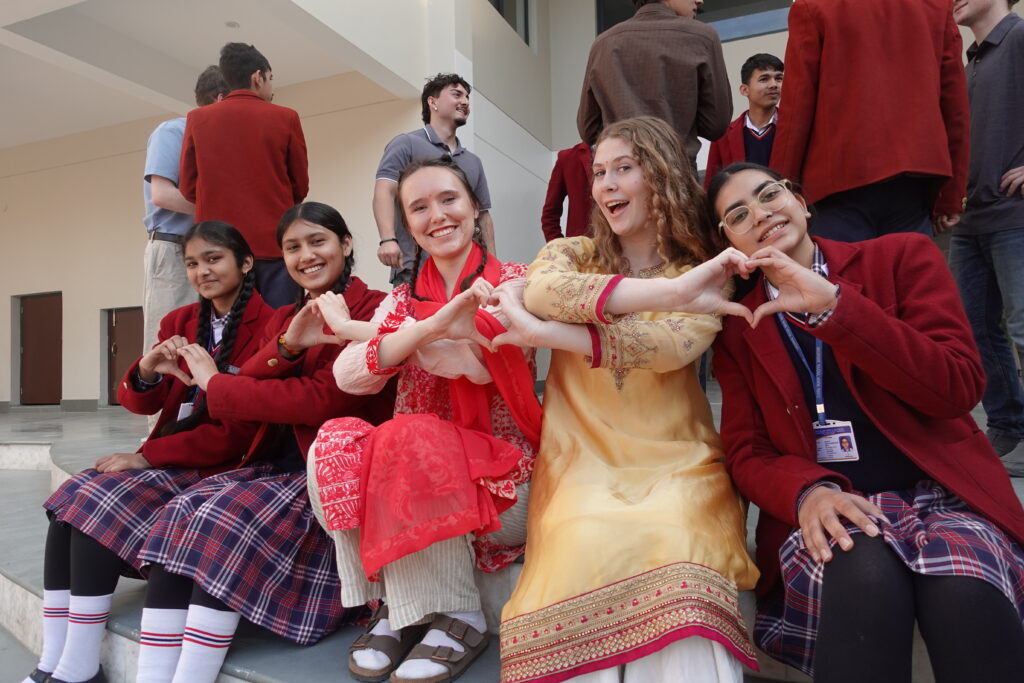
I arrived at the Sri Ram ashram—Mount Madonna’s sister organization in Haridwar— exhausted and ready to lie down and rest. The second I stepped off the bus, however, my weariness disappeared and was replaced by warmth and a peaceful alertness.
Let me explain. I’m still not—and don’t think I ever will be—used to the greetings we receive in India, especially from the children. With each new meeting, shock jolts through my body at the unconditional love, admiration, and interest with which we are greeted. Every time we are accepted by new people I feel momentarily uncomfortable and undeserving, and then viscerally grateful. I’m accustomed to a culture of judgement, cliquiness, and social anxiety; my fear of social interaction and strangers runs deep. This fear has chased after me as I embark on this journey. Because of this reality, each welcome I’ve received has been deeply emotional for me. I can almost physically feel my brain chemistry being challenged.
So, returning to that moment exiting the bus on our first afternoon at the ashram, you can imagine how I snapped into a charged wakefulness in response to the most magical greeting we’ve had yet. The weight of my exhaustion and the luggage on my shoulders seemed to lift as a tiny hand grabbed onto me and pulled me down the steps towards a gaggle of smiling faces.
Many of the young children speak to us in Hindi, so we communicate through body language, smiles, and play. Though for the most part we can’t understand one another, we share a few words: “how was school?” “Good!” Or “Didi, come play!”
Didi is the Hindi word for big sister, and it is how the young kids address the girls in our class. After hearing this word echoing around me, summoning me, for only a short day, I became as responsive to it as I am my own name. Each time I hear a joyful little voice call “didi!” from behind me, my face is fresh with smiles at the realization that I am being addressed, and I happily allow myself to be pulled this way and that.
The most meaningful part of being at the ashram for me is spending time with the babies. My idea of a perfect day is genuinely just holding a baby. I never get tired of being with them (even when I am covered in spit-up). At home, I don’t have many opportunities to spend time with babies, so I am soaking-in every moment.
Holding a baby is a form of meditation. One cannot help but be present in the moment, feel connected and slow down. Being accepted and loved by the babies and the children is showing me that I can be both empowered and humbled at the same time. This is a radical feeling.
Cora Kayne
A Deeply Foreign Encounter
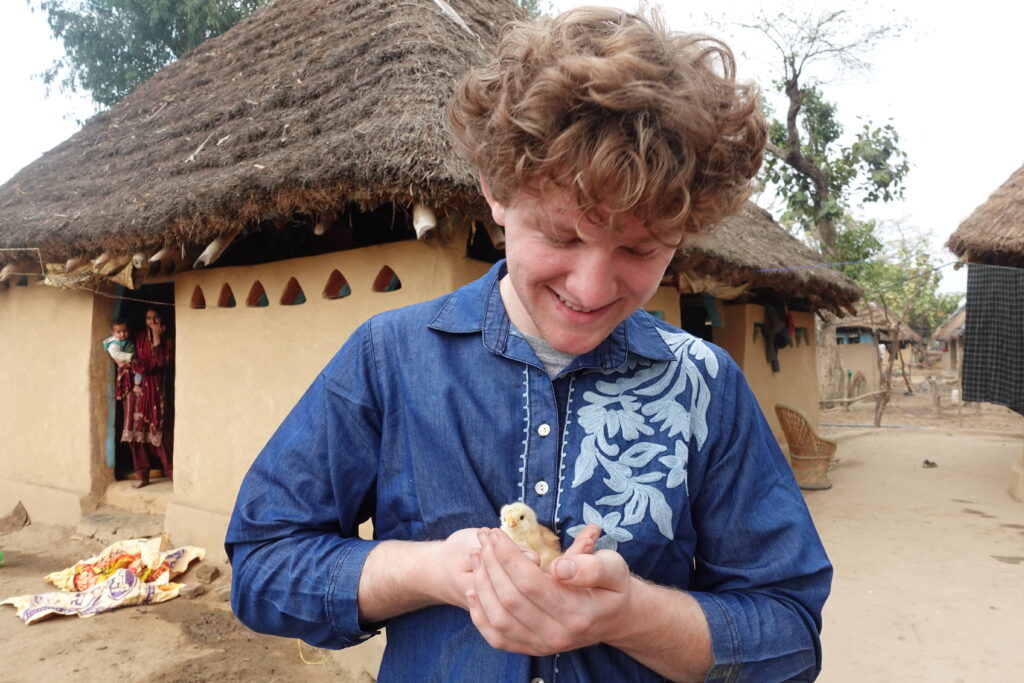
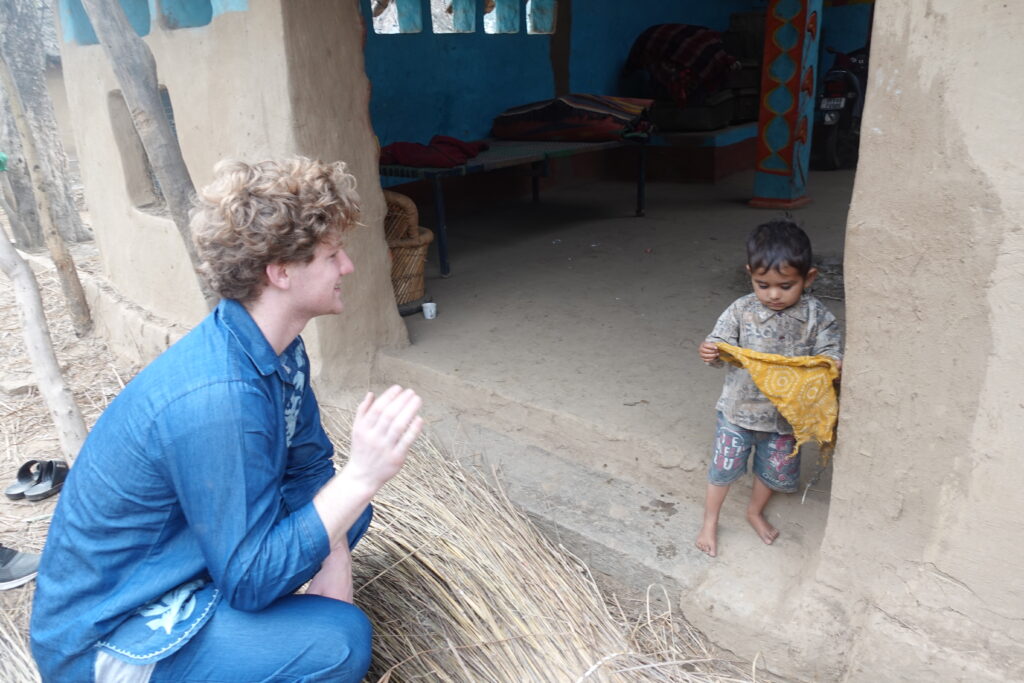
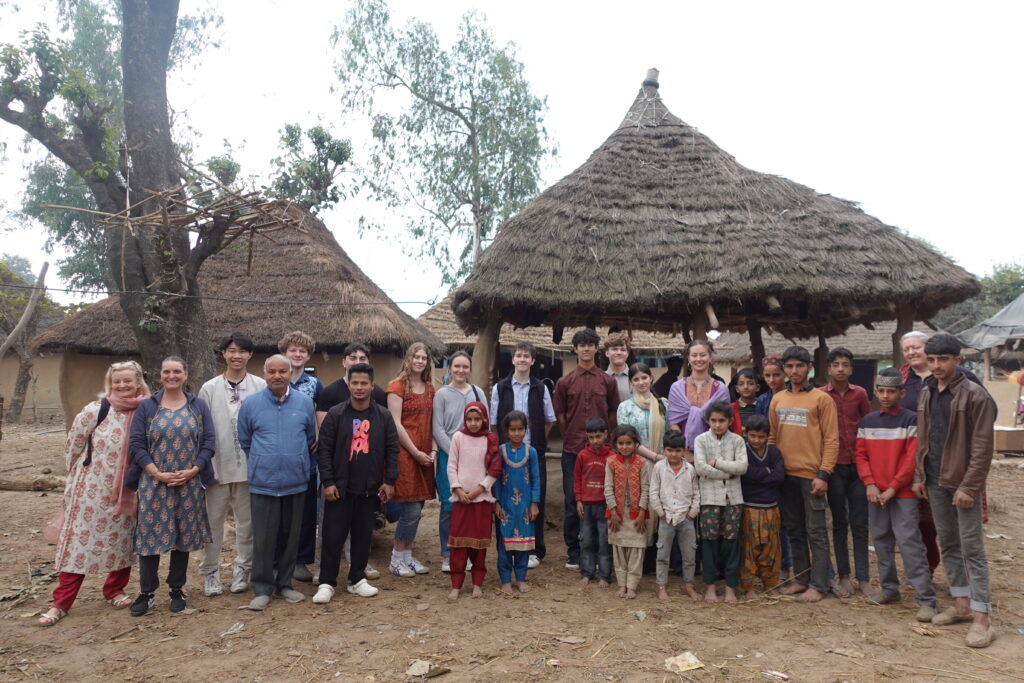
Today, the day after arriving at the joyful and comfortable Ashram, we took a bumpy trip on a tractor to a village populated by Gujars. The Gujars are a group of people, formerly nomadic, who took refuge from Afghanistan in India and are funded by the government to live in accordance with their traditions. In this case, the Gujjar people live simply, building their own houses and making money by selling buffalo milk.
When first arriving, I instantly noticed their huts, which were built of straw and stone. The straw that is used on the roof is waterproof and is stacked in a certain way in order to protect from rain. One of my main questions was how one decides they want to live a life like this. For the Gujar people, you are born into this lifestyle. Men are able to go to school, but often they choose to stay home and work. Women have to stay home.
Another thing I wanted to know about was if they ever create art, whether that be dancing, singing, painting, etc. They answered that they do not have a creative outlet. We also asked if they engage in play, and they shook their heads. One of our chaperones had a theory that their lifestyle is art in itself; building their houses by themselves, some painting the inside a beautiful blue with red accents, and adding structural additions like special-shaped windows. Raising animals from their first breath to their last seemed like play to us as we watched them with their baby cows and water buffaloes.
Our trip to this mud and thatch village was fascinating, and I will never forget the Gujar people.
Eli Moody
Meeting through a Language Barrier
Your understanding of places shifts entirely once you stop seeing them as a destination or an item on an itinerary and instead choose to see the people who live there. Today we visited a Gujjar village on the first day of Ramadan. The entire village consisted of the extended family of four brothers from Afghanistan, sharing land, but more than that, sharing a way of life.
Their world revolved around the simple things that many of us take for granted. Building a roof takes the whole village, and because of that, it takes far less time than you or I might expect in America, as the community comes together with a quiet sense of kinship to get what needs to be done, done. A chaotic flock of chickens, dozens of buffalo, and humble goats were the only companions they seemed to need.
What immediately struck me was how self sufficient everything felt. When a house needs to be rebuilt, they do it themselves. No contractors and no delay, just a hard day’s work. This made me realize how different independence looks when it is not a choice but simply the reality you live in.
Despite our differences in lifestyle, what stood out was not hardship or sadness, but warmth. Every interaction I had was filled with kindness and curiosity. Language barrier aside, curiosity and the willingness to welcome us never felt forced, only genuine. I left realizing that while nearly everything about their daily life felt unfamiliar to me, the sense of family, pride in their work, and quiet generosity felt completely universal.
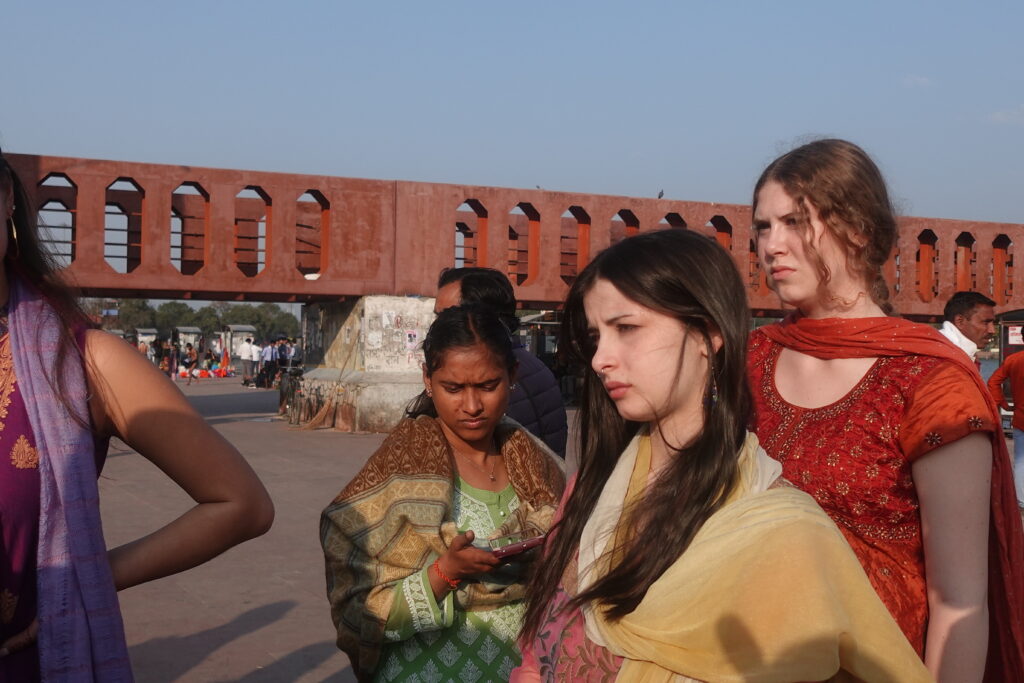
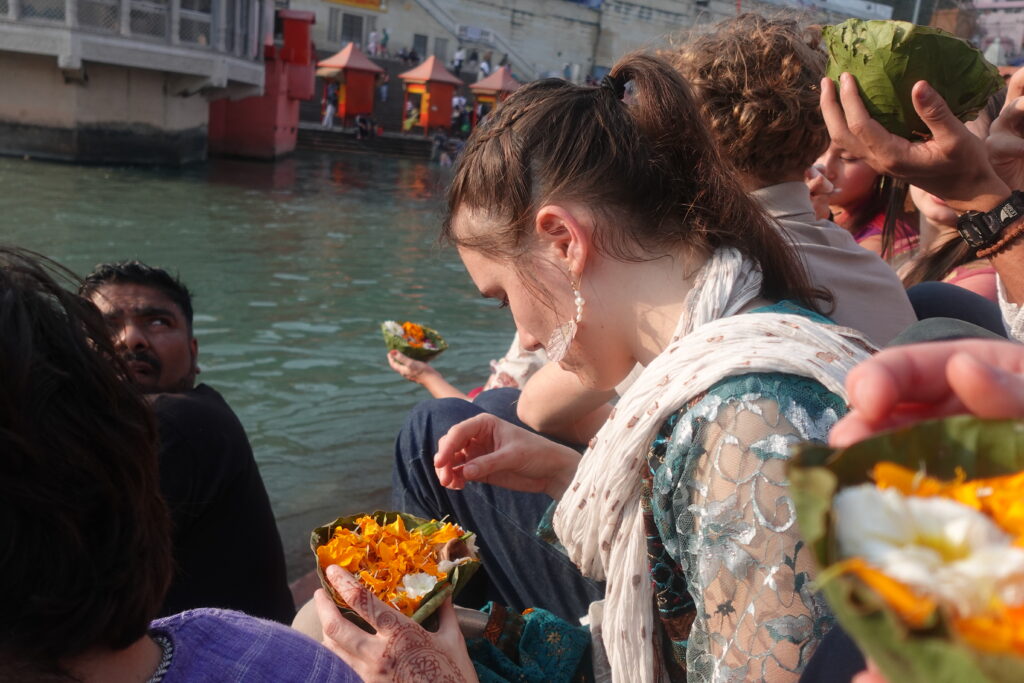
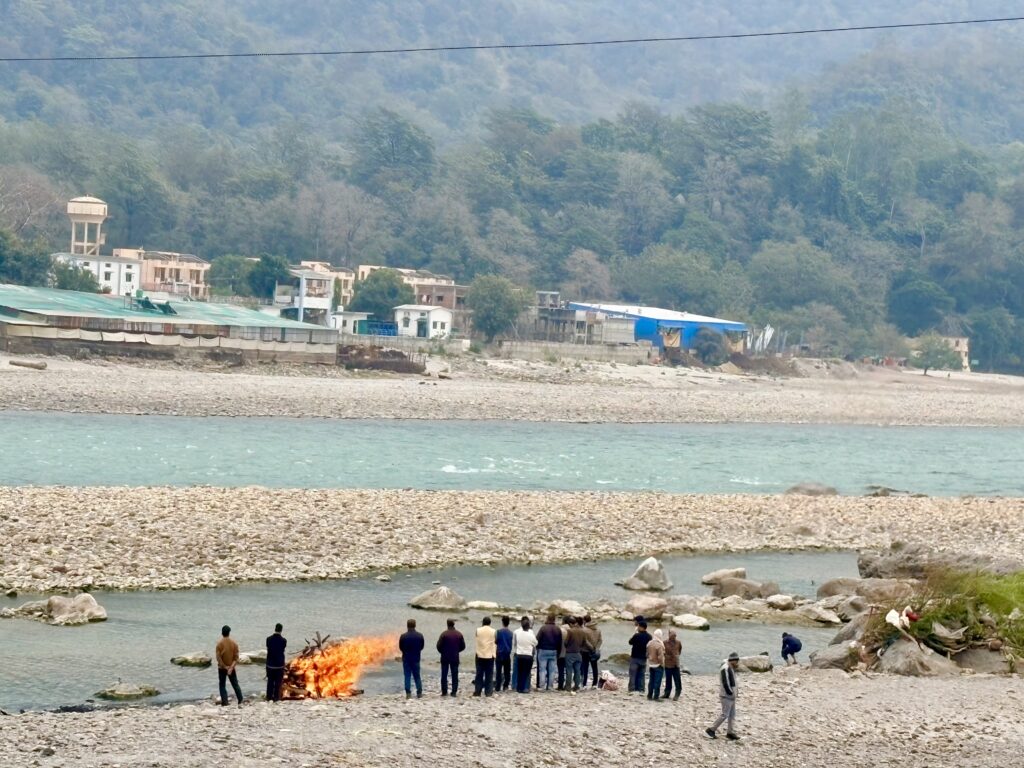
This evening, we had the opportunity to participate in the Hindu ritual of Hari Ki Pari, a fire ceremony (Aarti) on the banks of the Ganga river attended by thousands of people every evening at sunset.
I knew very little about the Ganga Aarti except that we would light a boat and let it float down the river. But everything I had assumed was so wrong. As the local sunset hour of 5:30 approached, flocks of people arrived at the steps along each side of the river. Everything was beautiful down to the smell of the incense as the monks burned little piles of wood. The river was a clear bright blue, and people were bathing and blessing themselves with the water. We got there an hour early in order to get good spots on the river. Thanks to our guide Asis, we got a spot directly across from the monks that performed the chants and offerings to the Ganga. It was quite a long time of chanting but during that time people chatted and watched. Pilgrims at the riverside would pour milk, salt, and marigolds into the water as an offering. It was a ritual to honor the gods and the dead. You could buy these small leaf boats stitched together with twigs and filled with flower petals. A single candle of cotton and loose wax nestled in the center. As the chanting came to an end, everyone started to light their boats and float them down the river.
I chose to honor my grandmother with my boat. I never met her. She was murdered before I had the chance to meet her in this life. But I came to know her through my moms’ stories and through pieces stitched together by the people who loved her. I know she was strong. I know she laughed loudly. I know she carried dreams bigger than the town she lived in. And I know she wished she could have traveled the world, but she never got the chance. So I chose to let the boat go with a wish that even if her body couldn’t go anywhere, her soul could travel the world just as fiercely as she lived it.
Kyler Nishimura
Insight from an Expert
Lucy Yen
When we found out that we would be meeting Ronjona Banerjee, we were all very excited, because we were very interested in hearing what she had to say. We would be meeting her at dinner at our host Shantam’s house. We all knew that she was a journalist who focused on major social issues and politics, but we could find very little out about her otherwise. Interested in learning about what the news was in India from her perspective, we were surprised to find ourselves talking about the Epstein files. We didn’t know that the files had also heavily affected India, and we soon learned that there was a massive coverup for all the names mentioned.
This led to a conversation about how we notice in the news that almost anyone, given a wealth of power and money, becomes incredibly corrupt and even sociopathic. We discussed whether or not human nature is to become corrupt, or whether a certain type of person, prone to corruption, naturally gravitates towards power. Whether that level of depravity is innately human, and wealth and power finally gives you one ability to indulge it, or if wealth and power breeds that depravity, is a question we all share.
We also asked her about where India stands in the progression LGBTQ+ rights. We had researched this, and the answers seemed unclear. She explained how it used to be illegal to be gay, but recently a law passed saying that you now couldn’t be prosecuted for it. That being said, gay marriage is still not recognized by the government. She also explained how these issues really only mattered for men. She said that women don’t really face any issues because quote “It doesn’t affect the patriarchy so nobody really cares.”
For men, homosexuality was a huge issue when it was illegal, because men commonly hold hands in India unromantically. Because you have to pay for bail, many police officers took advantage of this propensity for hand holding, and huge numbers of men were wrongly arrested. The idea of homosexuality was also used to excuse gang violence and violence against lower castes.
Ronjona also explained that caste has nothing to do with how much money a person has. This is a misconception many people carry. Caste is entirely a birthright, and you can discern caste based on a person’s last name, whom they associate with, and the color of their skin. Caste, religion, and one’s region of origin are all ways people discriminate against each other in India. The country is so diverse and full of so many different kinds of people that the ways in which to judge one another are endless. Ronjona explained that even the types of food people eat is telling of their “place” in others’ eyes. Vegetarianism is linked to religious practices, but it is also something reserved for the wealthy. The poor eat meat.
Overall, our talk with Ronjona was very interesting, because we got a different look at how people viewed news across the world, and what politics are like in India. Although we had learned about India and the news in the country, we hadn’t talked to an expert on the subject, so it was interesting to compare her views on the world with ours and other journalists we interviewed in DC.
Hans Hagge
Sri Ram Mandir School
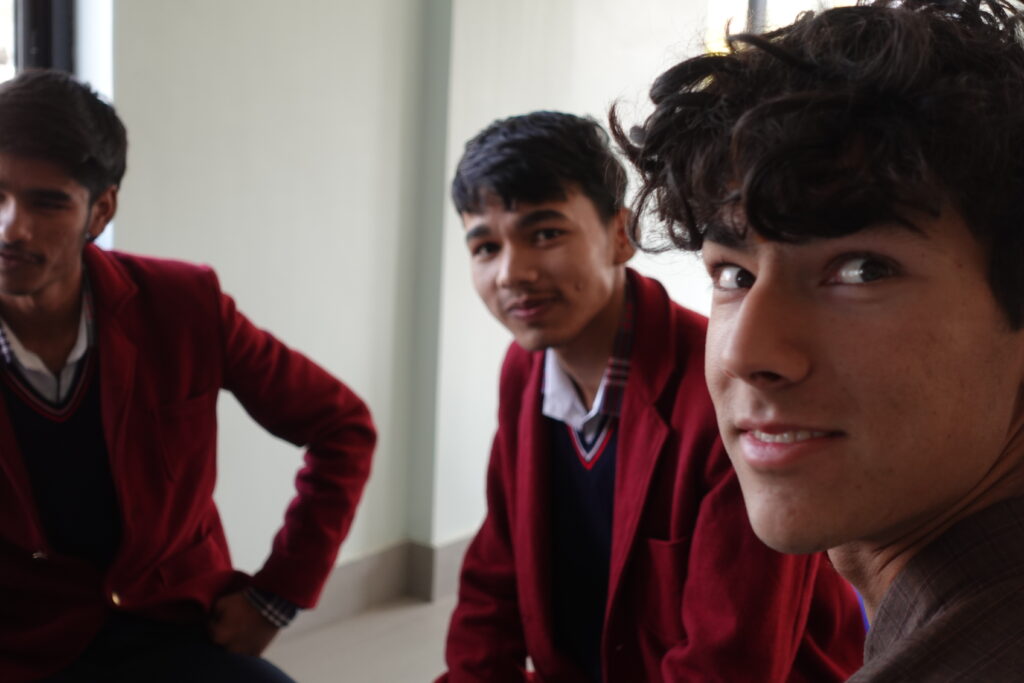
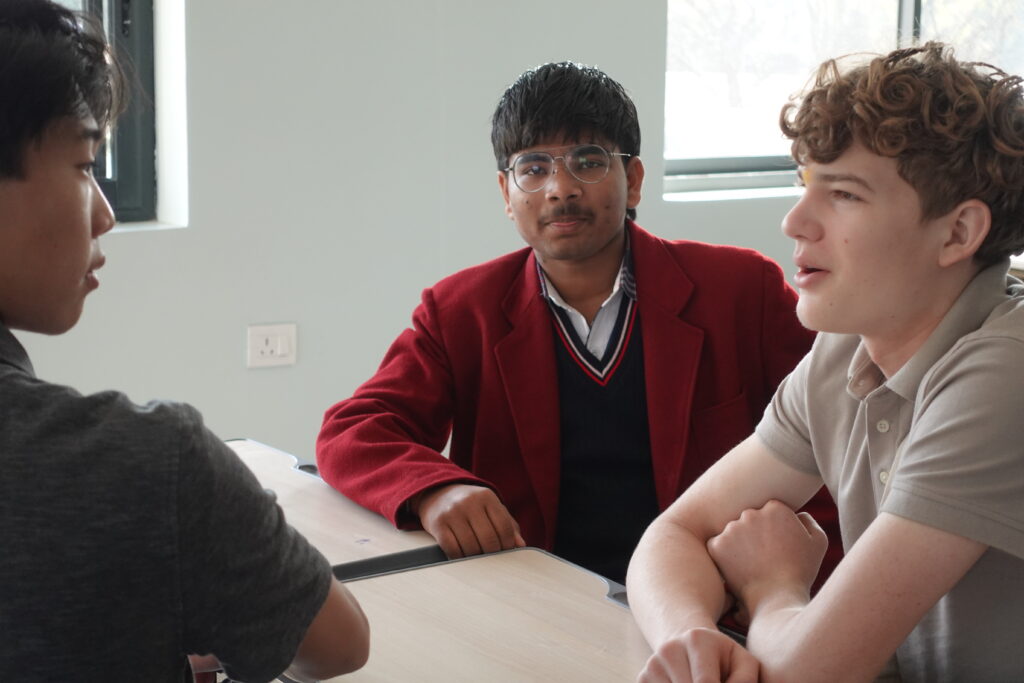
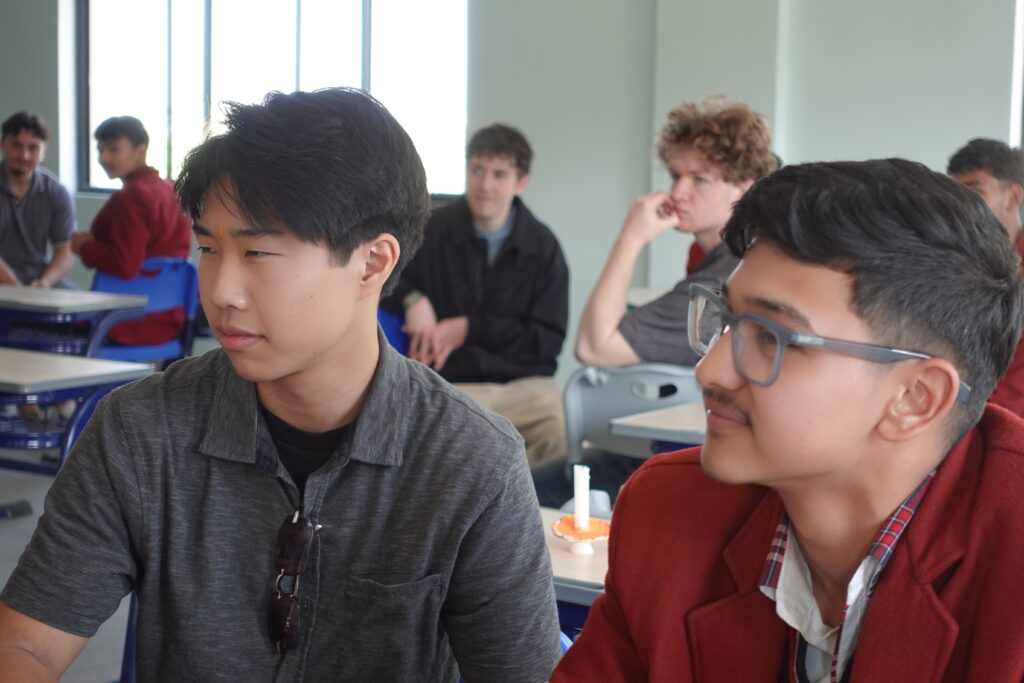
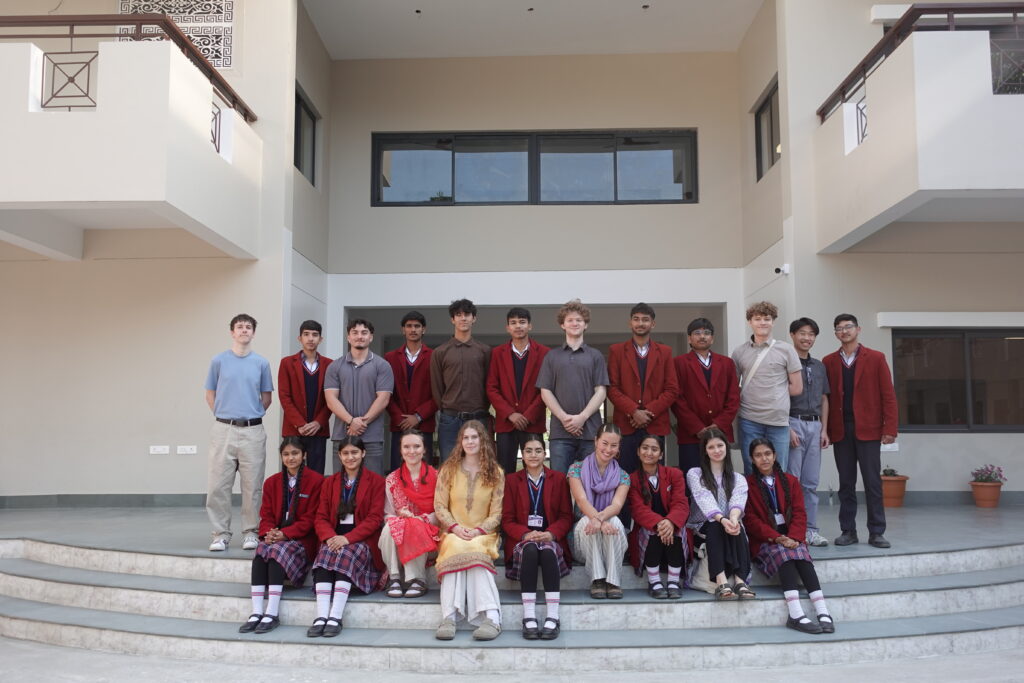
Before arriving at Sri Ram Vidya Mandir (the school associated with the Sri Ram Ashram), I expected there to be a disconnect between cultures. When I arrived, however, the first thing I saw was a united assembly. Everyone stood in lines organized by grade level and by the length of their arms. After they lined up, someone on the speaker gave commands like “Attention” and “At ease.” Those commands seemed to unite them. The students had a lot of discipline. By implementing discipline and wearing uniforms, they created a sense of unity. This made things less about where you come from and more about shared similarities. When fewer things separate people, there is more acceptance in friendships.
I ended up talking a lot with students in 11th grade. There wasn’t as much disconnect as I had expected. Kyler and I started talking with them about music and different genres. One student mentioned that he enjoyed lo-fi and English songs. He even talked about a couple of songs that Kyler and I enjoy and know, which really surprised me.
Kyler and I talked with two Indian students about how we could give back to our communities. I spoke about keeping in touch with my family. My family has done so much for me that it is impossible to repay them fully, but I think the best way to give back is by giving them your time. They worked hard to help me succeed in life, so the best gift I can give in return is staying connected—calling them, visiting them, and making time for them even when I am busy.
Kyler talked about careers that would allow him to help others. He mentioned that his uncle was a firefighter, which he respected, but he said he didn’t want to become one because his uncle developed lung problems from the job. Instead, Kyler talked about possibly becoming a police officer. His main point was that he wanted to serve and give back to the community. I also learned that one of the students wanted to join his family business as an electrician.
The students I spoke with ended up bonding over music, math, and games. I didn’t expect that we would connect so much. I thought there would be a large cultural disconnect between us, but that wasn’t the case.
Now, I can see myself keeping in touch with some of these students. Because of this experience, I realized that there are many people in India with whom I can connect through shared interests and similarities in our cultures. This was not a huge realization, but I did wonder beforehand whether they would be as interested in other cultures we are. For example, I enjoy anime, which comes from Japan, and I wondered if they would also be open to art forms and music from other cultures, or if they mainly focused on their own.
It turns out they may be more open to other cultures than I expected. This experience has helped me develop a broader understanding of the world and a clearer idea of how connected people can be, even across different countries.
Lucy Yen
Global Perspective on Open-Air Markets
Shopping in Dilly Haat was not what I imagined it would be. I expected to be overwhelmed and feel completely out of my comfort zone. The first thing that surprised me was how formal everyone around me looked. Everyone was dressed nicely. There were many foreigners, and there were no stampedes of people to navigate. Dilli Haat is unique in that it is run by the government and the Delhi tourism and transportation development corporation. So it showcases artisan goods from all over India representing their areas’ wares and crafts. There was lots of cashmere from Kashmere, perfumes, handmade puppets, etc. The place is clearly for tourists as it is an amalgamation of goods from all of India. Despite this, it had a very honest feel to it.
Sellers were, in general, honest and seemed to enjoy participating in bargaining. The stalls were well organized, clean, and friendly. I was with Carson and Shannon who are Dilli Haat cashmere buying champions. This helped me discover the best goods and bargain for the best prices.
I have been to other open air markets in Thailand, Taiwan, and Mexico, and all of them had more of an air of regency and demand from you as a customer. This market was the first one I have been to that felt playful. I also felt more trust in the sellers because it was government run, so I felt I could trust that no huge scams were happening right under my nose.
Another thing I noticed was how many of the shops were selling the same things. This I have found to be pretty true across the board when it comes to these kinds of markets. The Cashmere and certain wares are very high quality and specific to India, but other goods, charms and decor I have found in every open air market I’ve been to. For example, I found the exact same elephant charms I bought for myself in Thailand two years ago. I wonder where they are sourced, what items are really region specific, and what is worth bringing home.
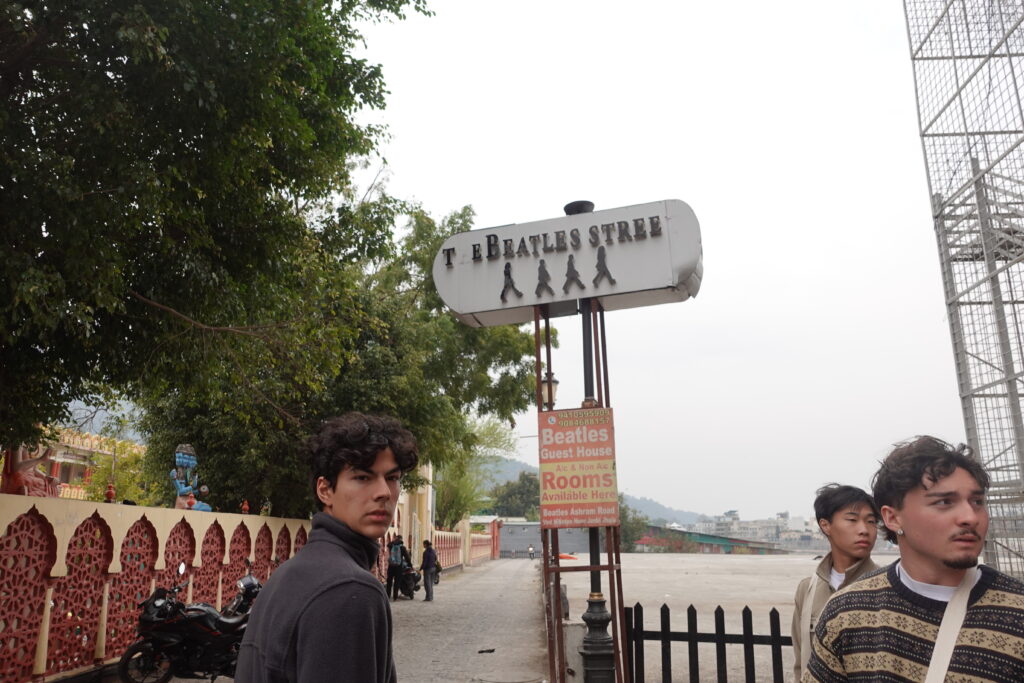
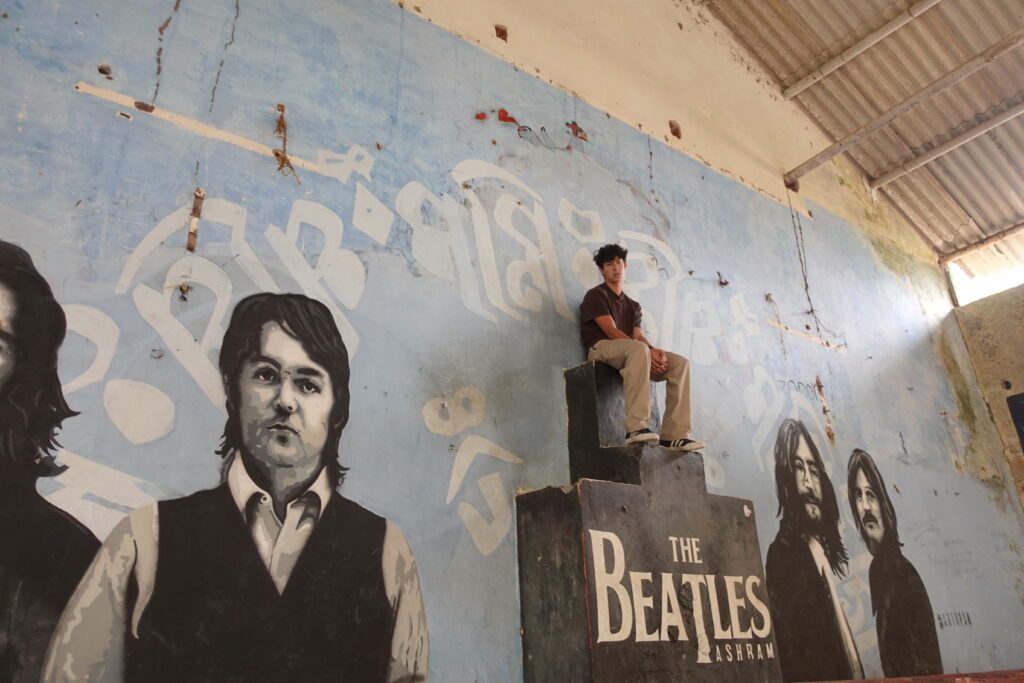
The Beatles ashram is where the Beatles lived for a month in 1968 to learn transcendental meditation from Maharishi Mahesh. During this time they also wrote most of the white album. We stopped on our way from Dehradun to Haridwar in order to visit this historic place.
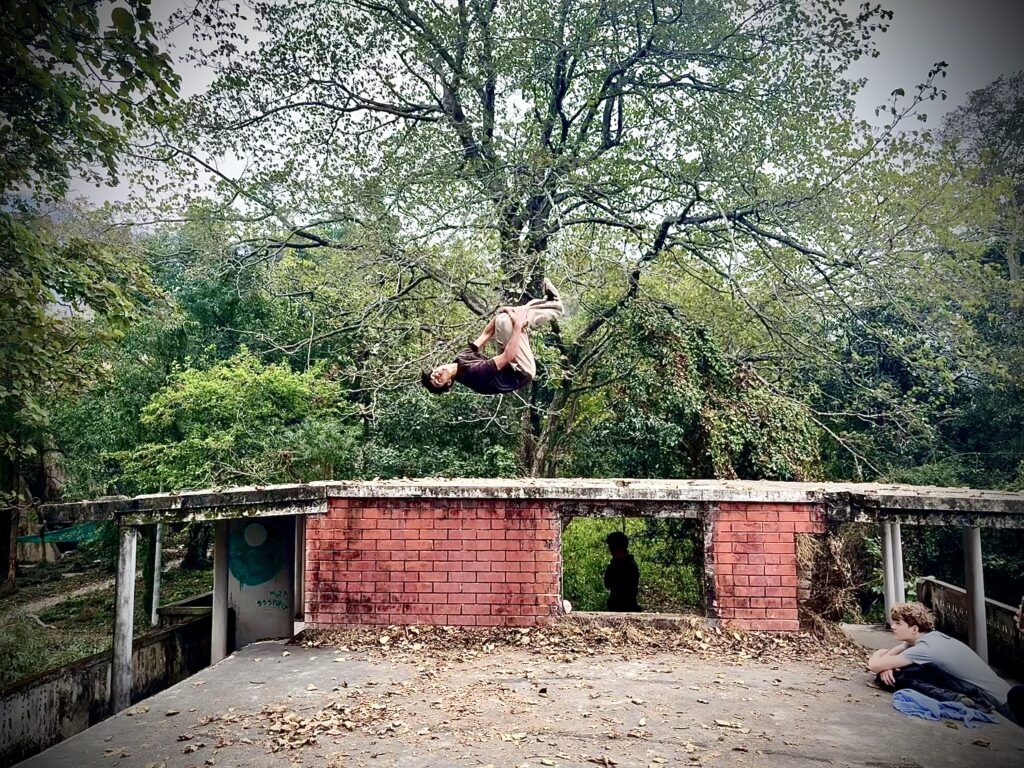
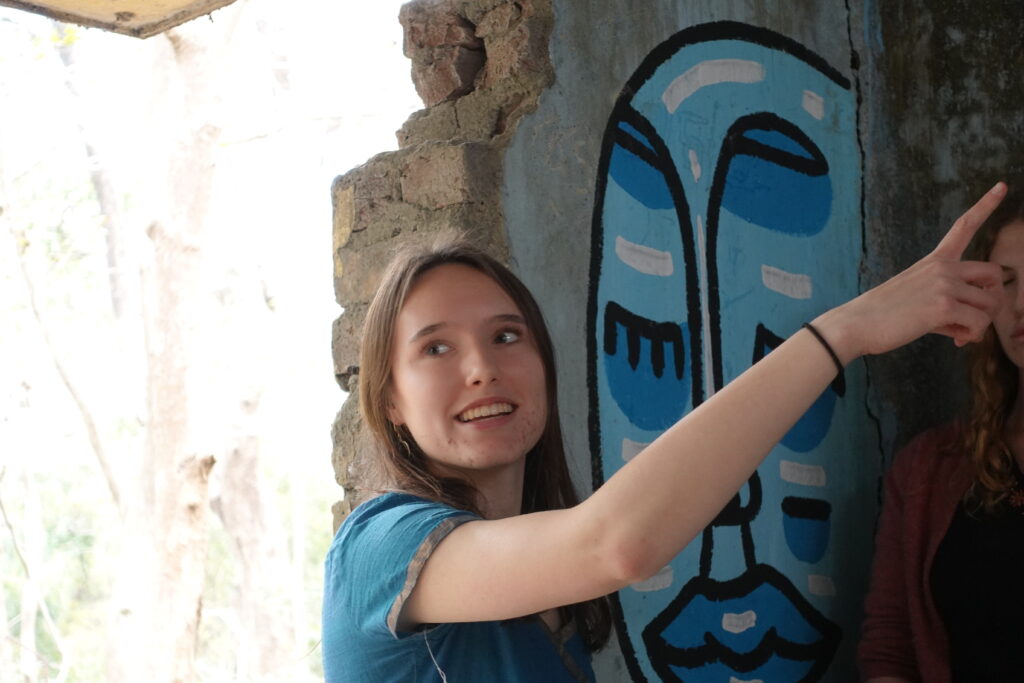
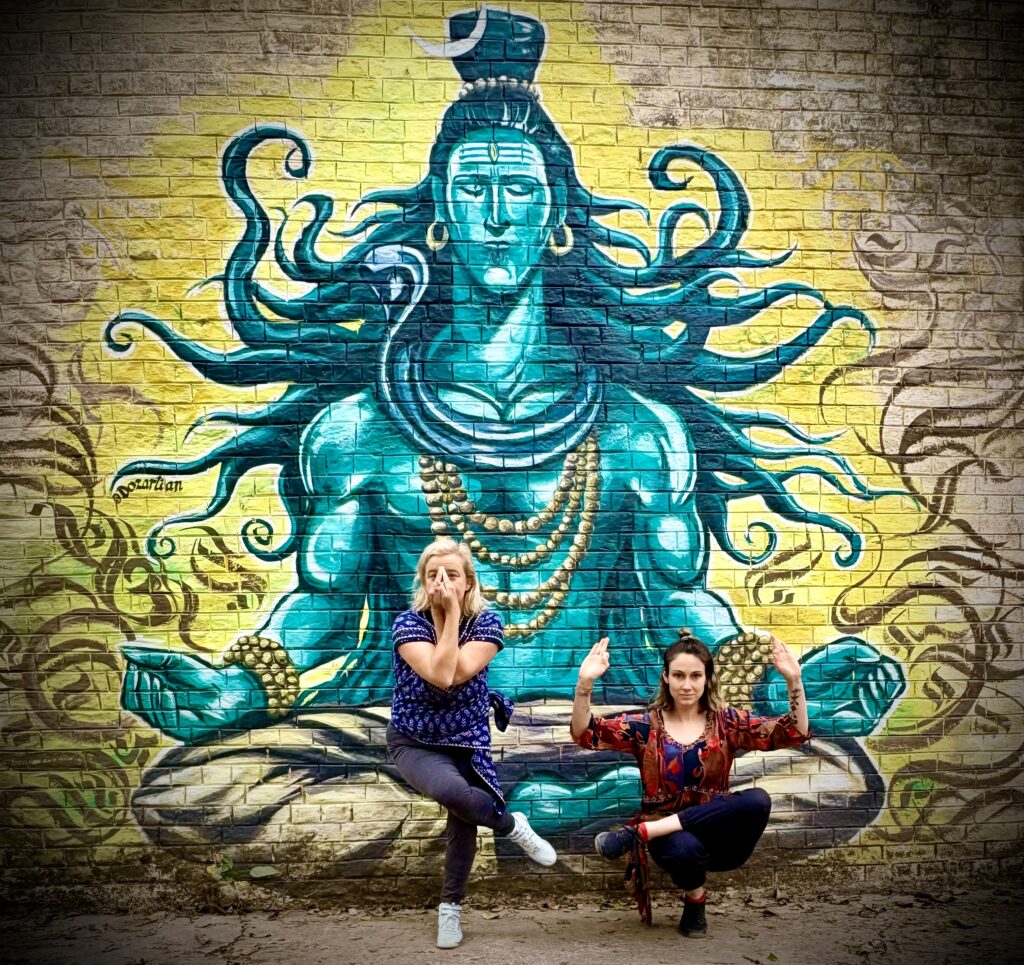
The ashram itself is old and falling apart a bit. It has incredible graffiti artwork on its crumbling walls, which I think is what gives it its authenticity and is what makes it so special. Right now they are in the process of remodeling and they are fixing all of the buildings and painting them all white which is incredibly sad, in my opinion. What makes the ashram so cool and unique isn’t just that the Beatles lived there, it is that they left their mark in the form of art and expression in all of the unique and incredible buildings.
The Beatles Ashram was impactful for me for an entirely different reason. After exploring and admiring the artwork, Chelsea took Mateo, Lucy and I to the roof of one of the buildings which had a view of all of Rishikesh and the river Gunga. We then spread out on the roof and did a five minute silent meditation. I thought, at that time, that I had felt India and I was fully here and experiencing everything that I could, but during that meditation I finally got a chance to breathe and just be. After we finished the five minutes I finally felt like I had arrived. I felt like I was actually in India for the first time. Before the meditation I was just going from one thing to the next and I was trying so hard to experience all the things that were available, but in that meditation I got a chance to pause and really feel the difference. I am so grateful that I got the opportunity to really connect with “mother India” in that way.
Rosemary Konviser
Ticket to Ride
After traveling so far that it feels like we have gone across the universe, I was particularly excited for one stop: the Beatles ashram. We learned today that the word “ashram” means to come, to leave, and to learn. This is what the Beatles hoped to do in India. In 1968, the Beatles spent several months in Rishikesh with the intention of learning about spirituality and practicing Transcendental Meditation, a technique introduced by Maharishi Mahesh Yogi over sixty years ago. While here, the Beatles also wrote the majority of their White Album. Now, the Beatles ashram is a popular attraction that houses murals, historical information, meditation huts, beautiful graffiti, and years of history. The Beatles are one of my favorite bands, and after watching a documentary about their time in India, I could hardly contain my excitement at the opportunity to visit this incredible site.
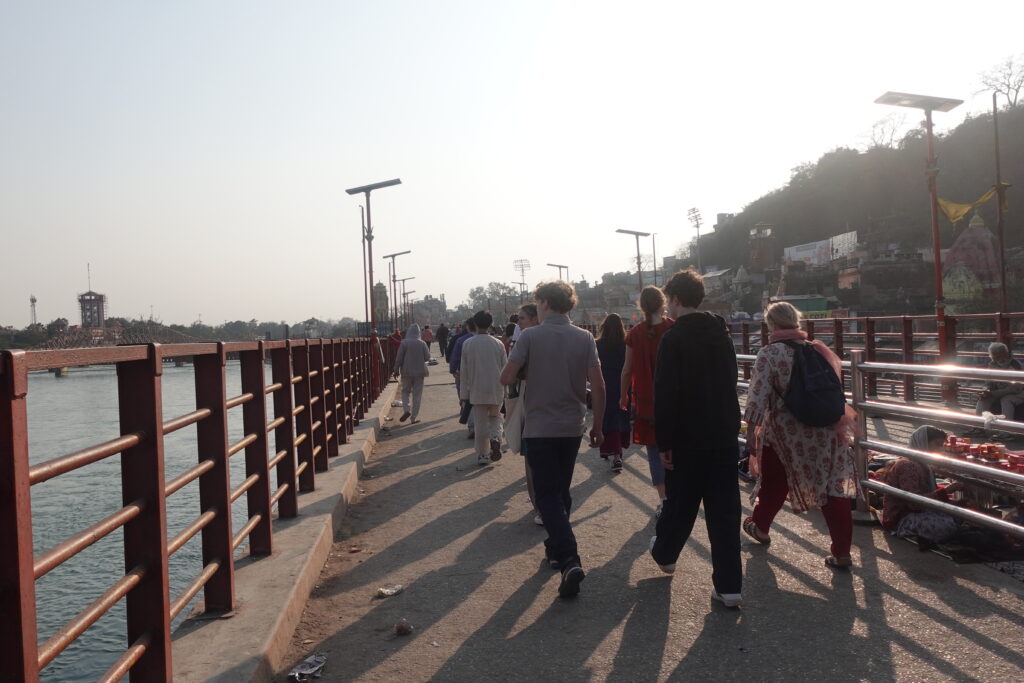
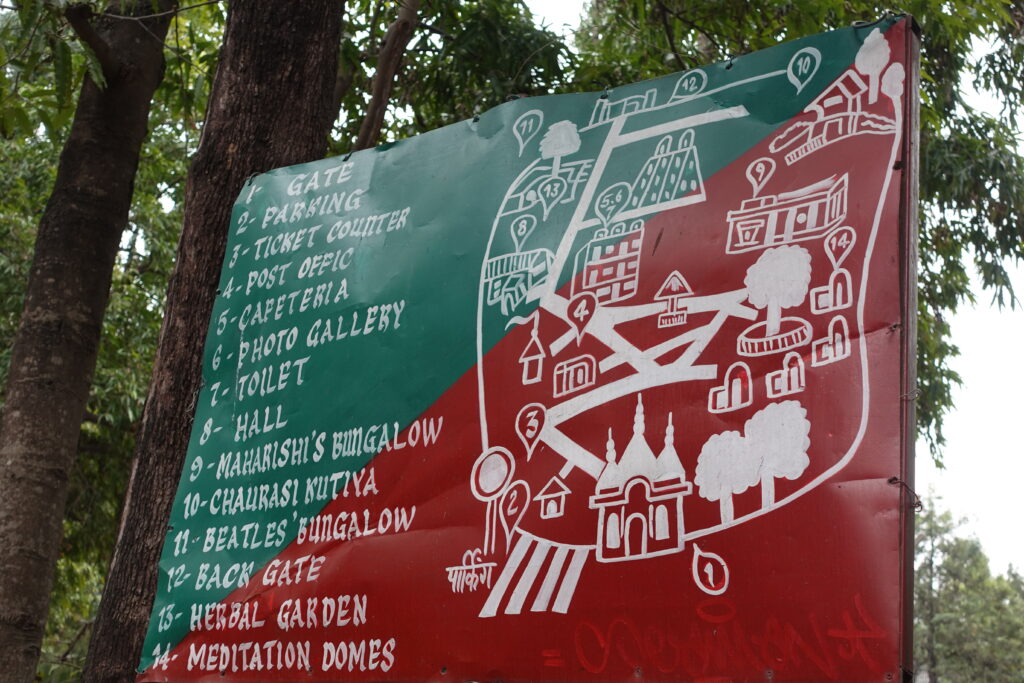
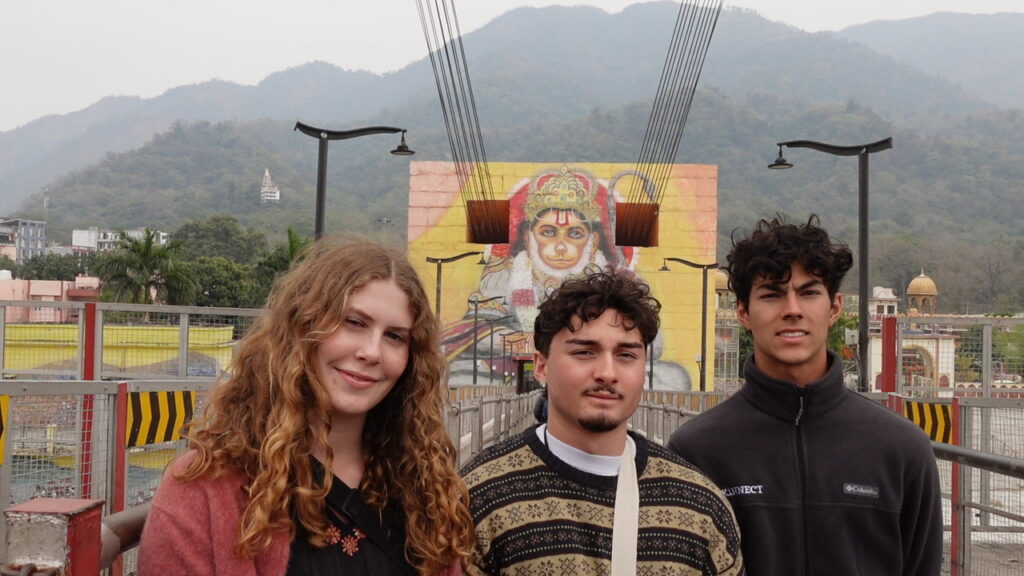
This morning, after many a long and winding road, we finally arrived in the beautiful village of Rishikesh, right on the river Ganga. We walked across a windy, motorcycle-packed bridge and completed a short trek along the water and up the hill into the entrance of the ashram. Amazed, I studied old photographs from the Beatles’ time here, and read about Maharishi Mahesh Yogi and the benefits of Transcendental Meditation. I admired murals, added my name to a wall of graffiti, and explored underground rooms and old rooftops that overlooked the Ganga. I would gladly have spent all day in this sprawling, beautiful landscape, full of old buildings and artwork here there and everywhere, waiting to be explored.
The ashram is currently undergoing renovations, and may very well look different by next year. Even despite this construction, we had much more ground under us than we could cover in our time, so unfortunately, we had to say “hello, goodbye” to the ashram and continue on to our next exciting stops.
Do you want to know a secret?
Money can’t buy you love, love but it can get you a trip to India to visit the Beatles ashram!
Mateo Borrego
A Dazzling Shopping Trip
Yesterday we visited Rishikesh. One of the things we did was go shopping in an alley that had lots of different shops. There were some similarities to shopping in the states, but most of it was so different. There were so many people and motorbikes; you would have to walk through a sea of people without losing your group while remaining aware of the motorbikes and cows all around. It sounds very extreme but it was actually fun and felt safe. It is still a crazy experience for an American and one I enjoyed very much.
If you know me, I have a bit of a shopping addiction. I found it difficult not to buy everything that I saw, especially when you see some of these prices. I realized that I could buy some nice pants for two to four dollars. There was novelty everywhere and so many things I had never seen. I got a nice bracelet for a dollar. We also have other places to shop so I had to save. Although I was able to contain myself to some degree on shopping I did visit almost every store I saw because it was mandatory. One of the stores my group went into was a jewelry store and these silver earrings caught my eye. Soon enough I saw a really beautiful silver bracelet and I knew I wanted that, so I asked for the price. He said three hundred seventy five U.S dollars and I didn’t even want to bother haggling because there was no point! Some things are shockingly expensive. I bought the earrings instead. The moral of the story is that not everything in India is inexpensive. Lastly, if you ever find yourself in India and shopping in an alley watch out for cows and also make sure you buy some of the lightweight linen pants because they are so comfortable and they cost four dollars. I really enjoyed the shopping experience.
Lisa Catterall
Everyone is a Guru
Human beings are social animals. Like our fellow primates, we need our groups to survive and thrive. Our binocular vision and large occipital lobes can do the calculus required to reach up and catch a ball as it arcs through the air instantaneously, but we are only registering a few points of visual recognition. When we look at a human face, we register over three hundred points so that we see, and analyze, reactions with great depth.
Baba Hari Dass taught that everyone is a “guru,” if you listen deeply. So often when we are listening, our minds work on formulating our response. This is a deeply protective instinct. Our survival depended on social status for such a great part of human evolution that the need to fit-in is deeply ingrained. We are listening to be seen, rather than seeing.
Enter the idea of enlightenment. It can happen in a snap. A perspective can be shifted forever; a person can live inside a metaphorical balloon that suddenly pops, revealing the outer world that had been obscured by a layer of translucent balloon latex. I’ve been enjoying, throughout our trip to India, watching many balloons pop as we walk across the bed-of-nails that is the carefully curated experience of the trip.
Not to compare these experiences to something painful; they are anything but that. Having been on this trip in a much earlier iteration, I have loved seeing the evolution of the shared experience. If I could encapsulate the changes in one word, the word would be Love. A greater love and tender caring for our students, for the people we meet, and for our very bodies has refined the education being offered on the road. The organizations we visit now were born from pure love, from seeing a hole in the world, and filling it with love itself.
Every time we are at the doorstep of a new organization, Chelsea does not hesitate to remind us that everyone is a Guru, if you listen deeply. Irrespective of language, I’ve been spending this week learning about the world through the smiles of children from a vibrant tapestry of cultures and experiences, including the MMS students who travel by my side. Our days can easily be described by our other favorite Babaji advice for life; work honestly, meet people without fear, meditate every day, and play.
This morning I greeted a smiling baby in the arms of a Gujar cattle herder in a small village built from mud and thatch. The baby loved my glittery manicure and spent a good long time teething on my fingers. With no common culture or language, I enjoyed a smiling “conversation” with the parents of the village about teething, and babies. A balloon popped for me about the universality of love, generations, and the rites of passage that carry through every culture and circumstance of life all over the world. Shared humanity is our greatest teacher.
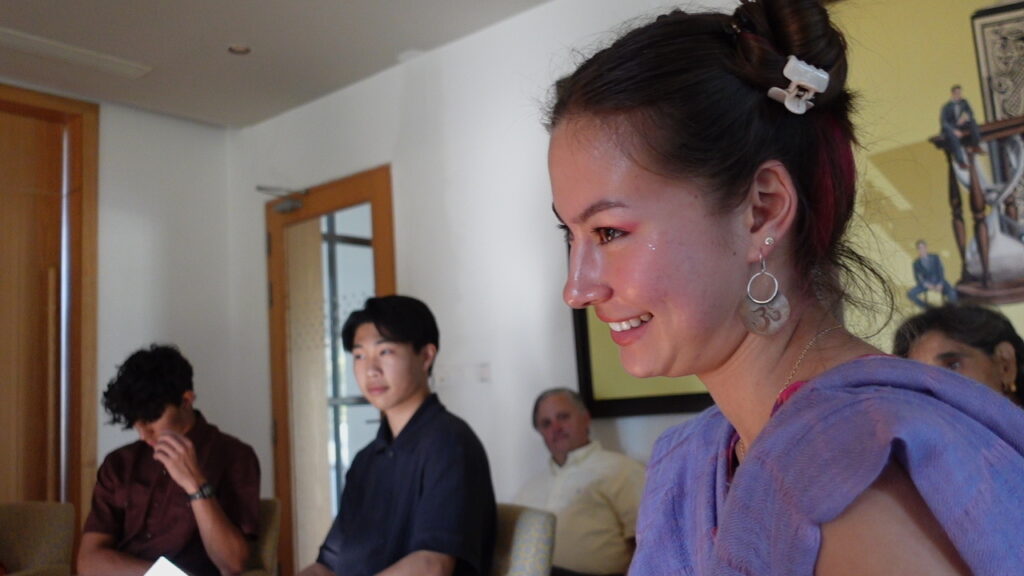
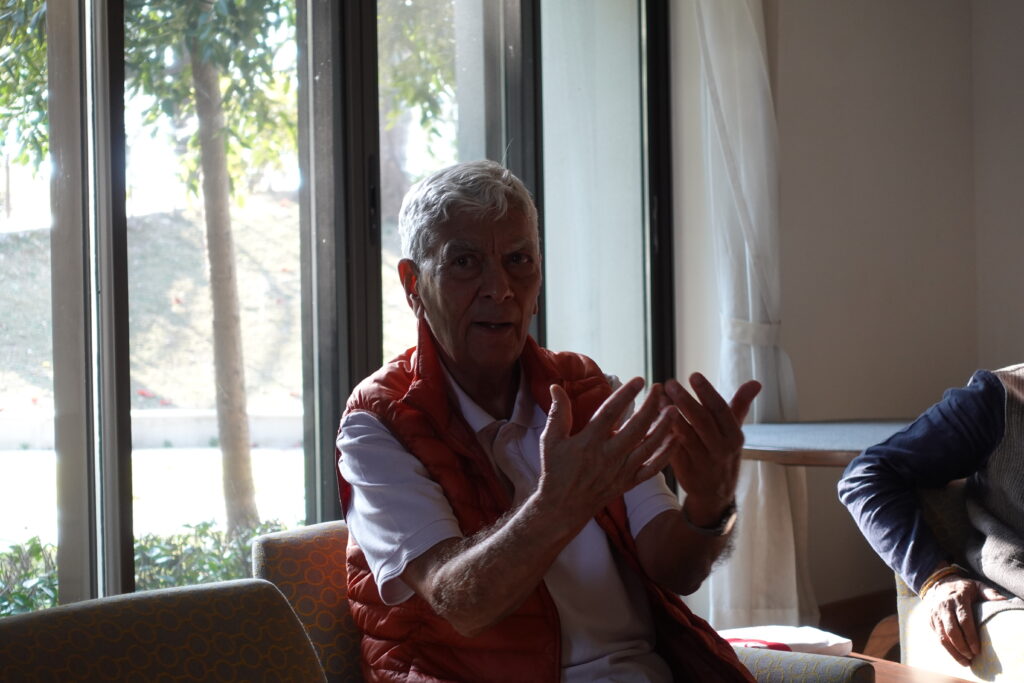
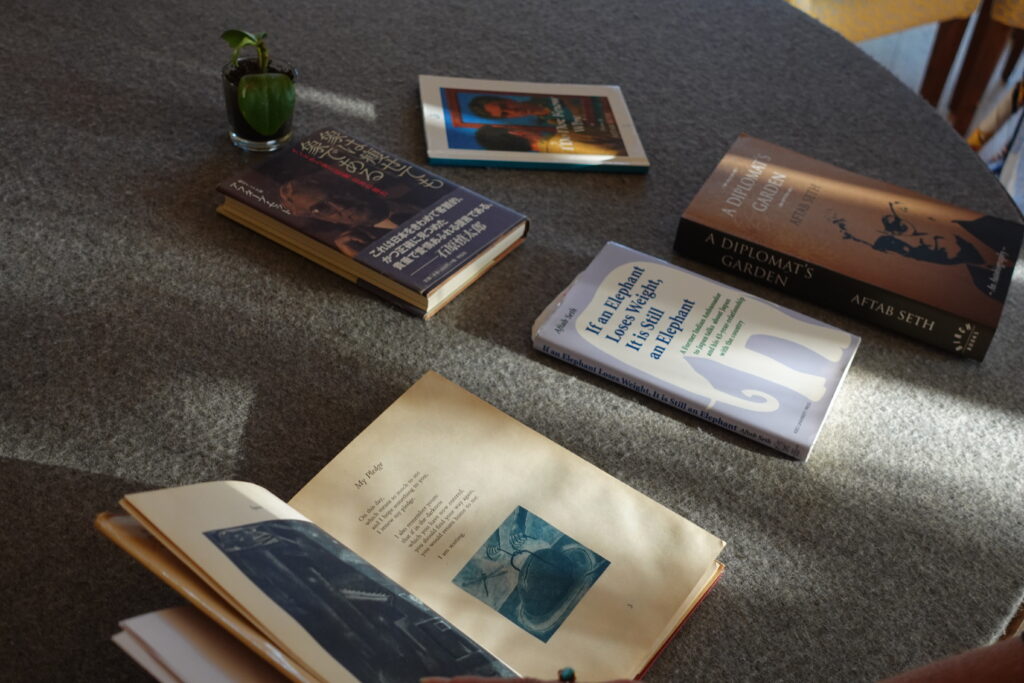
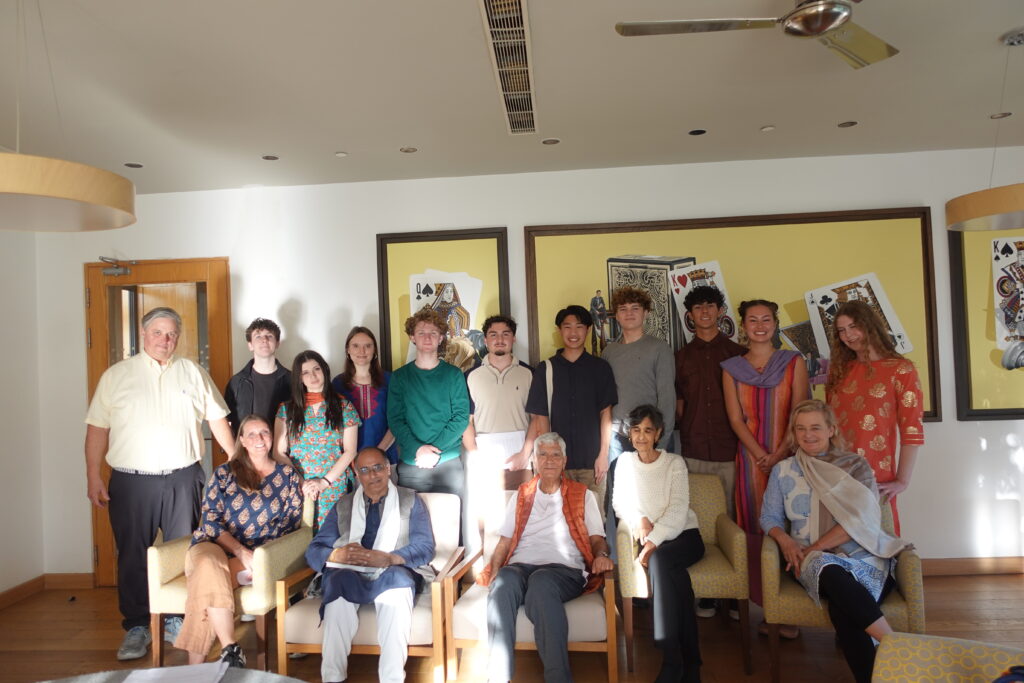
Today, our class had the opportunity to interview Aftab Seth, a former ambassador and diplomat to over four countries. He has also written two poetry books and an autobiography. Aftab lives in a senior living center with his wife. The facility was absolutely breathtaking with glass walls surrounded by lush green grass. Inside, soft lighting lit up the conference room in which we interviewed him. I felt the softness and radiance of the space reflected in the way we approached that interview.
When we first sat down with him, I instantly noticed he had a brightness and joyful attitude. Despite his age and immense amount of education and experience, he was not afraid to talk loudly and with his hands, make jokes, or poke fun at some of my classmates. One thing that stood out to me during the interview was the way he talked about how creativity, writing, and leadership all overlap. Many sources called Seth a “theater personality” so I asked him how acting and theatre coincide with leadership. He responded, saying that acting was a very helpful tool, especially as a diplomat. He mentioned that you may have to act angry even if you are not — facial expressions are important. He also gave a very valuable piece of acting advice, saying that when you play a character (he used Mercutio from Romeo and Juliet as an example), you, the actor, are never going to be Mercutio — even if you method-act. However, you must convince the audience that you are, and through that experience, you may watch yourself play that character.
Another thing during the interview that stood out to me was how he talked about learning new languages; and the power in “breaking bread” with others in order to learn. Seth said that when communicating with others in another country, using a translator isn’t really connecting with that person. You must sit down with them and experience their culture — whether that be through “drinking alcohol” or “sitting underneath a Kotatsu and eating sushi.” That is the real way to learn a language.
Overall, interviewing Seth felt like a breath of fresh air, with his creative approach to diplomacy and his silly way of going through life. I hope to meet him again soon, and I am excited to test out his acting advice!
Rosemary Konviser
Service to Billions
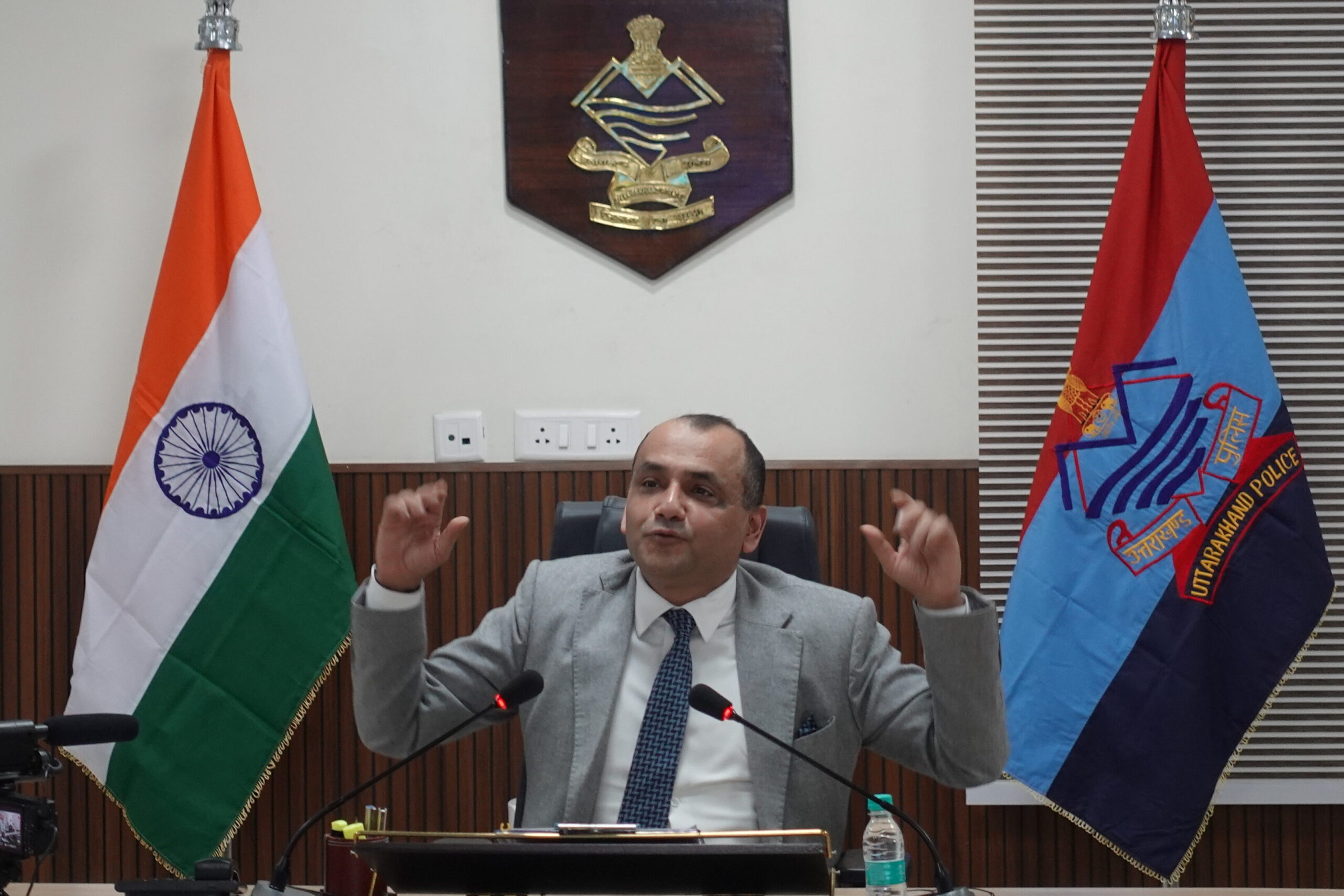
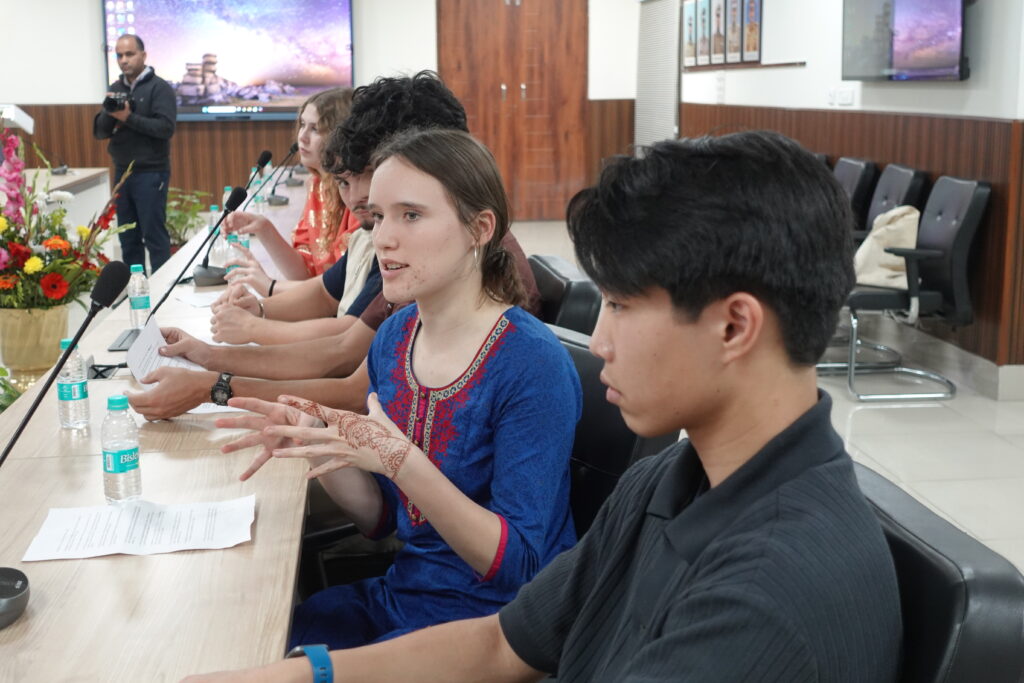
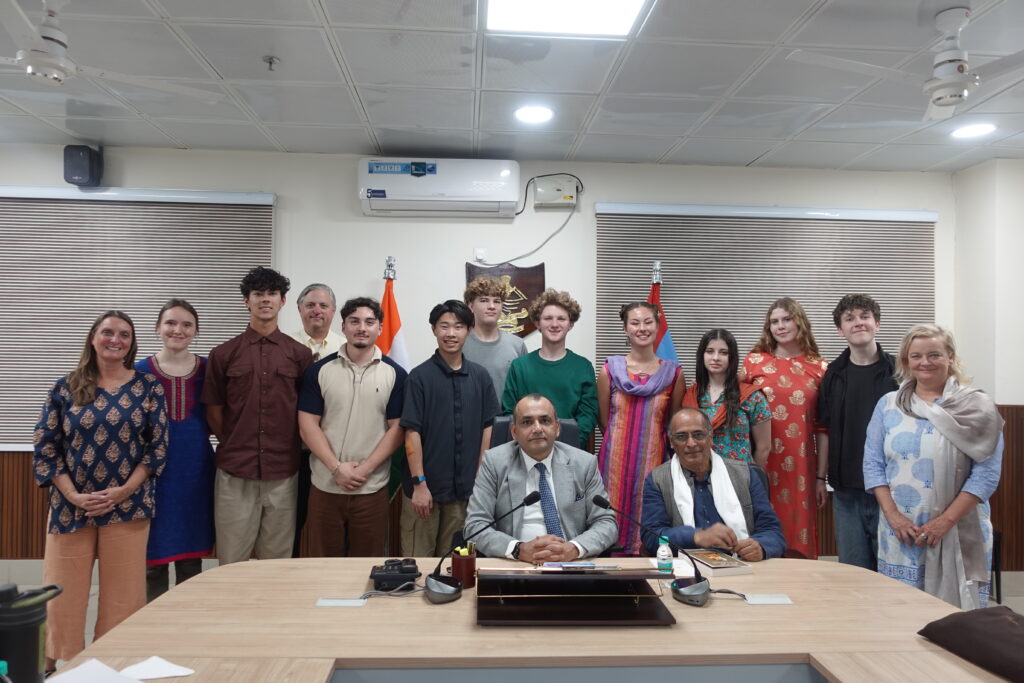
Today we had an informative interview with Abhinav Kumar, a high ranking officer who has worked for the Indian Police Service for several decades. Sitting at a long table in an official looking conference room, we felt grateful that Abhinav made the time to converse with us despite his busy schedule. Over delicious cups of chai, we discussed Abhinavs’ career, values, and he shared his global and local perspectives on politics and law enforcement. His views were thoughtful and he took care to acknowledge the flaws in the police system and government, while also pointing out the positive changes and progress that have happened since he’s been a part of the police service.
An important theme in the interview was that change is gradual, especially in a place like India, with a population of one and a half billion people and a long history of prejudice and hardship. Abhinav talked about the sides of policing that we don’t often consider, such as the hardships it creates for the officers and their families. He explained that in the first years of his career as a police officer he worked constant, long shifts and had no time for family life. He also faced dangerous and traumatizing situations. As he rose through the ranks and his roles changed, he had more time and was able to start a family, but he still struggled with separating his home life and his police life. He mentioned studies that have shown really high divorce rates among police officers, as well as the prevalence of other issues including alcoholism and violence. Often, police officers bring the violence and trauma they experience on the job back into their homes.
We asked Abhinav about the qualities necessary for good leadership, especially in the police force. In response, he emphasized the importance of not asking the officers under you to do things you yourself are not willing to do. He talked about not just assuming that because you are in charge, everyone will listen to you; instead you have to earn that respect by setting a good example as a superior officer.
Abhinav also talked about the importance of young people being interested in public service and pursuing careers in it, and he expressed his appreciation for hearing from the perspectives of young people like us. Speaking with him gave us a fascinating insight into politics and law enforcement in India.
Gage Saul
International Connectedness
Aftab Seth is an Indian diplomat who has had a long career in international relations. Much of his career was spent in Japan; he was the ambassador for India to Japan. Our class went to interview Aftab Seth at a home for the elderly. Shantum, a very learned man who helped arrange our interviews, talked briefly about how in India old people’s homes were uncommon. They are a new phenomenon as the elderly most often live with their children. Aftad Seth lived in one of these rare, very wealthy elderly homes in India.
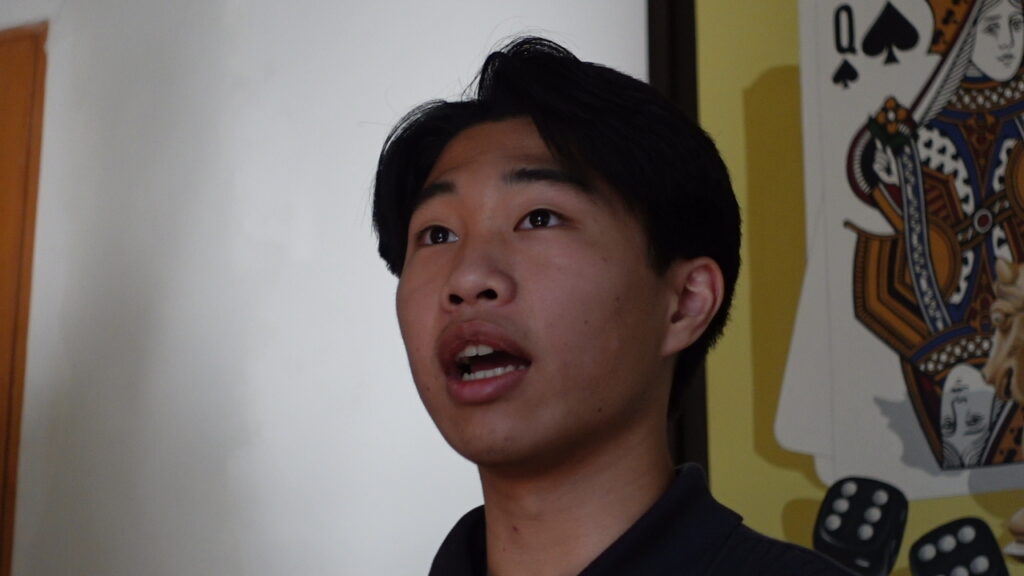
When we arrived, we were seated in a very neat and well furnished room. I believe its intended purpose was for poker as there were paintings of cards on the walls. As we prepared to interview him, he explained about his history in the diplomatic department. Language, he explained, is extremely important, especially when attempting to connect to a new culture. He related that there is really no better way to understand people. Without language, understanding stays on the surface, but with it, deeper connections can form. He has written several books that reflect upon his experiences as well as his ideas about diplomacy and culture. At one point in his career, he was also a professor at Keio University, where teaching required many of the same skills used in diplomacy. Patience, as well as clear communication, were important no matter where he was in his career. He stressed that understanding cultures is of great importance, and that assuming, instead of learning, can create problems.
When speaking about the most important lesson he learned during his time as a diplomat, he mainly focused on hard work and dedication rather than success coming easily. Throughout his talk, he was very charismatic and often funny, which made him far more engaging and easier to remember.
Kyler Nishimura
The Joy of Charity
When I decided to go on the India Learning Journey for this year, I wanted to go for multiple reasons, but probably the most important for me was finding the “missing link” in my life. I have always had a very good life, but I have always felt like I have been missing something, and I was hoping that going to India would help me. Little did I know that I would get my answer much sooner than I imagined, on the evening of our first day in India, which was after we visited the CED society building.
I was tired then, but we still had one final stop before we went back, which was helping-out at the Tibetan Elders Home. All of the constant things to do at the CED society had worn me out, not to mention the fact that I had very little sleep the night before, but I was still ready to do whatever I was asked to do. I just had to hand out clothes, which seemed like a very easy job, and I was eager to help out the elders. When we got to the Elders’ Home, we were greeted by Lama Tenzin, who had helped us with several key parts of the trip. I was grateful that he was energetic and helpful as always, and he was still very happy to see us.
We were soon given warm wool hats, socks, and money for the elders, and we were instructed to give them out in a specific way in order to make sure that the elders felt at peace. We soon began to hand out the supplies, and I was mainly focused on the job at hand. I made sure to respect the elders by bowing to them and thanking them. Only after I finished did the reality of the situation hit me. I suddenly realized that I was here, and that I had just done that, and it meant something to me on a deeper level than I expected. I had always valued community service and selflessness because of the values that my parents taught me, and this felt like the culmination of that. I was helping, I was making a difference, and this small revelation completely changed the way I felt about my future. I have always wanted a job that involves helping people, but that always went the way of a national service, like a park ranger or law enforcement. Now I feel that community service could be an option for me and even more than that, it should be.