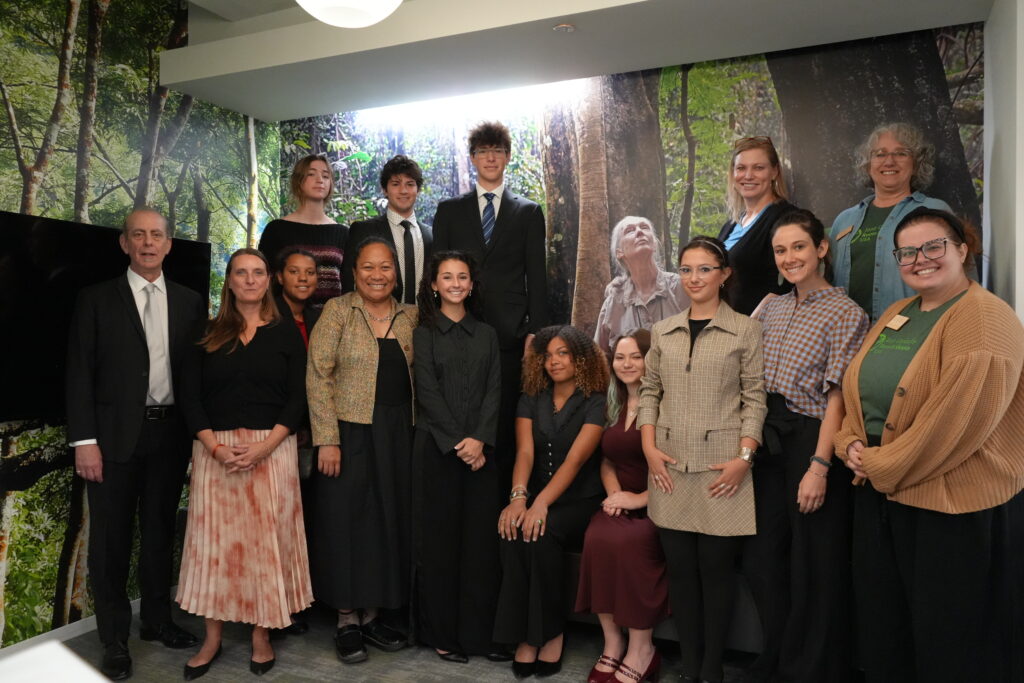
What Do We Owe Our Future?
Throughout this trip, there’s been a theme of selfless service, of helping others purely from the motivation to do good. We’ve heard about it from almost everyone.
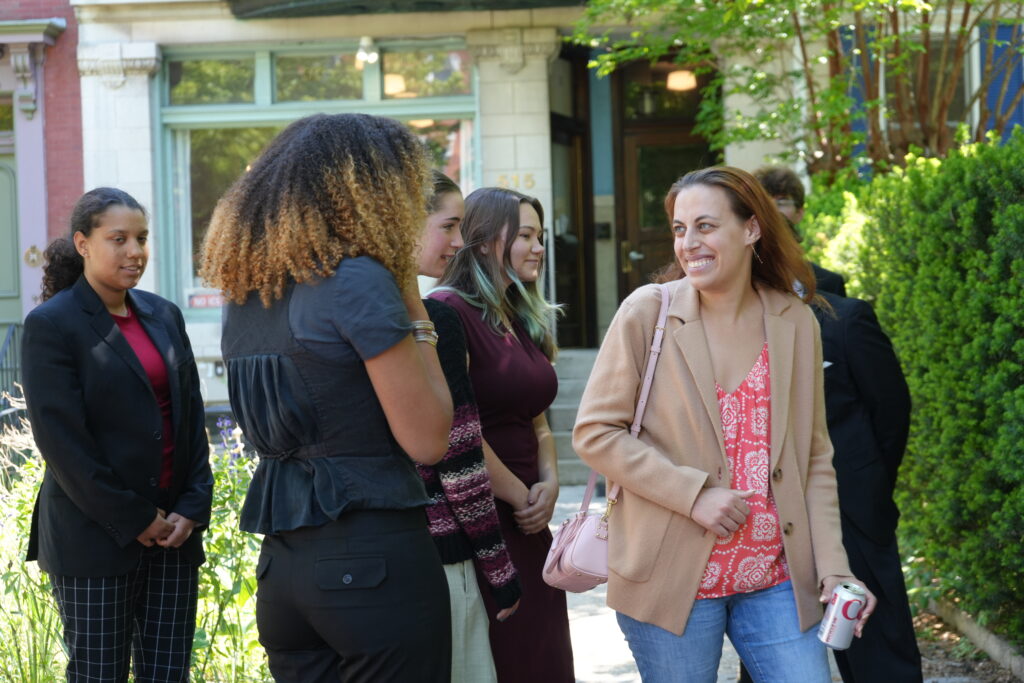
For example, Jimmy Panetta said, “The American Dream … is to provide a better future for our children.” At the Pentagon, we were told about selfless service in the military, and what it truly means to be an American citizen giving back to our country. We also heard from Tracie Potts about the importance of committing to excellence. She told us, “If it’s worth doing, it’s worth doing well,” urging us to commit fully to what we believe in. We talked to Susannah Welford, who told us that she doesn’t think that we can “change minds with anger.” She highlighted the importance of confidence and believing that you can commit to change and service. Today, we spoke to three very different women. But every single one of them left me with a feeling of hope.
These leaders are people who genuinely are committing to service, to change, and they are seeing real results. That hopeless feeling is nowhere to be found. And with the understanding that change and growth are both still very possible and real for this country comes the question: if it’s possible, do we owe it to this country to try?
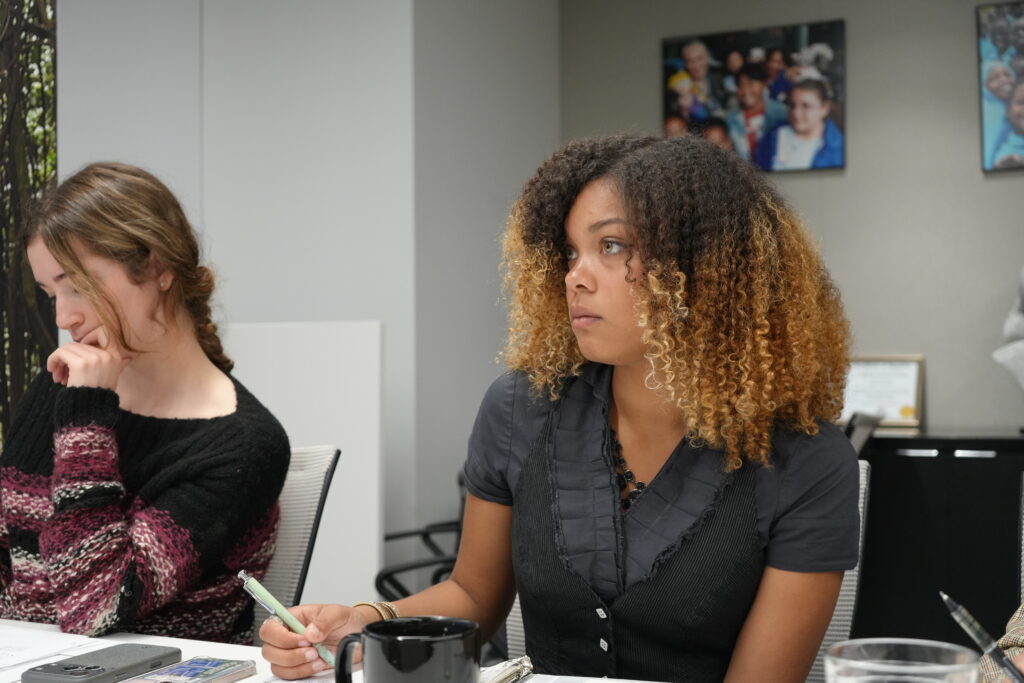
In our interview with Mary Ford, the VP of Roots and Shoots at the Goodall Institute, she talked about how her organization connects youth who wanted to make a difference in their local communities’ environments. She told us about the importance of taking small steps everywhere toward a better world, because it really all adds up. It really made me think: if I can be making these small efforts so easily, I owe it to my future self and future children to make the world they will live in a tiny bit better. She told us, “If you feel like it’s hopeless, take effort anyway.” I think she’s entirely right. It’s always better to make a small step now than to live in a wrecked world later. We have this awareness of the future and of need. We should also feel a duty to help with that need, to rescue that future.
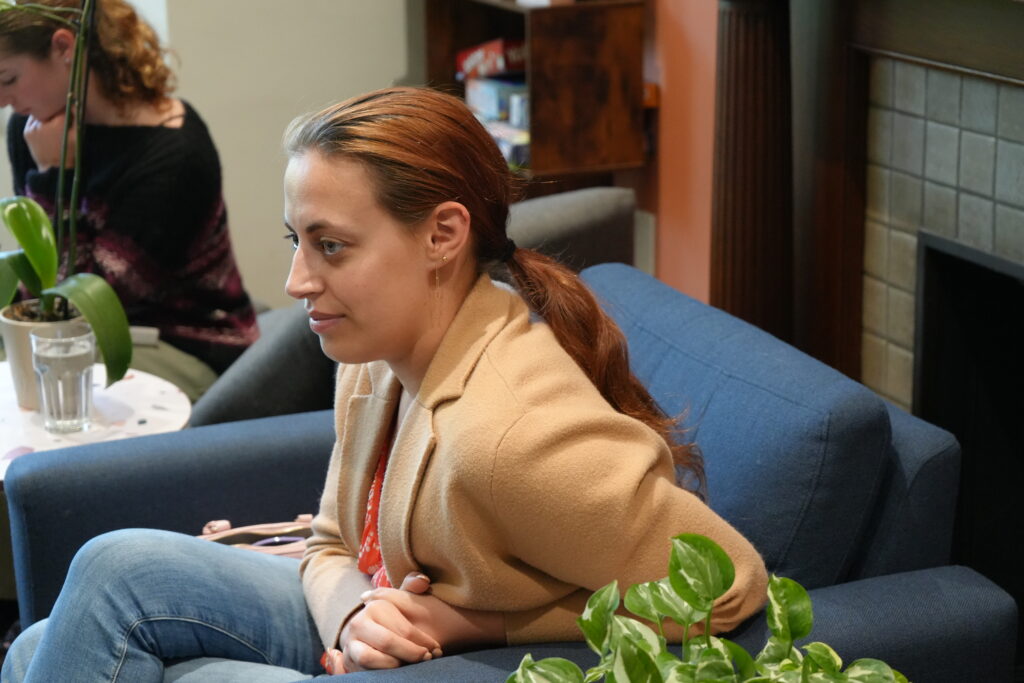
This idea of our duty as Americans also continued in our conversation later today with Eve Levenson, although in a different way. Ms. Levenson is a woman who is younger than the majority of her peers who work in advocacy, campaigns, and political awareness. She worked on the Biden-Harris campaign, encouraging the youth vote. It’s something I found very interesting and inspiring, especially because many people my age are under the impression that their votes don’t count. Voting engagement is fundamental for other obligations to our climate, culture, and safety. As youth, we are the new voices of the world. We are the future, as we are constantly reminded. While things may feel hopeless, we need to remember that our votes are the way we get our voices heard in policy.
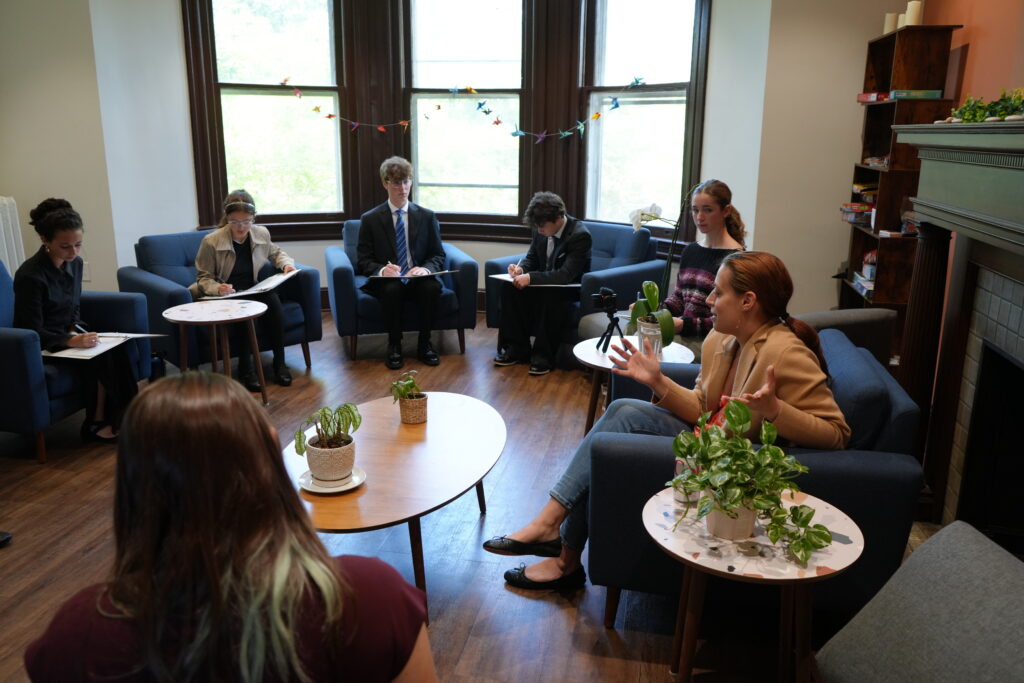
In our final interview, with Alyse Nelson, she shared with us amazing stories of female leaders creating change. She told us of a Slovenian woman who, upon the overturning of Roe v. Wade, returned to the EU with concerns for her rights. She told us how this woman, Nika Kovač, did her research, found out what was within her rights, created a plan, and acted on it. Despite facing dismissal, she used the power of democracy to produce real change, and now there are safeguards across the EU for women in medical need. It’s this duty to one another, the duty to humanity, the taking advantage of democracy, that fills me with hope. She told us, “We cannot accept; we need to fight.” I agree. We have a duty to each other and to ourselves. If we have it within our power to make change where we see it, we must.
There is no future in a world without hope. As Mary Ford said, “Hope is a verb … hope is an action we can take.” We can hope for a better future and then take action. I believe that, as the next generation and as a human being with the knowledge and capacity to see issues in the world, it’s my duty to try to fix them, to stand up for people who don’t have the time, resources, or luxury to be selfless, and to work hard to make the world a safer, cleaner, happier, and more efficient place to live in. Our job is to hope, to serve, and to change.
Young People and Good Leaders Take Risks
We got the opportunity today to interview the wonderful Alyse Nelson. Unfortunately, we only had a brief time to speak with her, but in that short amount of time I felt that I learned everything I would ever need to know to be a good leader, especially a leader of women and a leader for change. Alyse Nelson is the CEO of Vital Voices, an organization that helps women to protest, become leaders, and essentially find their voice.
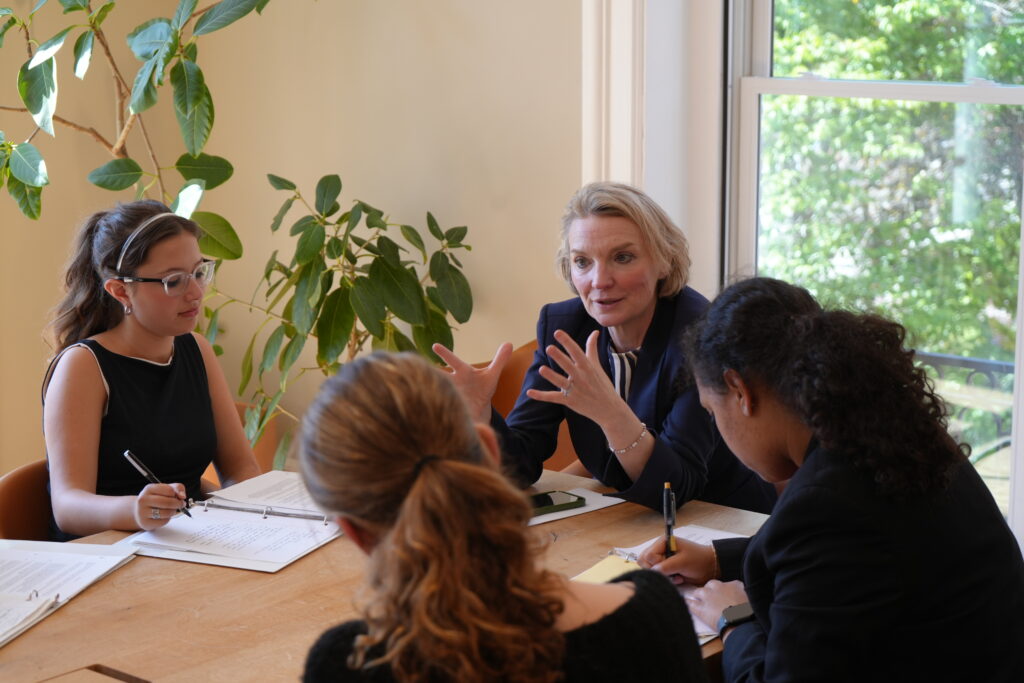
While talking to Ms. Nelson, we asked her about when she first found her voice. She shared with us the story of when she went to Beijing, China, to listen to Hillary Clinton speak. She told us that the one thing she learned was that, “As a young person, you have to take risks.” She took a risk by going to China without the correct documents, and if she didn’t go, she never would have met Hillary Clinton, and she never would have founded Vital Voices.
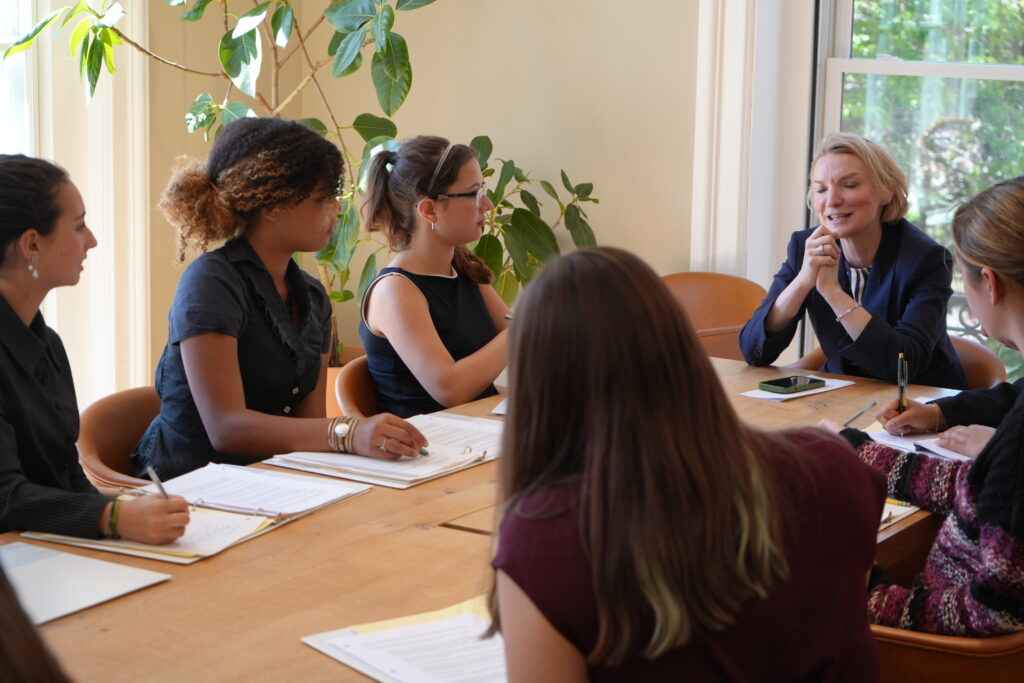
She told us that in her work she has worked with and met many women leaders across the globe, and in her experience she has found that the best leaders take risks. Leaders who make change take risks, and that is what she deemed to be the best quality in a leader, man or woman. In saying this, she also wanted us to know that to be a good leader you have to have your driving force. Everyone who we have spoken to on this trip has told us the same thing, from the military people we spoke to in the Pentagon to the young activist we interviewed today. They all told us to find our driving force, the thing that motivates us to get out of bed in the morning and drives us to the next best thing.
Ms. Nelson also told us to find our driving force. Shen then told us that a good leader has to have drive. f a leader doesn’t have drive, they don’t have a compass. That is what is wrong with politics today. So, if young people take risks and good leaders take risks, doesn’t that mean young people have a head start in becoming good leaders?
The Impact We Make
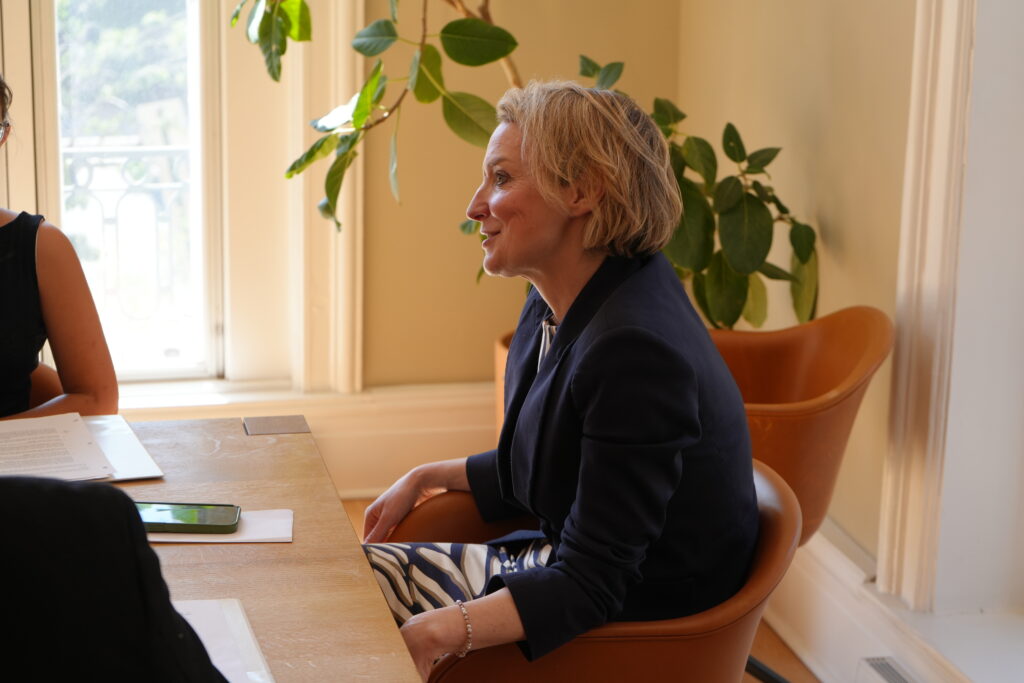
As the trip nears its end, it’s interesting to compare the different things that people have said. Today, we had one of the most unique conversations yet. In between our interviews with Mary Ford and Alyse Nelson, we got to talk to Eve Levenson, a political organizer, strategist, and young activist.
One of the core values of her work is Tikkun Olam, a Hebrew term meaning to repair and heal the world. In order to achieve that, she thinks the best way to step into activism is to ask yourself, “What is the biggest impact that I can best make?” Through the course of answering this question for herself, she found her passion. At a young age, she began to take action. I personally found this interesting as a member of MMS student government. It made me wonder what more I can do for my community.
As she gained more leadership roles, she thought more about the impact of identity. Being a political organizer, she brought up the interesting point that a campaign is bigger than the person running for office. The person is just the name at the top of the ballot, but there are thousands working behind that person, which is what she pays attention to the most. However, the more she works at the macro level, the harder she finds it to see the impact of what she does at the micro level. The ratio is no longer one-to-one, as it is when you are making change in a smaller space.
In large political actions especially, she finds that people make promises that are too unrealistic for the level of engagement, and when promises aren’t kept, people lose trust. Of course, there’s always hope, so when we asked her what brings her hope, she said it is the small things: young people being taken more seriously, citizens continuing to make noise, and seeing what people advocate for actually happen.
Hope Is Something You Can Choose to Do
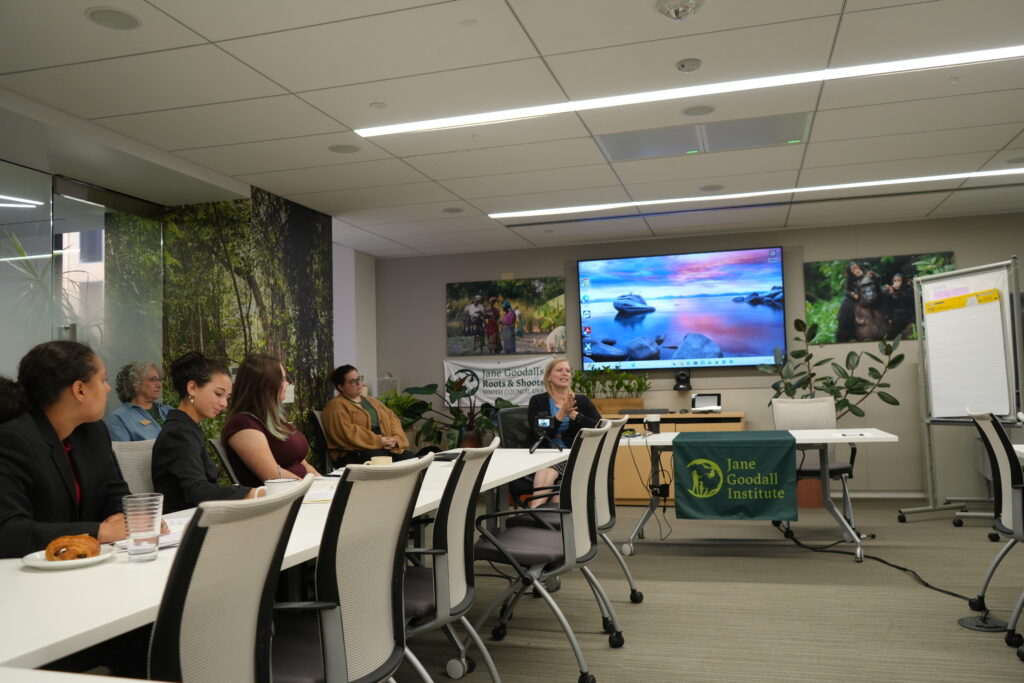
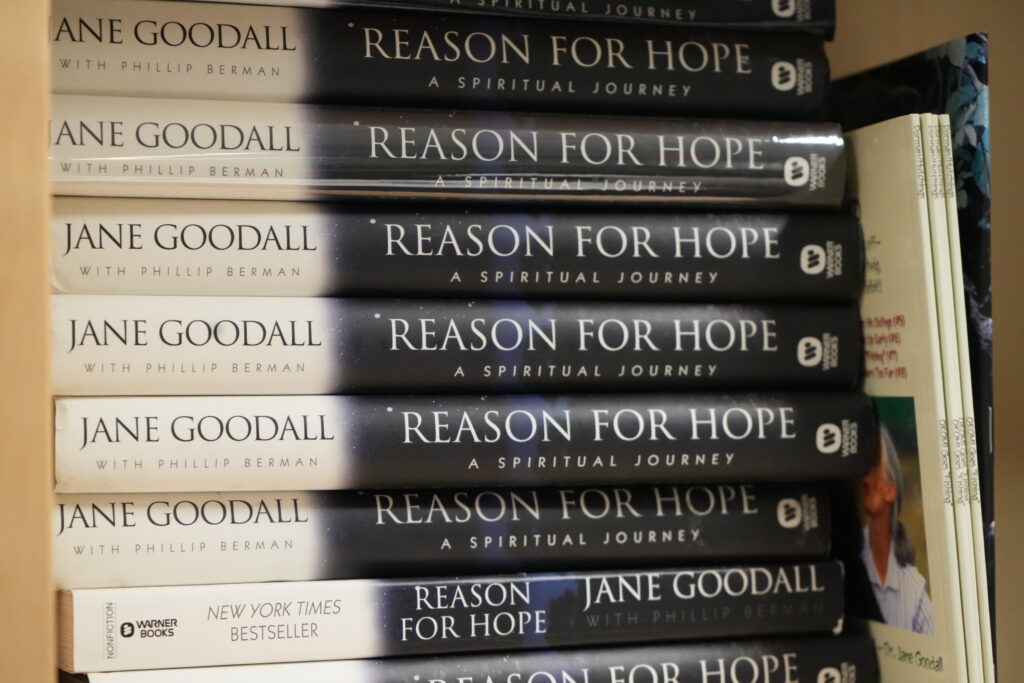
Today we interviewed Mary Ford, vice president of Roots and Shoots, which is part of the Jane Goodall Institute that works with young people to address environmental issues. Our first question to her was about hope. She stated that hope leads us to do spectacular things, but that the challenges in front of us can make us lose sight of that hope.
But her response was a bit of a shock. Mary told us that hope is a verb, not just a noun. In other words, it is a conscious decision to keep on going. To grow that hope, you need to take action to bring in others to make global change. A big part of her goal is to focus on local changes around the world. When every small community improves, the whole world improves.
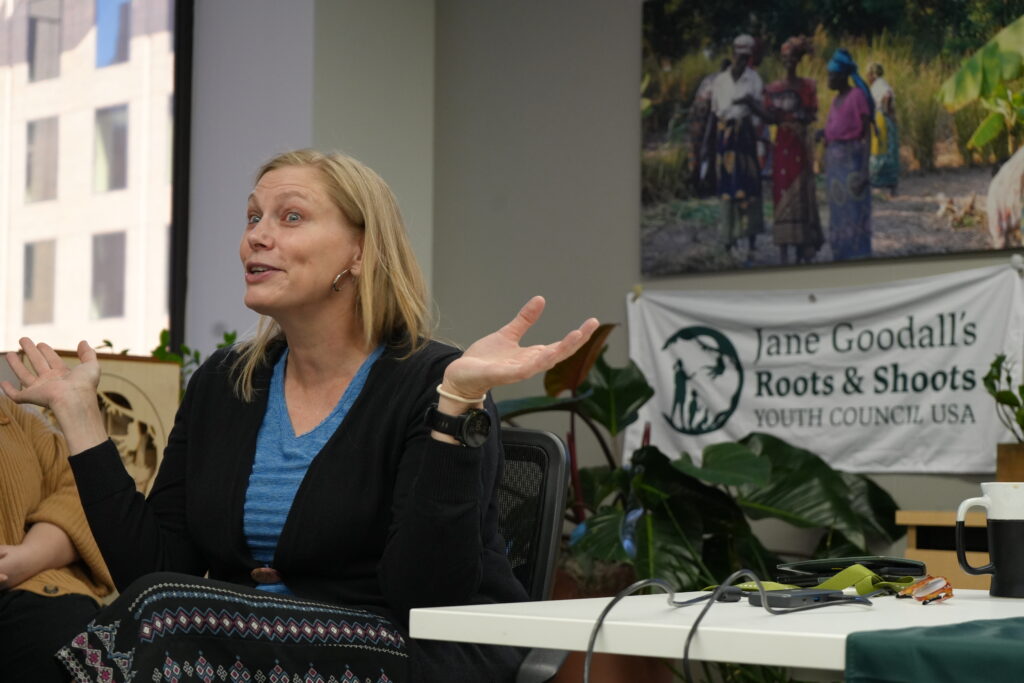
One of their goals is to give opportunities to young people who have obligations that make them unable to participate in Roots and Shoots programs. They have given project grants and stipends to young people so they can better their communities. A big way they help communities is through community mapping, which is a way to recognize a problem with specificity to your community, and to fight for it, and get in “good trouble” by taking action to create change.
Later today we interviewed Alyse Nelson, President and CEO of Vital Voices Global Partnership, which works to support women around the world. She shared a similar idea, saying that we can disagree on 99% of things, but real change happens when there is even just 1% of commonality. When there is healthy discussion, real change is possible.