Architecture on Capitol Hill
Throughout my life, I’ve always been entranced by large and intricate buildings, and the Capitol building was no different.
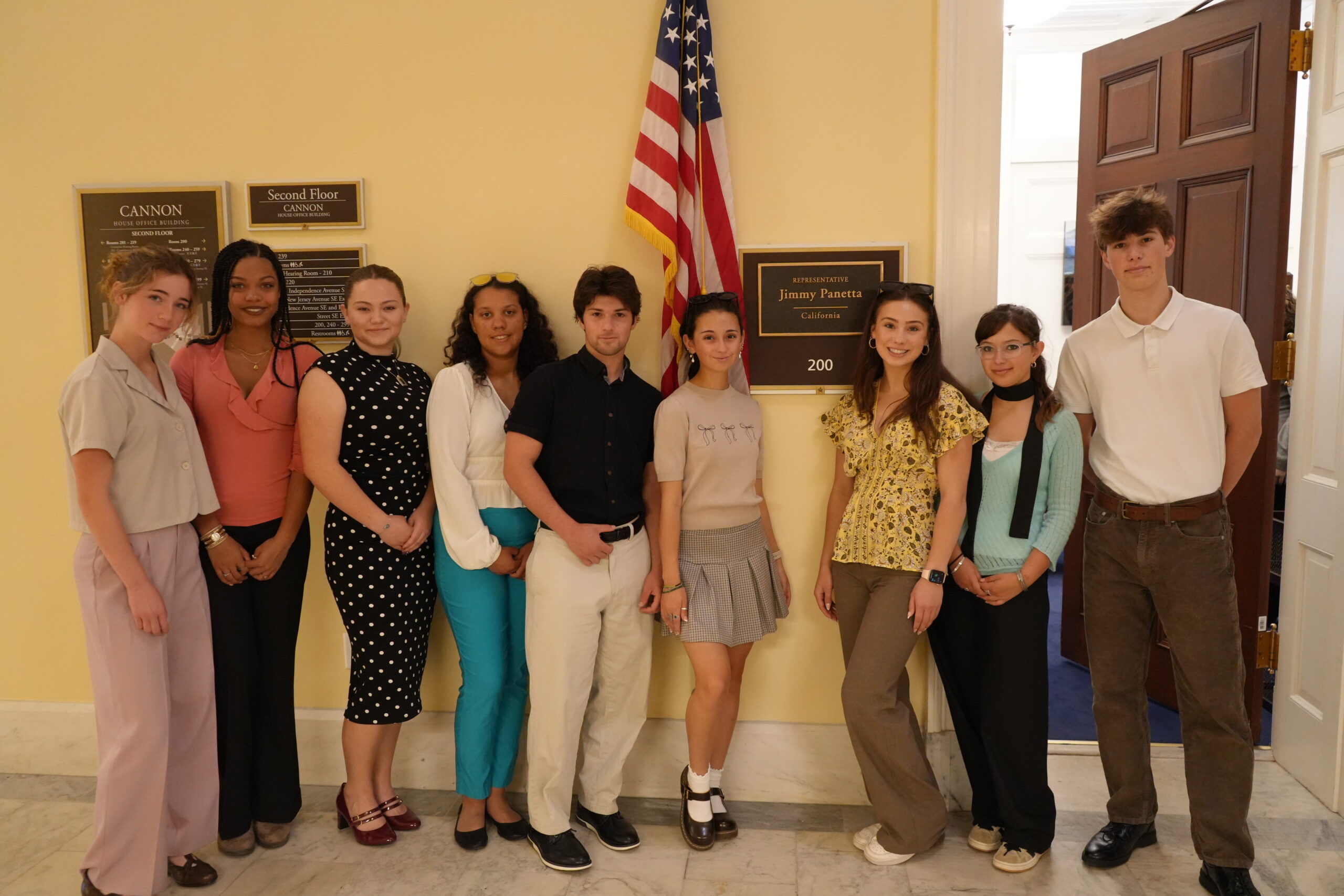
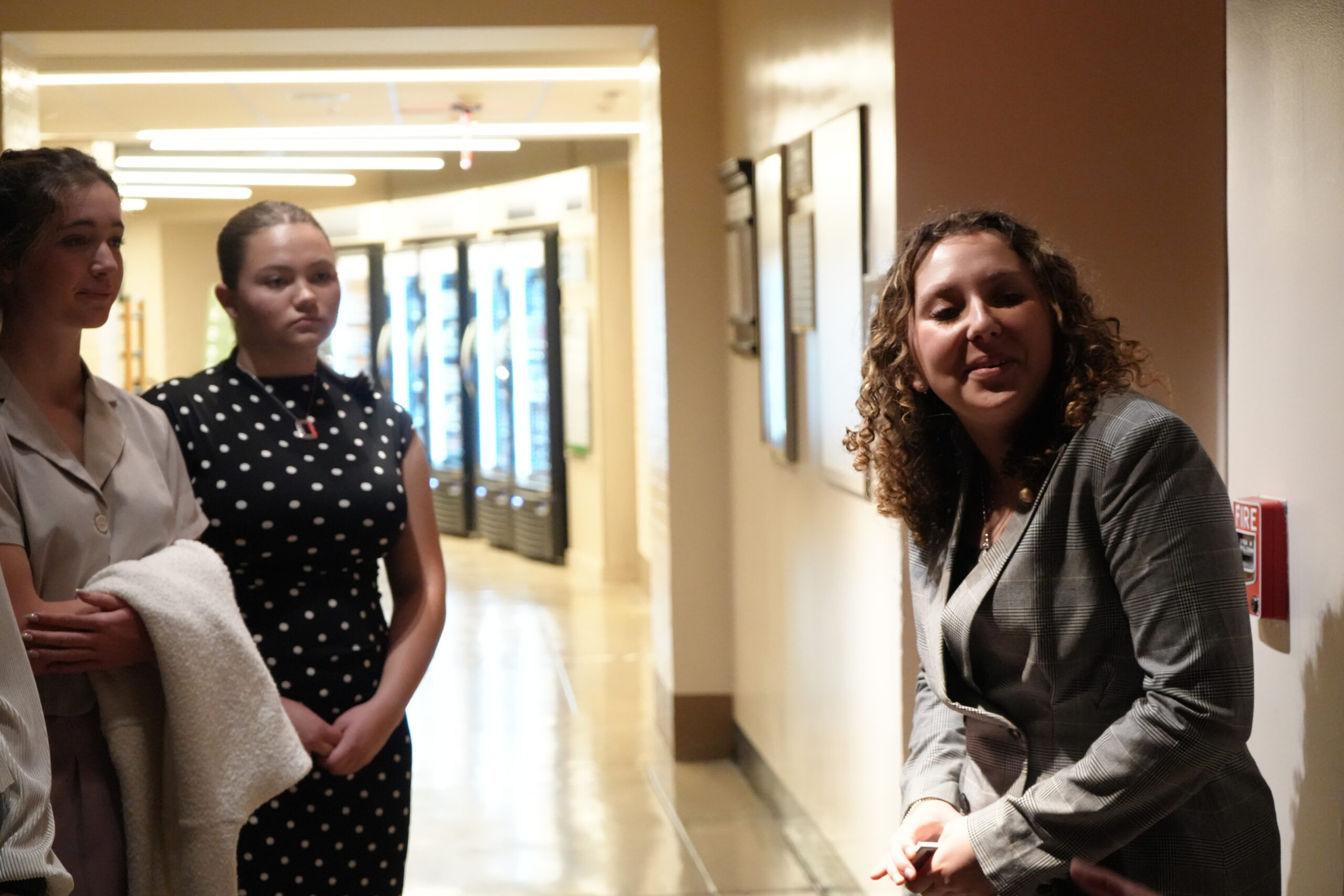
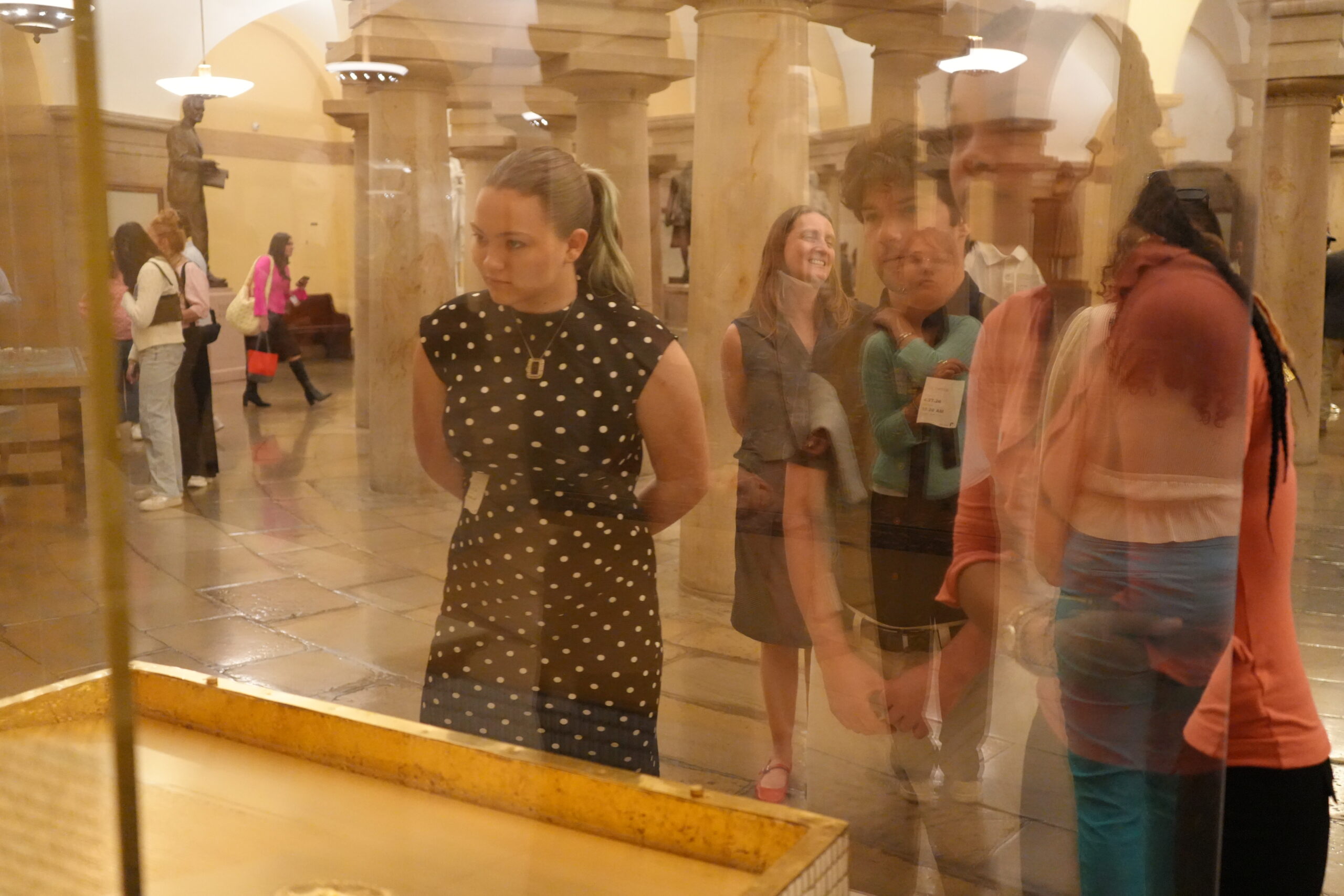
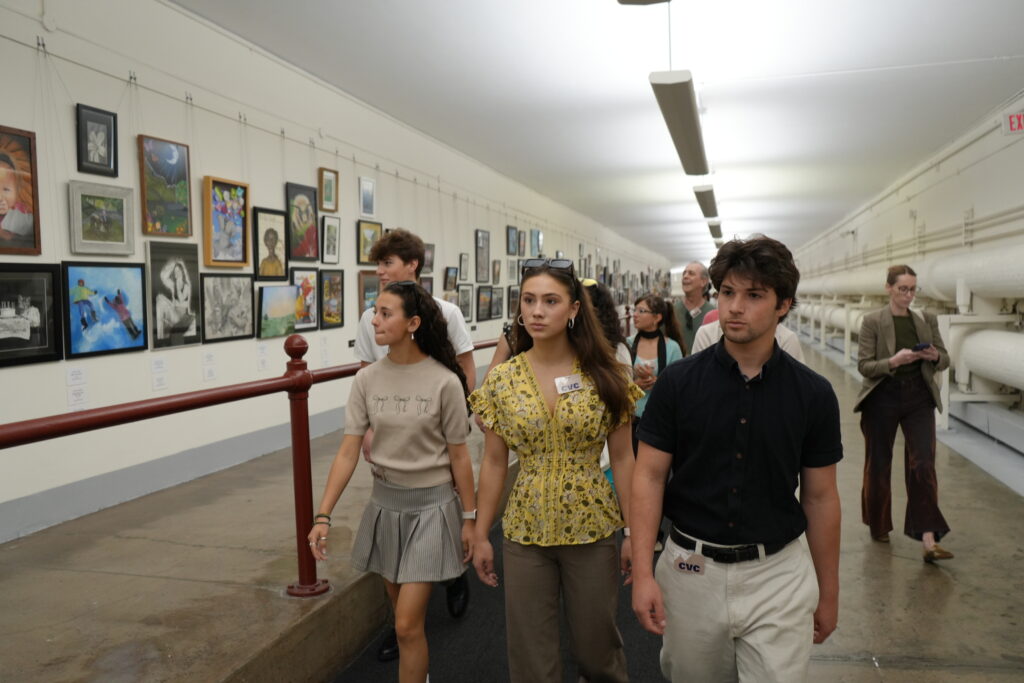
Today we took a tour led by Jimmy Panetta’s aide, Sofia, around the Capitol. We started the tour at the Cannon Building and took the underground tunnel to get to the Capitol itself. Sofia showed us the original parts of the building, including the original House and Senate rooms that were used in the early 1800s. We were able to see the original entrances to the Capitol building, which was enlarged considerably over the years. We also saw where the walls were damaged by bayonets when British troops stormed and burned the building during the War of 1812.
One of my favorite fun facts I learned on the tour is that if you stand in one of the small Senate rotundas against a certain pillar, you can see a trail of tiny cat paws leading away from another pillar. The story is that this “Demon Cat,” otherwise nicknamed “D.C.,” shows up before national tragedies, as per the tale from the 1860s. According to lore, the cat appeared to night watchmen before President Lincoln’s assassination, before the 1929 stock market crash, and before the JFK assassination. These prints likely appeared from one of the many cats they kept to deal with rodent problems.
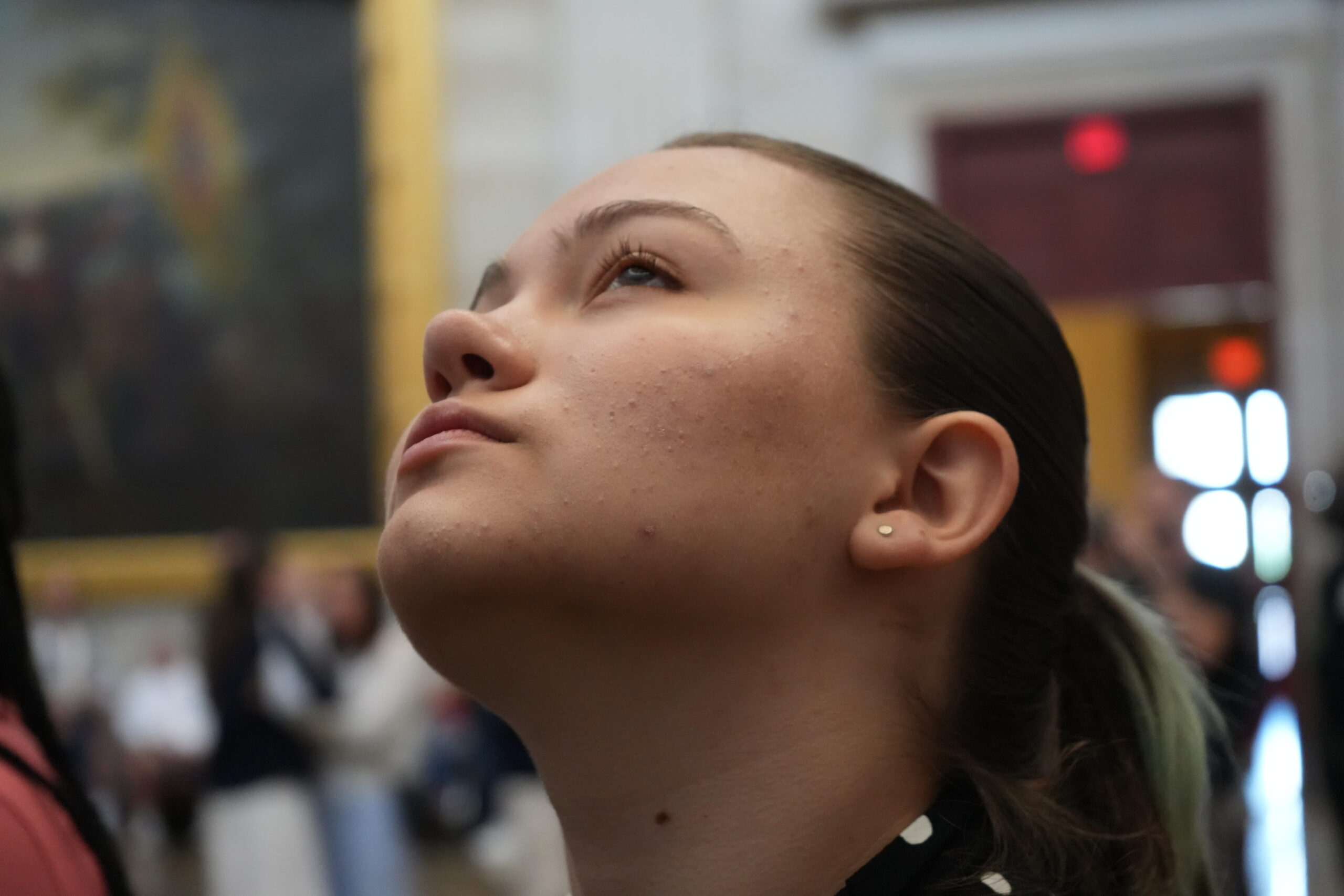
We then made our way to the main rotunda, which is the largest part of the Capitol by far, and which has the most intricate and detailed architecture I have ever seen in my life. As I walked into the space, I noticed all the paintings along the walls that I have always seen in history books. Then I noticed the statues of important figures that lined the walls. Interestingly, the statue of Ronald Reagan has a strip of the Berlin Wall embedded in the base of the statue. The ceilings are made with 8.9 million pounds of cast iron that was made to look like marble. Some comparisons put things in perspective: the ceiling is 288 feet tall, which is 2.59 Statues of Liberty tall, or 1.8 widths of a football field, slightly less than half a Space Needle. There are also 108 windows that line the base of the dome and illuminate the entire rotunda. Seeing a building this large and historically important reminds me of how small my world is compared to the centuries of history that have passed before I was ever born.

History in the US Capitol

The US Capitol is filled with more history, art and importance than I could have ever imagined. Our day started at the Cannon Building, where we met Sofia, a young woman still in college working as an intern for Rep. Jimmy Panetta. She is from our home town of Santa Cruz, and she graduated from a school I’m familiar with, and had a high school life similar to mine. I found her story very inspiring, as it reminded me of all the different ways I can choose for my life to unfold and how many opportunities I can have if I put myself in the right places at the right times.
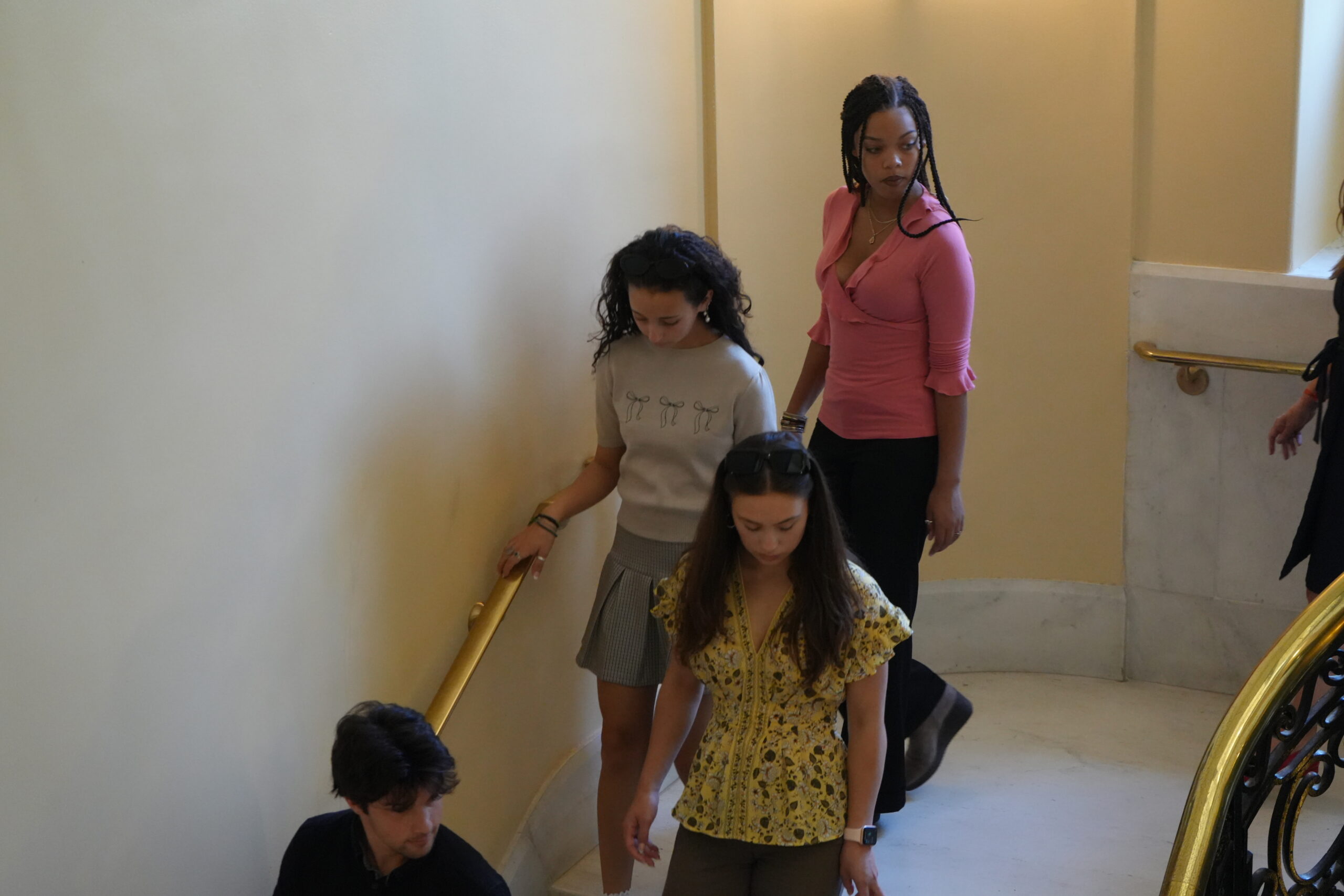
Sofia then took us through an underground tunnel that leads into the Capitol itself. As the tour continued through the grand halls, past the beautiful architecture and statues, I was filled with enthusiasm and excitement. It seemed as if every room I walked into was bigger and filled with more art than the previous room. There was something to look at and learn about everywhere, from the tiles on the floor to the paintings on the ceiling, and every inch in between. Everything had its reason for being there and its own meaning hidden in its details. I particularly liked the sculpture of Abraham Lincoln’s face, which is said to be the most accurate depiction of his face, which showed a stressed expression. Usually, I wouldn’t have thought twice about it, but Sofia informed us that it was because of the chronic stress created by the Civil War.
I walked out of this tour feeling fulfilled, fascinated and grateful for such a great opportunity. As a person who has never had much interest in learning history from a textbook, I now understand what I’ve previously read in much greater detail, and I am now much more interested in it.

Depictions of Deities
On the second day of our trip, we visited the Capitol. I have been once before, but this time I paid special attention to the art in the building. Much of the paintings and sculptures depict presidents, pioneers, and other historical figures, especially George Washington. He was treated almost like American royalty.
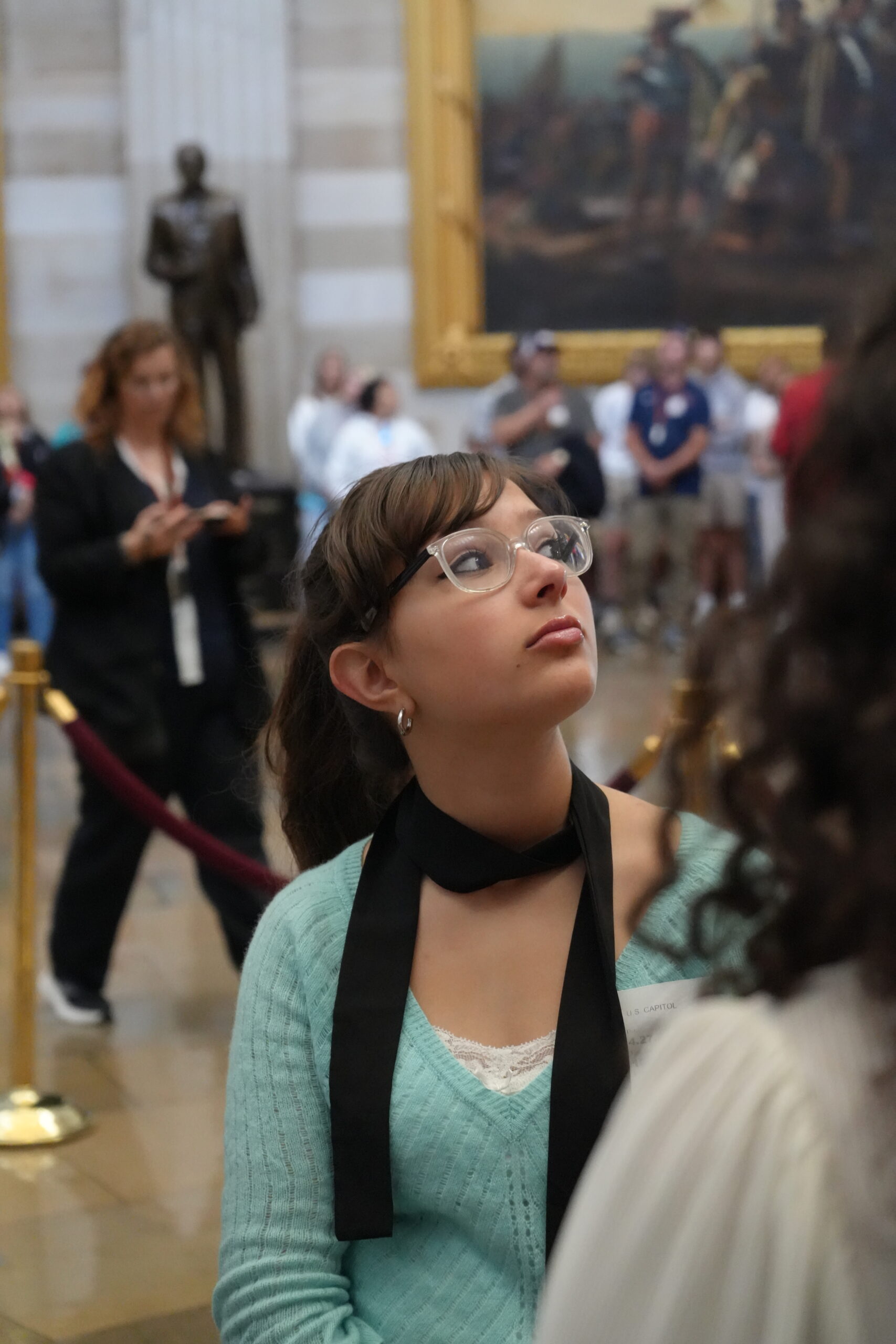
One thing we saw was the casket he was supposed to lie in after he died. However, he died before workers finished the Capitol, so he was never placed there. The space occupied by his casket reminded me of how Egyptian pharaohs were buried in pyramids, or how temples were dedicated to Roman warriors. Many of these great figures are depicted in the building, and almost every room has a statue of a god of freedom, a god of justice, or, as in the Capitol Rotunda, the Apotheosis of Washington, which shows all of the Greek gods surrounding a robed George Washington and other founding fathers. This Italian Renaissance-style painting is one of many in the room that depict scenes important in the history of America, all with the grandeur usually seen in paintings of deities.
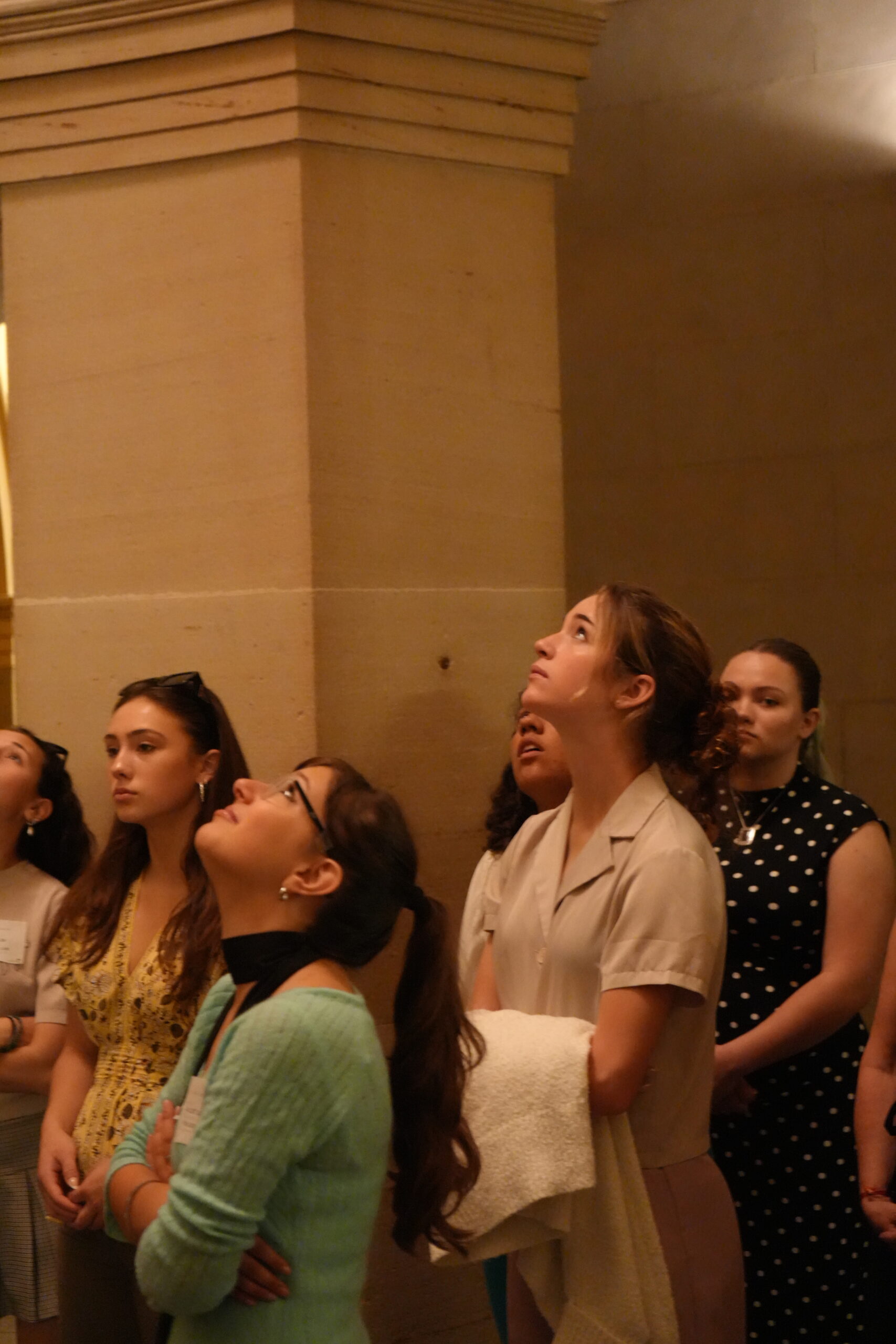
Since all of these historically important figures are just people, it makes you wonder if George Washington would have wanted to be depicted in religious terms. The painting Baptism of Pocahontas reminded me of the Coronation of Napoleon, which was painted merely forty years before. Several interesting points arise. Its resemblance to the painting of Napoleon is a nod both to the era in which it was created and to our country’s European roots. The historical elements of the painting are important too, because although Napoleon was a good general, he was not a great man, and although the Europeans colonizing the Americas did found our nation, the actual history of it is far grimmer than is usually thought. All of the original statues in the building are of fighters, all people who made a mark on the nation, even if they caused a lot of damage along the way. An example is Christopher Cololumbus, who is featured repeatedly. Another example is Father Junípero Serra, whose statue represents our state. After a while, it becomes clear what kind of people the country has traditionally chosen to represent itself. I do believe that there is a slow change being made, as the newer statues are of figures such as Rosa Parks, Martin Luther King Jr, and Barbara Rose Johns. So, maybe there will be a shift in the artwork that appears in the Capitol, with less worshiping of gods and more respecting people.