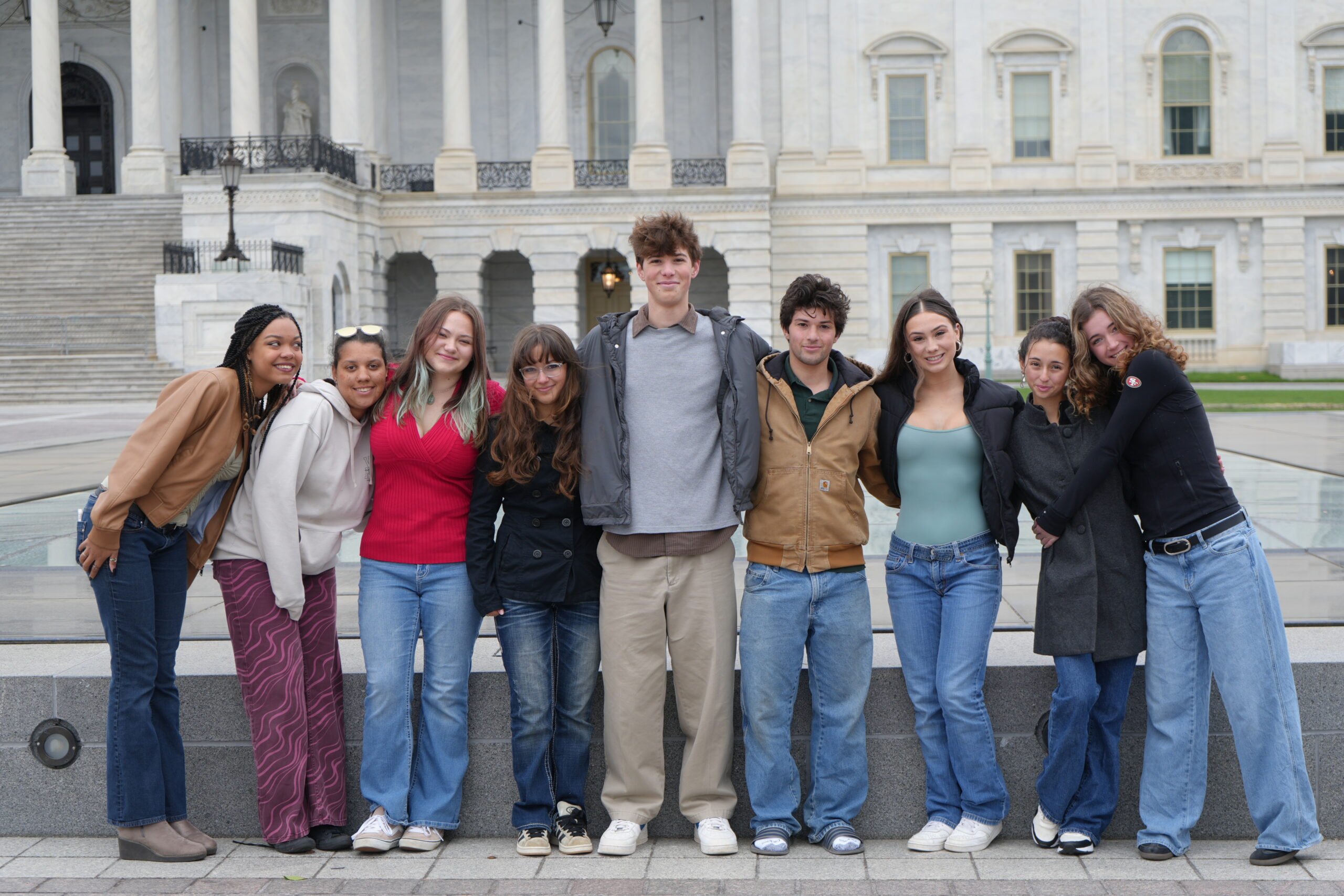
African-American History Is American History
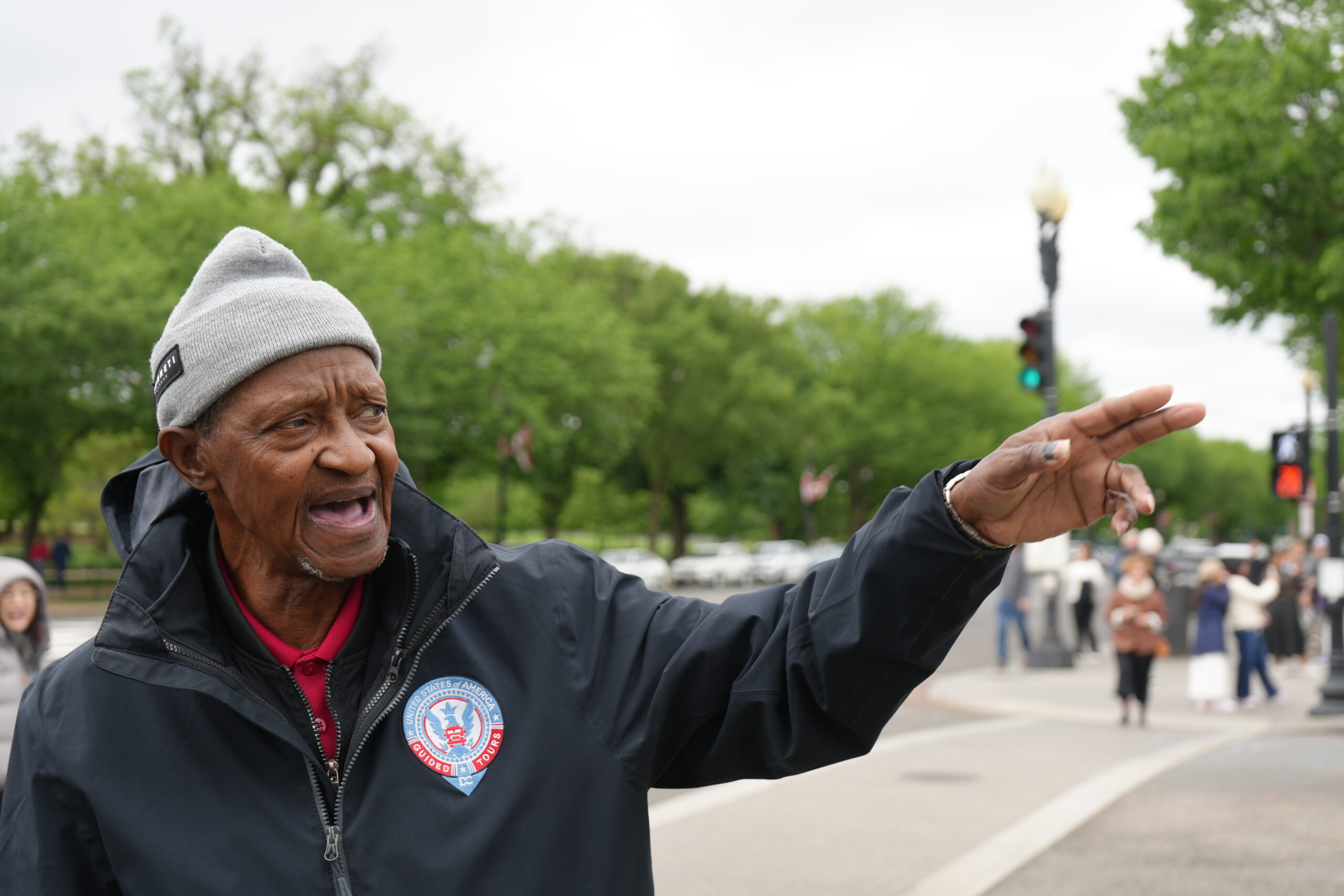
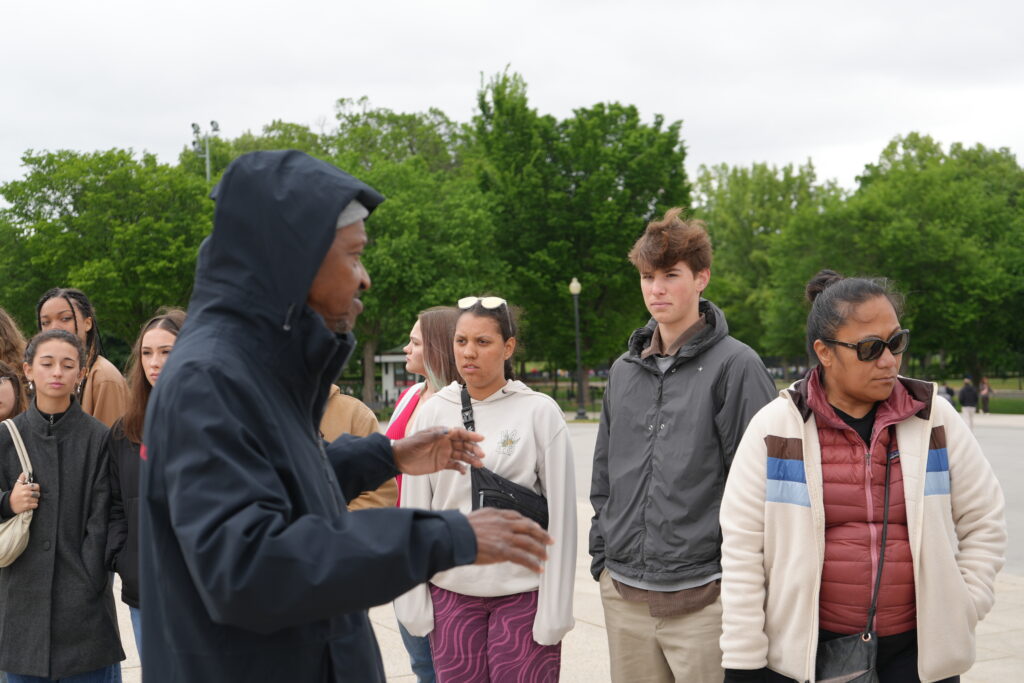
Today we took the “African-American History” Tour. I put the title in quotation marks because the main theme of the tour is that there is no difference between “African-American” history and “American” history.
I have never really been very interested in US history, so I was surprised to learn about the central role that African-Americans have played in our history. Elvis, our tour guide, told us several times that what he was saying about “African-American” history was no different from what he would say if he were talking about “American” history. When I think about World War One or the Vietnam War, I often think only of who won. On this tour, I was able to take a deeper dive to learn more about who was fighting and why. I learned that 300,000 African-Americans fought in the Vietnam war and that even more fought in World War One. Before the tour, I also had no idea of the impact African-Americans have had on the history of Washington, DC, itself. For example, I learned about Philip Reid, an African-American sculptor, who had been enslaved, who designed the Statue of Freedom atop the U.S. Capitol and was emancipated on April 16, 1862.
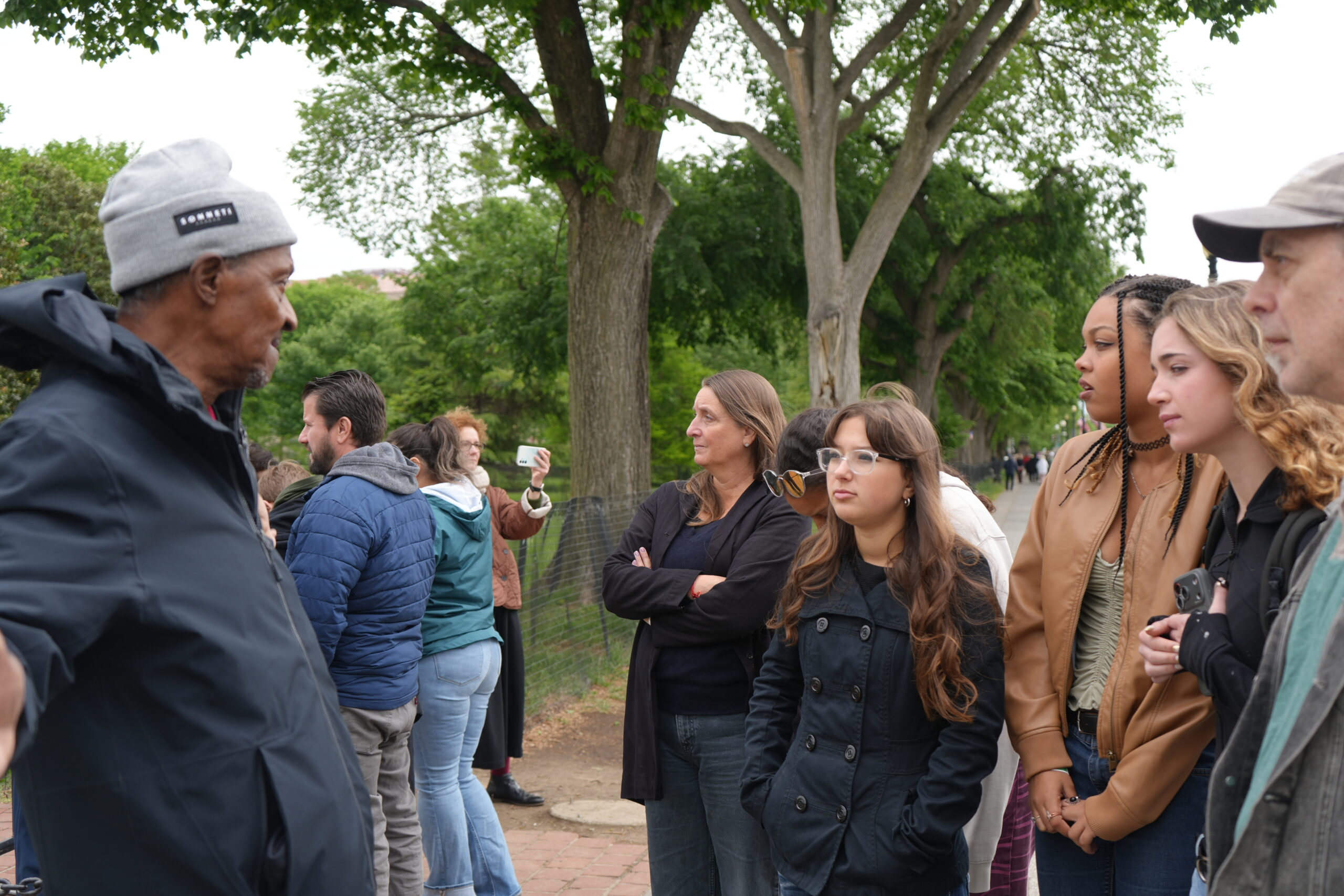
This tour really changed how I see “American” history. It showed me that African-American history is not separate, but a central part of the whole story. I learned that history is more than just events, that it’s about the people who shaped this country, whose lives have made a real difference in the lives of Americans.

Monumental Neglect
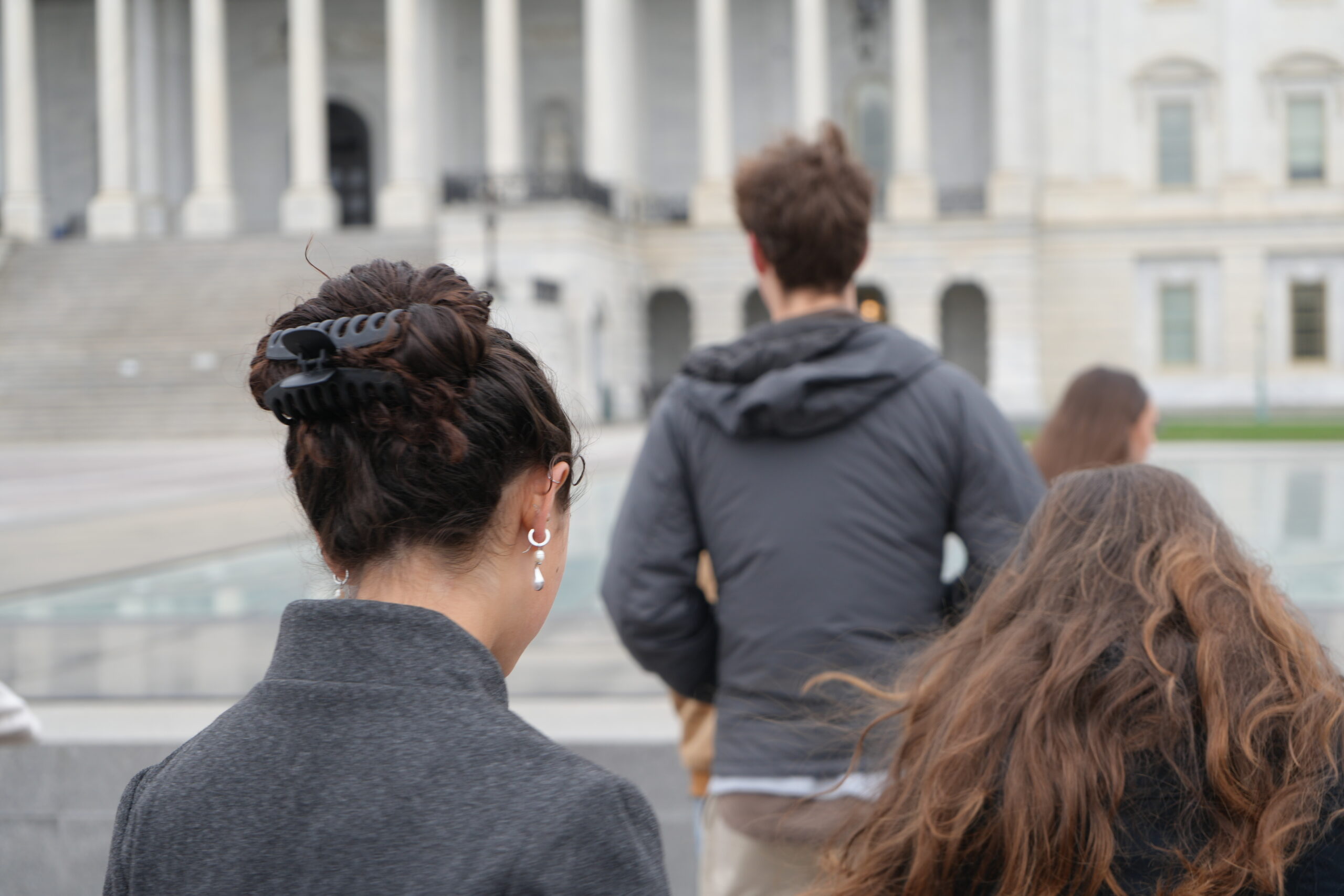
Today we took the African-American History tour, which took us around many of the memorials and monuments in DC. As we walked to where our tour started, we passed the Capitol, which is a beautiful piece of architecture. Walking up to the building, I realized, “I’m really in DC,” this place where so much history has taken place and is still taking place. We also passed the Library of Congress and the Washington Monument. When we arrived at the tour bus, it was apparent that our tour guide has a special connection to the topics he was talking to us about. He talked with such passion and deep personal understanding that was very different from learning something from a textbook. I felt as if my grandmother were telling me a story. Once we got on the bus, one of our first stops was the Lincoln Memorial. I gazed in awe at the building. I have seen many pictures of the statue and the reflection pond when Dr. Martin Luther King, Jr., gave his “I have a Dream” speech. We got to see where he spoke on the steps. It was like stepping into history. The Lincoln Memorial was serene, even with all the people inside and on the steps. The room was grand and beautiful. That it was so clean made it clear that it is an important place.
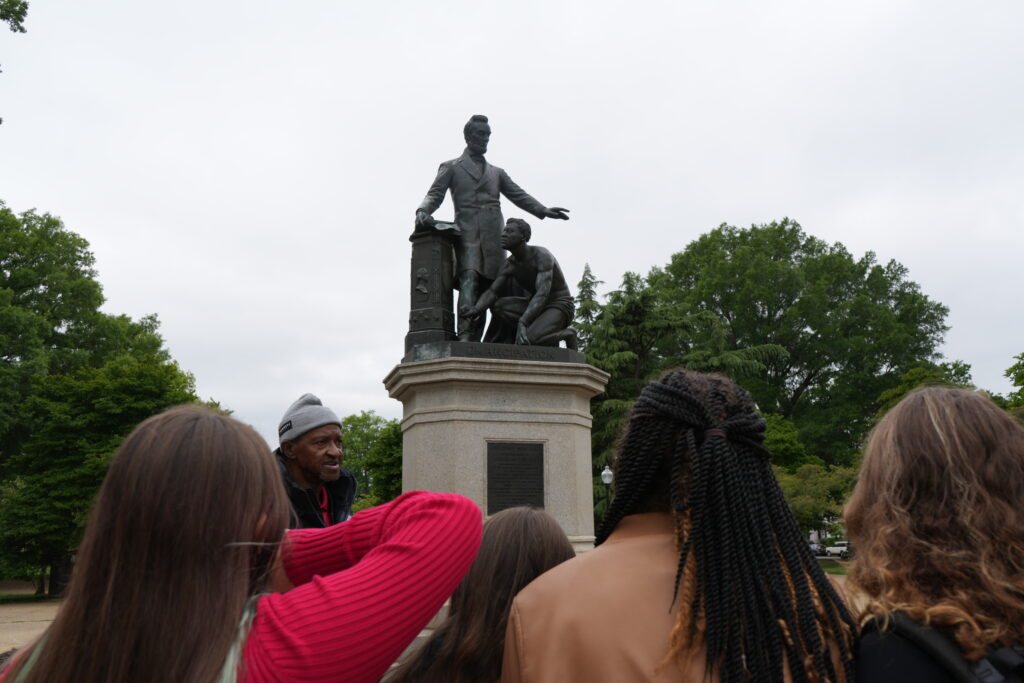
As the tour continued, we saw several other monuments, including the Martin Luther King, Jr., Memorial, which was also very grand and very serene, depicting Dr. King facing the tidal pool as he “emerges” from a block of stone. However, in contrast to the clean settings of the Lincoln Memorial and Martin Luther King, Jr., the neighborhood containing the Emancipation Memorial and the Mary McLeod Bethune Memorial almost seemed hidden from the public. They are in Lincoln Park, a small block-long park in a residential area. Our tour guide told us of the controversial history of the memorials. Not only do these memorials feel more secluded, but the quality and representation of the statues are very different from the Lincoln Memorial and Washington Monument. These two monuments sit in large, open and mostly empty spaces, making it clear that they are the centers of attention. Furthermore, the areas around them are kept as clean as possible, in contrast to the dog park where the Emancipation and Mary McLeod Bethune memorials sit, which seemed almost run down by comparison.
Near the end of the tour we saw the African American Civil War Memorial, which was very impactful for me. Seeing all of the names of African-American soldiers killed in the Civil War was very sad and eye opening. Something else that caught my attention was the dirtiness of the area around it. For example there was an empty Sprite can laying on one of the rows of names. Even though this disrespect may not have been intentional, it is clear that the way our country honors our African Americans soldiers and leaders is something less than how it honors white soldiers and leaders. The lack of care taken with the areas around the African-American memorials and monuments, either consciously or unconsciously, represents the way our nation has treated African-Americans. Something our tour guide Elvis said that has stuck with me is that “African American history is American history.” America was built on the backs of African-Americans, and I think that these beautiful memorials and monuments should be treated with greater respect and care.

The Struggle for Civil Rights Never Ends
Many people tend to think about civil rights only as something to be studied as history. People often talk about where we’ve come from and how things have changed. However, the struggle for civil rights wasn’t just people taking action to protect their rights in the past; it is something that continues as we work towards achieving goals that have yet to be met. I thought about this idea a lot as I toured the National Museum of African American History and Culture. The museum has so many exhibits that it takes four floors to cover African-American history. Every turn reveals a different era and set of experiences. Walking through the museum, I viewed exhibits from the 1400s to the present. In one exhibit, I read about Jim Crow laws. What stuck most with me is that Jim Crow laws were in place all the way up until 1964, which is pretty recent, just shortly before my parents were born. This fact really puts into perspective how long it takes to make change.
Racism isn’t gone; it’s just changed. It still exists in the ways people treat each other, and in the ways we act and perceive people. According to Racial and Ethnic Disparities, “Black adults were incarcerated at a rate of 600 per 100,000, while white adults were incarcerated at 184 per 100,000.” In California, one in five people with convictions “met criteria for full conviction relief under the state’s automatic relief laws” even though “the share of Black Americans eligible for relief was lower than White Americans.” So, yes, we are not in a time of slavery or apartheid, but we are still in a time of desperate need for change. Racism isn’t gone; it’s just disguised and harder to identify.

Whatever You Do, You Have to Keep Moving
On our first day in D.C., we didn’t have any interviews. Instead, we visited the Smithsonian’s National Museum of African American History and Culture.
The museum has four floors, and Shannon advised us to work our way up from the first floor, since each level tells the history of African-Americans and their experience in this country. The first floor focuses on how Africans were brought to America and the way they were treated once they arrived. Some of the exhibits were difficult to view. It’s impossible to fully understand what other people have lived through, but it’s important to acknowledge that history so it is never repeated.
Because I was running out of time, I skipped ahead to the fourth floor, which I had been looking forward to the most. This level—the Culture Galleries—felt completely different. Calling it “culture” feels like an understatement. The art, music, and expression went beyond just one community: it connected to so many others. It showed how deeply African-American culture has influenced visual art, music, and theater across the world. When I walked into the Musical Crossroads exhibit, the contrast from the earlier floors was striking. It was full of life: people celebrating, artists performing, and energy flowing everywhere. It represents hope, and it shows how far a community of people has come, and how much further they can go. That sense of progress and determination is inspiring. This experience reminded me of a quote by Martin Luther King Jr. “If you can’t fly, then run. If you can’t run, then walk. If you can’t walk, then crawl, but whatever you do, you have to keep moving.” The museum captures that idea perfectly: acknowledging the errors of the past while continuing to move forward into a better future.

African-Americans: Creators of American Music
Today, we took the African-American history tour of DC. The city is full of culture and history. As we traveled through the city, we saw how African-Americans are a central part of that culture and history. There are so many things that we attribute to “American” history and culture that were contributions from African-Americans. Our tour guide, Elvis, shared with us a quote from George Washington, who, when asked why he owned slaves despite believing in equality, said, “What would I do without them?”
We ended the tour at the National Museum of African American History and Culture. It is beautifully curated, with compelling exhibits, and it has great food! I have a personal connection with music, as I think of it as one of the most “human” things of which we are capable. So, of course, I found the music and culture exhibits amazing. They showcase African-American art, dance, film, writing, poetry, and music. There were images of ‘60s girl groups like The Supremes, and recent pop icons like Nicki Minaj. It was a beautiful representation of how much our American culture has been created by African-Americans.
Many people think of Europe as the birthplace of Western music. For example, Norway created opera, and Germany created electronic music. But a majority of musical genres that we know and love today were created by African-Americans. In the era of slavery, music and dance were forms of creative expression that defied oppression. While enslaved peoples were treated as property, they could still find a way to take back their bodies and identities through artistic expression. Enslaved African-Americans created blues, ragtime, jazz, doo-wop, gospel, soul, funk, rap, hip-hop, R&B, and what would eventually become country music. African-Americans such as Chuck Berry also created rock and roll in the 1950s. After years of struggle, slaves were eventually emancipated, but African-Americans still faced horrific prejudice through Jim Crow laws, lynch mobs, and systemic racism. Still, African-American culture has never stopped shining.
Truly, every American music genre we now have was created or at least influenced by African-Americans. This tour showed us how much of our culture we owe to those who have faced oppression and hardship. As we drove through the neighborhood around Howard University, we saw images of African-American veterans behind glass that had been shattered by rocks. It was fascinating to see the beauty and richness of African-American culture as it was created out of hardship, defiance, and resilience, and to see how the diverse music genres we know and love today came to be.

Looking Past the Myth to See the Truth
Today was the first full day of the long-awaited Washington, D.C., trip, and it did not disappoint. My feet are already feeling all of the day’s walking.
Seeing all the statues that reflect the evolution of American history is really profound. Sculptors have shaped metal to show the world, today and into the future, what happened in the past. Something that I really love is that through these monuments you can see how the country was in the past, and you can see the obvious biases in our predecessors’ thoughts and opinions. The tributes they created cannot be changed so that they don’t reflect those biases. We also learned more about the reluctance of the country—especially in the Civil War border states Maryland, Kentucky, Delaware, and Missouri—to emancipate the slaves. An example is the Emancipation Memorial, which shows Abraham Lincoln and Archer Alexander, one of the first slaves “freed” after the signing of the Emancipation Proclamation. However, some sources say that Archer Alexander was never really freed by Lincoln, but had to fight in court to earn his freedom. Archer is depicted without pupils, as if he is blind, on his knees, as Lincoln, with pupils, stands above him. I had always thought that Lincoln’s goal was peace and freedom, but today’s tour of DC opened my eyes to the need to be critical of my previous conceptions. Our tour guide shared a powerful quote with us that I want to share with you. Someone asked Lincoln, “If there were any other way to save the union than freeing the slaves, would you do it?” Lincoln’s answer: “I would.” Lincoln said.
Please take my advice. Remain critical of whatever you hear and see, and you’ll discover what really is.